5 Foods Rich in Phytoestrogens That May Support Women’s Health, Smooth Skin, and Youthful Aging
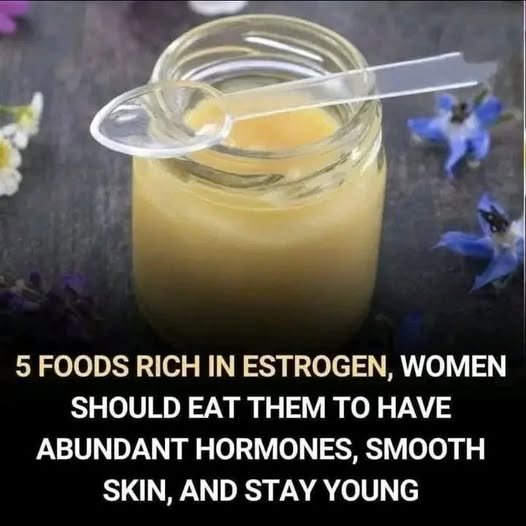
For centuries, women have searched for the fountain of youth—a secret elixir or a magic diet that could preserve a radiant complexion, balance hormones, and delay the visible signs of aging. In the modern era of wellness, this quest often leads to the kitchen. The image of a golden, nutrient-dense paste in a glass jar, surrounded by delicate blue flowers, perfectly captures the allure of natural, plant-based beauty remedies. The bold text accompanying the image promises a compelling solution: “5 Foods Rich in Estrogen, Women Should Eat Them to Have Abundant Hormones, Smooth Skin, and Stay Young.”
This claim taps into a very real biological phenomenon. As women age, particularly as they approach perimenopause and menopause, the natural production of estrogen declines significantly. This hormonal shift has profound effects on the body—most notably on the skin. Estrogen is a primary driver of collagen production, skin thickness, and hydration. When estrogen levels drop, the skin can become thinner, drier, less elastic, and more prone to wrinkles.
However, the term “estrogen-rich foods” is slightly misleading. Plants do not contain human estrogen. Instead, they contain phytoestrogens—naturally occurring plant compounds that are structurally similar to human estrogen. Because of this similarity, they can weakly bind to estrogen receptors in the body. When human estrogen levels are low (such as during menopause), these plant compounds can provide a mild, gentle estrogenic effect, helping to mitigate symptoms like hot flashes, dry skin, and bone loss.
This comprehensive guide will explore the science behind phytoestrogens, explain exactly how they support skin health and hormonal balance, and detail the five most powerful phytoestrogen-rich foods you can add to your diet to support a more youthful, vibrant appearance from the inside out.
Understanding Phytoestrogens: The Plant-Based Hormone Helpers
To truly appreciate the benefits of these foods, it is essential to understand what phytoestrogens are and how they function in the body. They are not a magic cure-all, but they are a remarkably powerful dietary tool, especially for women navigating the hormonal shifts of aging.
The Three Main Classes of Phytoestrogens
There are hundreds of different phytoestrogens found in plants, but they generally fall into three main categories:
Isoflavones: Found primarily in legumes, especially soybeans. The most studied isoflavones are genistein and daidzein. They have the strongest estrogenic activity of all plant compounds.
Lignans: Found in seeds (especially flaxseeds), whole grains, and some fruits and vegetables. When consumed, gut bacteria convert lignans into enterolactone and enterodiol, which have weak estrogenic and antioxidant effects.
Coumestans: Found in alfalfa sprouts and some legumes. They are less common in the typical human diet but are highly active.
How Phytoestrogens Work: The “Selective” Effect
Phytoestrogens are what scientists call Selective Estrogen Receptor Modulators (SERMs). This means they behave differently depending on the body’s current hormonal state.
When a woman is in her 20s and 30s and has abundant natural estrogen, phytoestrogens actually compete with the body’s stronger estrogen for receptor sites. Because phytoestrogens are much weaker, this can help block the effects of excess estrogen, which is beneficial for conditions like estrogen dominance.
Conversely, when a woman is in her 50s and her natural estrogen has plummeted, phytoestrogens can bind to the empty receptors and provide a gentle, mild estrogenic effect. This is why they are so valuable for postmenopausal women, helping to stave off the rapid aging of the skin and the uncomfortable symptoms of hormonal decline.
The Estrogen-Skin Connection: Why Hormones Keep Us Young
The image’s claim that these foods help women maintain “smooth skin” and “stay young” is not just a marketing slogan; it is rooted in dermatological science. The skin is an active endocrine organ, meaning it responds directly to hormones.
Collagen and Elastin Production
Estrogen stimulates the production of fibroblasts, the cells responsible for manufacturing collagen and elastin. Collagen provides the structural scaffolding that gives skin its firmness, while elastin allows it to stretch and bounce back. Studies show that women can lose up to 30% of their skin collagen in the first five years after menopause. Phytoestrogens can help stimulate these fibroblasts, slowing down the loss of skin firmness.
Hydration and the Skin Barrier
Estrogen also plays a vital role in maintaining the skin’s moisture barrier. It stimulates the production of sebum (natural oils) and glycosaminoglycans (like hyaluronic acid), which hold water in the skin. As estrogen declines, the skin becomes drier and more prone to fine lines. Phytoestrogen-rich foods help support this moisture barrier, leading to a plumper, more radiant complexion.
Antioxidant Protection
Many phytoestrogen-rich foods are also packed with antioxidants. These compounds help neutralize free radicals caused by UV exposure and pollution, which are the primary drivers of premature aging (photoaging). They also help reduce the inflammation that can break down collagen over time.
Food #1: Flaxseeds – The Lignan Powerhouse
The first food to include in your anti-aging arsenal is the