Mystery Solved: The Truth Behind the Small Red-Brown Objects on Your Bed
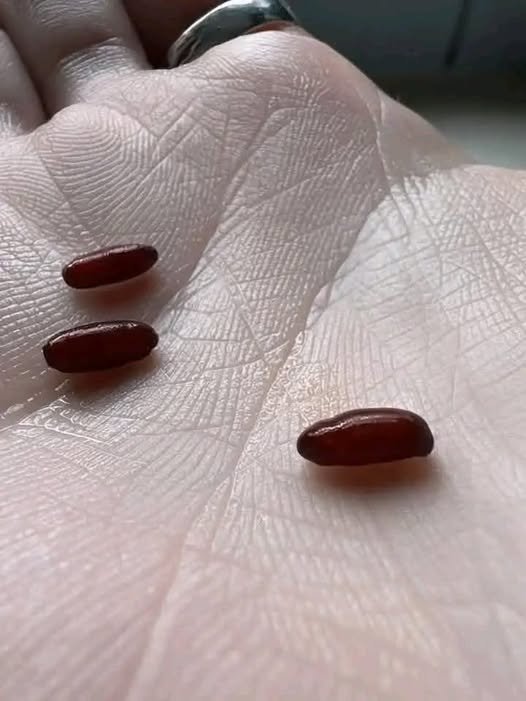
Finding small, mysterious objects in your bed can be a genuinely unsettling experience. The mind immediately jumps to the worst-case scenario: are they insect eggs? Droppings? A sign of an infestation? The image you shared shows three small, smooth, dark reddish-brown oval objects resting on your palm. They have a glossy, seed-like appearance.
The good news is that these are almost certainly not a sign of a pest problem. Based on their visual characteristics, these objects are plant seeds—most likely flax seeds or buckwheat seeds—that have escaped from a common household item. This article will explain what these objects are, how they ended up on your bed, how to tell them apart from look-alikes (like cockroach egg cases), and what you should do next.
What Are These Tiny Red-Brown Objects?
The objects in your hand are the seeds of a plant. Their specific shape—smooth, oval, and reddish-brown—is characteristic of several types of seeds used in everyday products. The most common culprits are flax seeds (linseeds).
The Evidence for Flax Seeds
Flax seeds are small, oval, and have a smooth, shiny surface that ranges in color from dark brown to reddish-brown. They are frequently used as a natural filling in microwaveable heating pads, therapeutic neck wraps, and even some plush toys designed to be warmed up.
These products rely on the seeds because they retain heat exceptionally well and hold their shape. When the outer fabric of a heating pad, a stuffed animal, or a weighted blanket gets a small rip or a loose seam, the seeds can slowly leak out and scatter onto your bed or floor.
Another Possibility: Buckwheat Seeds
While flax is the most likely candidate, another common filling for pillows and heating pads is buckwheat. Buckwheat seeds (hulls) are also dark brown and oval-shaped, though they tend to have a slightly more angular, triangular appearance than the smooth oval of a flax seed. Either way, they are a harmless plant product.
Why Are They on Your Bed?
If these are indeed flax or buckwheat seeds, their presence on your bed is easily explained. Ask yourself the following questions:
Do you use a microwaveable heating pad? These are often filled with flax seeds. Check the seams for any small tears or holes.
Do you have a weighted blanket? Some weighted blankets use micro-glass beads, but others use natural seeds.
Do you have a plush toy or a neck pillow? These can also be filled with seeds for warmth or weight.
Have you been eating flax seeds? It is possible that a few seeds clung to your clothing or bedding and eventually fell onto the bed.
Finding a small cluster of these seeds on your bed almost always points to a leaking heat pack, a torn pillow, or a stray snack, rather than an insect.
The Look-Alike You Should Rule Out: Cockroach Egg Cases
The primary reason these objects cause alarm is that they bear a superficial resemblance to cockroach egg cases (oothecae). However, there are clear visual differences that can help you distinguish a harmless seed from a pest problem.
How to Tell the Difference
The Ridged Seam: The most definitive feature of a cockroach egg case is a distinct, comb-like ridge or seam running along one edge. If you examine a flax seed under a magnifying glass or your phone camera, the surface is generally smooth. If you look closely at an ootheca, you will see a structured, segmented line that looks like a tiny zipper or a series of ridges.
Texture and Shape: Flax seeds are hard, smooth, and glossy. Cockroach egg cases are often more capsule-shaped (like a small pill or a bean) and can have a slightly softer, more brittle texture, especially as they age.
What Happens When You Crush It: If you were to crush a seed, it would be hard and oily inside. An egg case would be hollow or contain a liquid or developing nymphs.
Given the smooth, glossy, and uniformly oval appearance of the objects in your hand, they are far more consistent with seeds than with insect egg cases.
What Should You Do Now?
If you are still feeling uneasy, you can take a few simple steps to confirm the source and eliminate the mystery.
Inspect Your Bedding and Pillows: Check the seams of your pillows, mattress protector, and any heating pads or stuffed animals for small tears or holes.
Perform a Crush Test: To confirm it is a seed, you can place one on a hard surface and press it with a spoon. A seed will crack and reveal a lighter, oily interior. (Do not do this with your bare hands if you are unsure).
Check for Other Signs: Look for other signs of pests, such as tiny black fecal spots on your sheets or mattress seams. If you only find the smooth seeds and no other evidence of insects, you can be confident it is a seed.
Clean Your Bedding: Wash your sheets and vacuum your mattress to remove any stray seeds. If you find a torn heating pad or pillow, repair or replace it.
Frequently Asked Questions
Q: Are these definitely not insect eggs? Based on the image, they lack the characteristic ridged seam and capsule shape of cockroach egg cases. They are almost certainly plant seeds, most likely flax seeds.
Q: Could they be bed bug eggs? No. Bed bug eggs are tiny, white, and oval, and they are usually glued to surfaces. They do not look like dark brown seeds.
Q: Why are they shiny? Flax seeds have a natural glossy coat that helps them retain moisture. This shiny appearance is one of the key identifying features of a seed rather than an egg case.
Q: What if I have a lot of them? If you are finding a large number of these seeds, it is highly likely that a large heating pad or a beanbag-style pillow has ruptured. Check all similar items in your home.
Q: Can I just vacuum them up? Yes, you can vacuum them up. However, it is better to find the source (the torn item) to prevent them from continuing to spill.
Q: Are they harmful? No. Flax seeds and buckwheat hulls are non-toxic and harmless. They are not a health hazard.
Q: What if they are not seeds? If you are still in doubt, you can place one in a sealed plastic bag and take it to a local pest control professional or an extension office for a definitive identification.
Conclusion
The small, reddish-brown objects on your bed are a classic case of mistaken identity. They are almost certainly flax seeds or buckwheat hulls from a household item like a heating pad, a neck pillow, or a weighted blanket. While they may look like something out of a horror movie at first glance, they are a harmless plant product. By checking your household items for tears and comparing the objects to the distinctive ridged seam of a cockroach egg case, you can put your mind at ease. The mystery is solved, and it is nothing to be afraid of.