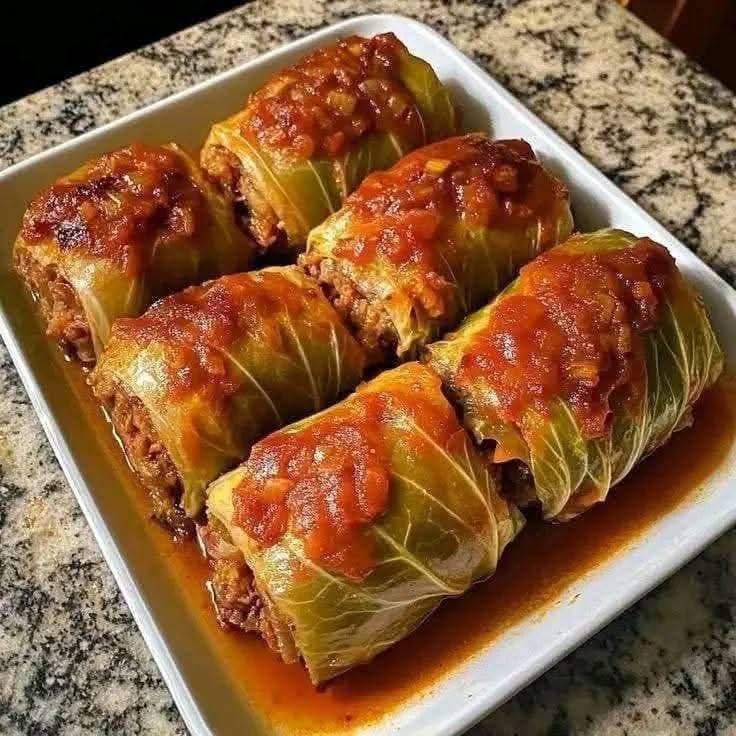
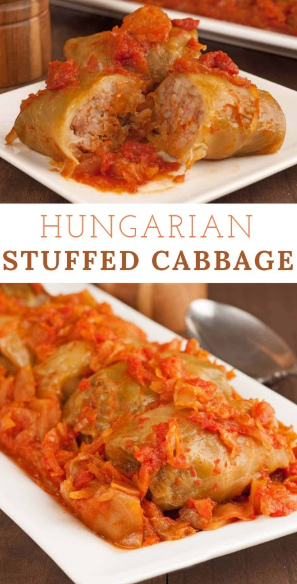
Traditional Hungarian Stuffed Cabbage Rolls Recipe (Töltött Káposzta)
There are few dishes that capture the heart and soul of Hungarian comfort food quite like Stuffed Cabbage Rolls, known locally as Töltött Káposzta. Just look at that vibrant, heavy-bottomed pot overflowing with plump, tender cabbage rolls, simmering in a rich, paprika-infused tomato sauce. The glossy finish on the cabbage leaves and the deep, ruby-red hue of the broth are immediate indicators of a dish that is packed with flavor. It is a meal that warms you from the inside out, filling the kitchen with an intoxicating aroma of smoked meat, sweet paprika, and tangy sauerkraut as it slowly bubbles away on the stove.
While the social media caption playfully promises a “5-minute” preparation and a dish that “melts in your mouth at the first bite,” the reality is that Töltött Káposzta is a labor of love. It takes time to blanch the cabbage, carefully roll the savory meat filling, and let the whole pot simmer until the flavors marry perfectly. However, the actual cooking techniques are remarkably straightforward. The “melt in your mouth” promise, however, is absolutely true. When prepared correctly, the cabbage becomes incredibly tender, practically dissolving on your tongue, while the rice and meat filling remains juicy and satisfying.
In Hungarian culture, this dish is the centerpiece of celebrations, especially during the Christmas and Easter holidays. It represents abundance, warmth, and family tradition. In this comprehensive guide, we will walk you through the authentic method of making this legendary dish. We will explore the history, break down the essential ingredients, provide a meticulously detailed step-by-step recipe, and share the secrets to achieving that perfect balance of smoky, sweet, and sour flavors that defines a true Hungarian Töltött Káposzta.
Recipe Overview
Preparation Time: 45 minutes (plus time for freezing or blanching the cabbage)
Cooking Time: 2.5 to 3 hours
Total Time: Approximately 3.5 to 4 hours
Servings: 6 to 8 generous portions
Difficulty Level: Intermediate
Cooking Method: Stovetop simmering (can be adapted for oven or slow cooker)
Cuisine: Hungarian
Course: Main Course
Estimated Calories per Serving: Approximately 450-500 kcal
What is Hungarian Stuffed Cabbage?
Töltött Káposzta is a beloved traditional dish that sits at the intersection of resourceful peasant cooking and celebratory feast food. At its core, it consists of blanched cabbage leaves wrapped around a mixture of ground meat (usually pork or a blend of pork and beef), rice, onions, and spices. These rolls are then nestled into a pot layered with sauerkraut (fermented cabbage) and smoked meats, and finally simmered in a sweet and sour tomato sauce until everything is tender.
It is important to note that Hungarian cuisine has a few variations of cabbage dishes. The version pictured here is the thick, stew-like Töltött Káposzta. There is also a soup version (Töltött Káposzta Leves), which has a much thinner broth and more liquid. The dish we are focusing on today is the hearty, main-course version.
What makes the Hungarian version unique is the heavy reliance on two specific ingredients: High-quality Hungarian sweet paprika and Sauerkraut. The sauerkraut is not just a side note; it is layered on the bottom of the pot and mixed into the sauce, providing a distinct tangy acidity that cuts through the richness of the pork and the smoked meats. The signature smoky flavor comes from the addition of Hungarian smoked sausage (kolbász), smoked bacon (szalonna), or smoked pork ribs. The result is a deeply complex, savory, and comforting dish that is universally loved across Central Europe.
Ingredients You Will Need
To make an authentic pot of Hungarian Stuffed Cabbage, you will need the following ingredients. Precise measurements are key to achieving the right balance of flavors.
For the Cabbage and Filling:
1 large head of green cabbage: Choose a firm, heavy head with large, unblemished leaves.
1 pound (450g) ground pork: Provides essential fat and flavor.
½ pound (225g) ground beef: Adds depth to the meat mixture.
½ cup (100g) uncooked short-grain white rice: Do not use instant or long-grain rice.
1 medium yellow onion: Finely chopped.
2 cloves garlic: Minced.
1 large egg: To bind the mixture.
1 ½ tablespoons Hungarian sweet paprika.
1 teaspoon salt.
½ teaspoon freshly ground black pepper.
1 teaspoon dried marjoram.
For the Pot and Sauce:
1 jar (about 2 lbs / 900g) of high-quality sauerkraut: Do not drain or rinse it; the juices are essential.
1 pound (450g) smoked Hungarian sausage (kolbász) or smoked pork ribs: Sliced into thick rounds.
2 tablespoons vegetable oil or lard.
1 large yellow onion: Sliced.
2 tablespoons all-purpose flour.
1 tablespoon Hungarian sweet paprika.
1 can (15 oz / 400g) tomato puree or crushed tomatoes.
4 cups (1 liter) water or beef broth.
1 tablespoon granulated sugar (adjust to taste).
2 bay leaves.
Salt and pepper to taste.
For Serving:
Sour cream (Tejföl)
Fresh crusty bread
Fresh dill or parsley for garnish
Choosing the Best Ingredients
The quality of your ingredients will directly impact the final flavor of the dish. Here is what to look for when shopping:
The Cabbage: Look for a large, firm head of green cabbage. Savoy cabbage can also be used, but its crinkly leaves can be harder to roll. If you are using a store-bought cabbage, you may want to core it and freeze it overnight, then thaw it. This process breaks down the cell walls and makes the leaves incredibly pliable and easy to roll without blanching.
The Meat: A blend of ground pork and ground beef is traditional. The pork provides the necessary fat to keep the filling moist and flavorful, while the beef adds a robust, meaty taste. Avoid using extra-lean meat, as the filling will become dry and crumbly.
The Rice: Use a short-grain white rice, such as Arborio or sushi rice. Short-grain rice has a higher starch content, which helps bind the filling together and gives it a slightly creamy texture.
The Sauerkraut: Do not use canned, mushy sauerkraut. Look for bagged or jarred refrigerated sauerkraut that is crisp and tangy. The juices are crucial for the sauce.
The Smoked Meat: Hungarian kolbász (smoked sausage) is the gold standard. If you cannot find it, a good quality smoked kielbasa or smoked bacon will work. The smokiness is a defining characteristic of the dish.
The Paprika: Use authentic Hungarian sweet paprika (Édes Nemes). It should be vibrant red and smell sweet and slightly peppery. Old paprika loses its color and flavor.
Kitchen Equipment
To make this recipe, you will need a few basic kitchen tools:
A Very Large Pot or Dutch Oven: A heavy-bottomed pot with a tight-fitting lid is essential. It needs to be large enough to hold all the cabbage rolls in a single or double layer. A traditional Hungarian bogrács (cauldron) or a large enameled cast-iron Dutch oven (like the one in the photo) is perfect.
A Large Pot for Blanching: For boiling the cabbage.
A Sharp Knife and Cutting Board: For prepping the cabbage, onions, and sausage.
A Large Mixing Bowl: For combining the meat, rice, and spices.
A Whisk: For mixing the roux into the sauce.
Tongs: For handling the hot cabbage leaves.
Step-by-Step Cooking Instructions
Making Hungarian Stuffed Cabbage is a multi-step process, but it is incredibly satisfying. Follow these steps carefully.
Step 1: Prepare the Cabbage Leaves Core the head of cabbage. Bring a very large pot of water to a boil. Submerge the whole cabbage in the boiling water. As the outer leaves soften (after about 2-3 minutes), gently peel them off using tongs and set them aside on a towel. Continue boiling and peeling until you reach the core and the leaves become too small to roll. Reserve the small inner leaves. (Alternatively, use the freeze-thaw method mentioned in the ingredient section for easier peeling). Using a sharp knife, carefully shave down the thick, tough central rib of each large leaf so it lies flat (be careful not to cut through the leaf!).
Step 2: Make the Meat Filling In a large mixing bowl, combine the ground pork, ground beef, uncooked rice, finely chopped onion, minced garlic, egg, paprika, salt, pepper, and marjoram. Use your hands to mix the ingredients gently until they are just combined. Do not overmix, or the meat will become tough.
Step 3: Roll the Cabbage Take one prepared cabbage leaf and lay it flat on your work surface. Place a generous 2-3 tablespoons of the meat mixture near the stem end of the leaf. Fold the stem end over the meat, then fold in the sides. Gently but tightly roll the leaf up into a neat little parcel. Tuck the loose end underneath to secure it. Repeat with the remaining leaves and meat.
Step 4: Layer the Pot Spread half of the sauerkraut (with its juices) evenly across the bottom of your large pot. Add the reserved small inner cabbage leaves. Nestle the smoked sausage slices or smoked ribs into the sauerkraut. Arrange the cabbage rolls snugly on top. Cover the rolls with the remaining sauerkraut.
Step 5: Build the Sauce In a separate saucepan, heat the oil or lard over medium heat. Add the sliced onion and cook until translucent. Remove the pot from the heat (to prevent burning the paprika). Add the flour and 1 tablespoon of paprika to the onions, stirring constantly to create a roux. Gradually pour in the water or broth, whisking constantly to prevent lumps. Add the tomato puree, sugar, and bay leaves. Stir well to combine and bring to a gentle simmer.
Step 6: Simmer the Cabbage Rolls Pour the tomato sauce over the layered cabbage rolls in the pot. The liquid should almost cover the rolls (add a little water if needed). Bring the pot to a gentle simmer on the stovetop. Once it’s bubbling slightly, reduce the heat to the lowest setting, cover the pot with a lid, and let it simmer for 2 to 2.5 hours.
Step 7: Rest and Serve Once cooked, remove the pot from the heat. (The hardest part!) Let the cabbage rolls rest for at least 30 minutes before serving. This allows the flavors to meld and the rolls to firm up slightly. To serve, place 1 or 2 rolls on a plate, spoon over plenty of the tangy sauerkraut and sauce, and add a piece of the smoked sausage. Top with a generous dollop of cold sour cream and a sprinkle of fresh dill.
Important Cooking Tips
The Salting Step is Crucial: If you are using fresh cabbage, ensuring the leaves are soft and pliable is key. Do not skip the blanching or freezing step.
Use Raw Rice: Do not pre-cook the rice. The long simmering time will cook the rice perfectly while allowing it to absorb all the delicious juices from the meat and the sauce.
Don’t Overstuff: Leave room in the cabbage leaf for the rice to expand. Overstuffed rolls will burst during cooking.
Layering is Key: Laying the pot with sauerkraut on the bottom prevents the cabbage rolls from burning and sticking to the bottom of the pot.
Gentle Simmer: Keep the heat low. A rolling boil will cause the cabbage rolls to break apart and the sauce to reduce too quickly.
Common Mistakes to Avoid
Not Removing the Core: The thick core of the cabbage leaf makes rolling nearly impossible. Always shave it down to create a flat surface.
Rinsing the Sauerkraut: The juice of the sauerkraut is where the flavor lives. Do not rinse it away unless you absolutely must reduce the acidity.
Burning the Paprika: Hungarian paprika burns easily and becomes bitter. Always remove the pot from the heat before adding it to the onions and flour.
Skipping the Resting Time: Allowing the dish to rest after cooking lets the flavors meld and the sauce thicken slightly.
Using Lean Meat: Lean ground turkey or chicken will result in dry, flavorless filling. The fat from the pork and beef is essential.
Variations and Substitutions
Transylvanian Style (Erdélyi Káposzta): This variation uses the same ingredients but adds a significant amount of sour cream directly into the sauce, making it incredibly rich and creamy.
Different Meats: You can use all pork or all beef. Ground lamb also works beautifully.
Vegetarian Version: Substitute the meat with a mixture of cooked lentils, mushrooms, and rice.
Slow Cooker Method: Brown the meat and make the sauce on the stove, then transfer everything to a slow cooker and cook on low for 6-8 hours.
Add Pork Ribs: For an even richer flavor, add a few smoked pork ribs to the pot along with the sausage.
What to Serve with This Dish
Sour Cream: A must-have. The cool, creamy sour cream balances the tangy, spicy sauce.
Crusty Bread: Essential for mopping up the tomato broth.
Hungarian Cucumber Salad (Uborkasaláta): The crisp, tangy salad cuts through the richness of the meat perfectly.
Pickles: A side of tangy pickles adds a refreshing crunch.
Mashed Potatoes: Creamy mashed potatoes make a comforting and hearty side dish.
How to Store and Reheat Leftovers
Refrigeration: Store leftovers in an airtight container in the refrigerator for up to 4 days. The flavors actually improve the next day.
Freezing: This dish freezes beautifully. Freeze the cabbage rolls and sauce in a freezer-safe container for up to 3 months. Thaw overnight in the refrigerator before reheating.
Reheating: Reheat gently on the stovetop over low heat or in the microwave until heated through.
Make-Ahead and Meal-Preparation Tips
Prep Ahead: You can stuff the cabbage rolls and make the sauce up to 24 hours in advance. Store them separately in the refrigerator.
Freeze Before Cooking: You can freeze the raw stuffed cabbage rolls. Place them on a baking sheet until frozen, then transfer to a freezer bag. When ready to cook, thaw them and proceed with the recipe.
Troubleshooting Guide
Why is my rice crunchy? The rice needs more time or more liquid. Add a splash of hot water to the pot, cover, and simmer for another 15-20 minutes.
Why did my cabbage rolls burst? You likely overstuffed them. The rice expands, so always leave room at the top.
The sauce is too sour. Add a little more sugar to balance the acidity of the sauerkraut and tomatoes.
The sauce is too thin. Remove the lid and simmer for a few more minutes to allow it to reduce and thicken.
Nutritional Information
Please note that the following nutritional information is an estimate and will vary based on the specific ingredients used and portion sizes.
Calories: 480 kcal
Protein: 25 g
Carbohydrates: 30 g
Fat: 28 g
Saturated Fat: 10 g
Cholesterol: 100 mg
Sodium: 800 mg
Fiber: 6 g
Sugar: 12 g
Frequently Asked Questions
Can I use red or yellow peppers? Yes, you can. Green peppers are traditional, but red and yellow peppers are sweeter and work well.
Do I have to use raw rice? Yes, the raw rice is essential for the texture and structure of the filling.
Can I make this in the oven? Yes, assemble the cabbage rolls in a baking dish, pour the sauce over, cover with foil, and bake at 350°F (175°C) for about 2 hours.
How long does it last in the fridge? It will keep in an airtight container in the refrigerator for up to 4 days.
Can I use instant rice? No, instant rice will turn to mush. Use regular short-grain white rice.
What is the best way to hollow out the peppers? Cut a circle around the stem and pull it out. Use a spoon to scrape out the seeds and white ribs.
Final Recipe Summary
Hungarian Stuffed Cabbage (Töltött Káposzta) is the ultimate comfort food. Tender green peppers filled with a savory meat and rice mixture, slow-simmered in a sweet and tangy tomato sauce. This dish is easy to prepare, deeply flavorful, and perfect for a family dinner. Serve it with crusty bread and a dollop of sour cream for a truly authentic Hungarian experience.
Printable Recipe Card
Traditional Hungarian Stuffed Cabbage Rolls (Töltött Káposzta) Tender cabbage leaves stuffed with savory meat and rice, simmered with sauerkraut and smoked sausage in a sweet and tangy tomato sauce.
Prep Time: 45 minutes
Cook Time: 2 hours 30 minutes
Total Time: 3 hours 15 minutes
Servings: 6-8
Course: Main Course
Cuisine: Hungarian
Ingredients:
1 large head green cabbage
1 lb ground pork
½ lb ground beef
½ cup uncooked short-grain white rice
1 medium onion, finely chopped
1 egg
1 ½ tbsp Hungarian sweet paprika
1 tsp salt
½ tsp black pepper
1 tsp marjoram
2 lbs sauerkraut, undrained
1 lb smoked Hungarian sausage, sliced
2 tbsp vegetable oil
1 large onion, sliced
2 tbsp all-purpose flour
1 tbsp Hungarian sweet paprika (for sauce)
1 can (15 oz) tomato puree
4 cups water or beef broth
1 tbsp sugar
2 bay leaves
Instructions:
Core and blanch cabbage leaves until pliable. Shave down thick ribs.
Mix ground meats, raw rice, chopped onion, egg, paprika, salt, pepper, and marjoram. Stuff and roll the cabbage leaves.
Layer a large pot with half the sauerkraut, then sausage, then cabbage rolls, then the rest of the sauerkraut.
Make a roux with oil, sliced onion, flour, and paprika. Add water, tomato puree, sugar, and bay leaves. Pour over the rolls.
Cover and simmer on low for 2.5 hours. Rest for 30 minutes before serving with sour cream.
Storage: Refrigerate in an airtight container for up to 4 days.
Internal Linking Suggestions
Traditional Hungarian Cucumber Salad (Uborkasaláta): Link to this recipe with anchor text “crisp cucumber salad” to provide the perfect side dish pairing.
Hungarian Chicken Paprikash Recipe: Link to this classic recipe with anchor text “creamy chicken paprikash” for another hearty Hungarian meal.
Authentic Hungarian Goulash Soup: Link to this article using anchor text “hearty goulash soup” to explore more paprika-based dishes.
Guide to Hungarian Paprika: Link to this educational article with anchor text “high-quality Hungarian paprika” to help readers understand the key ingredient.
How to Make Nokedli (Hungarian Dumplings): Link to this recipe with anchor text “homemade nokedli” to offer a starchy side dish option.
External Source Suggestions
USDA Food Safety and Inspection Service (FSIS): For guidelines on safe internal temperatures for cooking ground meat.
The Great Hungarian Plain / Culinary History: For resources on the history of Hungarian cuisine and the traditional methods of preparing Töltött Káposzta.
The Spruce Eats or Serious Eats: For general culinary techniques related to stuffing vegetables and creating roux-based sauces.