The Ultimate Guide to Hungarian Stuffed Cabbage Rolls (Töltött Káposzta) 🥬🥘
Look at the pure joy on that man’s face! That is the universal expression of someone who knows they are about to dive into one of the most satisfying, soul-warming meals on the planet. In that beautiful orange Dutch oven sits a masterpiece of Eastern European cuisine: Hungarian Stuffed Cabbage Rolls, known locally as Töltött Káposzta.
The viral caption reads, “5 minutes, melts in your mouth at the first bite, Simple to make…”—and while it might take a bit more than 5 minutes to roll these beauties, the preparation is wonderfully straightforward, and the actual cooking is a slow, hands-off process that fills your home with an intoxicating aroma. 🤤
If you’ve ever wanted to master this classic dish, you are in the right place. Today, we are going to unpack the history, the essential ingredients, and a foolproof, step-by-step recipe that will have your family begging for seconds (and thirds!). Let’s get cooking! 👨🍳✨
🕰️ A History Wrapped in Cabbage
Stuffed cabbage is a dish that transcends borders. You’ll find variations of it in Poland (Gołąbki), Ukraine (Holubtsi), Romania (Sarmale), and across the Balkans. However, the Hungarian version, Töltött Káposzta, holds a special place in the hearts (and stomachs) of the Hungarian people.
Historically, this was a dish born out of necessity and the seasons. Before modern refrigeration, the harsh winters meant families had to preserve their food. Cabbage and sauerkraut were incredibly easy to ferment and store in large barrels, providing essential vitamins during the cold months. Pork was the most common meat, and rice was a cheap, filling extender.
What makes the Hungarian version unique is its heavy reliance on sweet Hungarian paprika and the generous use of sauerkraut (fermented cabbage) mixed directly into the cooking liquid, giving the dish a signature tangy, smoky, and deeply savory flavor profile.
Today, Töltött Káposzta is a mandatory dish for Christmas and Easter tables, weddings, and major family gatherings. It is the definition of Hungarian comfort food. ❤️
🧩 The Anatomy of the Perfect Cabbage Roll
To make a perfect batch, you need to understand the four pillars of this dish:
The Cabbage: 🥬 You cannot use raw cabbage leaves; they will snap and break. You need whole, large heads of green cabbage that have been carefully blanched (or frozen and thawed) to make them soft, pliable, and easy to roll.
The Meat Filling: 🥩 Traditionally, this is a 50/50 blend of ground pork and ground beef, or sometimes just ground pork shoulder. You want a meat with a good fat ratio so the filling stays juicy. It is mixed with parboiled rice, finely diced onions, garlic, eggs (to bind), and a heavy hand of paprika.
The Smoke: 🥓 Here is the Hungarian secret weapon: Smoked Meat. Before cooking, the pot is lined with sauerkraut, and nestled among the cabbage rolls are pieces of smoked Hungarian sausage (kolbász), smoked pork ribs, or smoked bacon (szalonna). This infuses the entire dish with an incredible depth of flavor.
The Sauce: 🍅 The rolls are simmered in a rich, paprika-infused tomato sauce. The magic happens when the juices from the meat, the tang of the sauerkraut, and the smokiness of the sausage all marry together in this broth.
🛒 The Master Recipe: Authentic Hungarian Stuffed Cabbage
This is a labor of love, but it is remarkably easy to execute. This recipe serves a crowd (6-8 people) and tastes even better the next day!
Prep Time: 45 minutes | Cook Time: 2.5 to 3 hours | Total Time: ~3.5 hours Servings: 6-8 | Category: Main Course | Cuisine: Hungarian
Ingredients:
The Cabbage:
1 large head of green cabbage (look for one with large, unblemished outer leaves) 🥬
1 jar (about 2 lbs / 900g) of good-quality sauerkraut (do not drain!)
The Meat Filling:
1 lb (450g) ground pork
1 lb (450g) ground beef (or use all pork for a richer flavor)
1 medium yellow onion, very finely diced 🧅
2 cloves garlic, minced 🧄
1/2 cup uncooked short-grain white rice (like Arborio or sushi rice)
2 large eggs 🥚
2 tablespoons Hungarian sweet paprika 🌶️
1 teaspoon salt
1/2 teaspoon freshly ground black pepper
The Pot & Sauce:
2 tablespoons lard or vegetable oil
1 large onion, sliced
3 tablespoons all-purpose flour
1 tablespoon Hungarian sweet paprika
1 can (15 oz / 400g) tomato puree or crushed tomatoes 🍅
Gently submerge the cabbage in the boiling water. As the outer leaves soften (after about 2-3 minutes), gently peel them off using tongs and set them aside on a towel.
Keep boiling and peeling until you reach the core and the leaves become too small to roll. Set the small inner leaves aside.
Using a sharp knife, carefully shave down the thick, tough central rib of each large leaf so it lies flat (be careful not to cut through the leaf!).
(Pro-Tip: If you don’t want to boil a whole cabbage, you can put the whole head in the freezer for 24 hours, then thaw it in the fridge. The freezing process breaks down the cell walls, making the leaves perfectly pliable without blanching!)
Step 2: Make the Meat Filling 🥩
In a large bowl, combine the ground pork, ground beef, finely diced onion, minced garlic, uncooked rice, eggs, paprika, salt, and pepper.
Use your hands to mix everything together until just combined. Be careful not to overwork the meat, or it will become tough.
Step 3: Roll the Cabbage 🥟
Take one prepared cabbage leaf and lay it flat on your work surface.
Place a generous 2-3 tablespoons of the meat mixture near the stem end of the leaf.
Fold the stem end over the meat, then fold in the sides. Gently but tightly roll the leaf up into a neat little parcel.
Tuck the loose end underneath to secure it. Repeat with the remaining leaves and meat.
Step 4: Build the Pot 🥘
In a large, heavy-bottomed Dutch oven (like the one in the photo!), heat the lard or oil over medium heat. Add the sliced onion and cook until translucent.
Remove the pot from the heat (to prevent burning the paprika), add the flour and 1 tablespoon of paprika, and stir constantly for 30 seconds.
Pour in the water or broth, stirring vigorously to prevent lumps. Add the tomato puree, caraway seeds, bay leaves, and a pinch of salt and pepper.
The Layering: Spread half of the jar of sauerkraut (with its juices) evenly across the bottom of the pot. Add the reserved small inner cabbage leaves.
Nestle the smoked sausage slices or smoked ribs into the sauerkraut.
Arrange the cabbage rolls snugly on top.
Cover the rolls with the remaining sauerkraut.
Step 5: Cook It Low and Slow ⏳
Pour the tomato sauce mixture over the top of the cabbage rolls. The liquid should almost cover the rolls (add a little water if needed).
Bring the pot to a gentle simmer on the stovetop.
Once it’s bubbling slightly, reduce the heat to the lowest setting, cover the pot with a lid, and let it simmer for 2 to 2.5 hours.
Stir very gently once or twice during cooking to prevent sticking, but try not to disturb the rolls too much. The rice will absorb the liquid and the meat will become incredibly tender.
Step 6: Rest and Serve ✨
Once cooked, remove the pot from the heat. (The hardest part!) Let the cabbage rolls rest for at least 30 minutes before serving. This allows the flavors to meld and the rolls to firm up slightly.
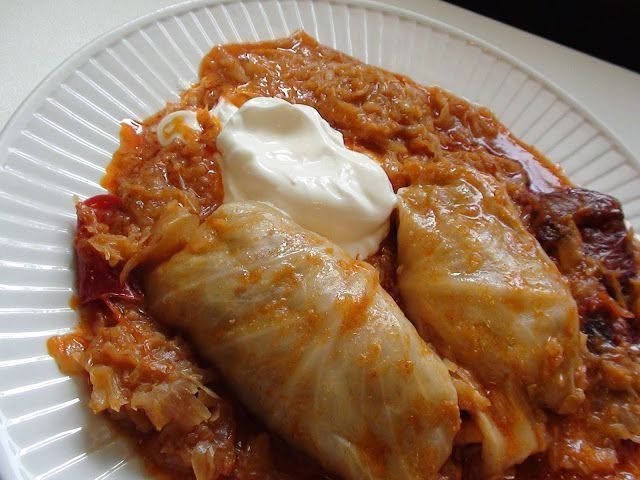
To serve, place 1 or 2 rolls on a plate, spoon over plenty of the tangy sauerkraut and sauce, and add a piece of the smoked sausage.
Top with a generous dollop of cold sour cream and a sprinkle of fresh dill. Serve with thick slices of crusty bread to mop up the sauce!
💡 Troubleshooting & Pro-Tips for the Perfect Bite
My cabbage leaves are breaking when I roll them! 🥬 If they are tearing, they aren’t soft enough. Boil them a minute or two longer. Also, always make sure you shave down that thick center rib; it’s the main culprit for tearing.
The rice is still crunchy after 2 hours. 🍚 This can happen if you used a long-grain rice or if the liquid evaporated too quickly. Make sure you use short-grain rice and that the pot is at a gentle simmer. If needed, add a splash of hot water and simmer for another 20 minutes.
The meat filling is dry. 🥩 This is usually caused by using extra-lean meat. Don’t be afraid of fat! A blend with good fat content (like pork shoulder) bastes the rice from the inside as it cooks.
Can I make this in a slow cooker? 🍲 Absolutely! Assemble the pot as directed (browning the onions and making the sauce on the stove first), then transfer everything to a slow cooker. Cook on LOW for 6-8 hours.
Why is it better the next day? 😋 Like many stews, the flavors deepen overnight in the fridge. The sauerkraut gets milder, and the paprika melds perfectly with the meat juices. It makes incredible leftovers!
Final Thoughts
Hungarian Stuffed Cabbage Rolls are a testament to the magic of slow cooking and humble ingredients. The tangy, smoky flavor of the sauerkraut paired with the rich, paprika-spiced meat and that creamy dollop of sour cream is a flavor combination that will leave you speechless.
It might not take exactly 5 minutes, but the “melt in your mouth at the first bite” promise is 100% guaranteed.