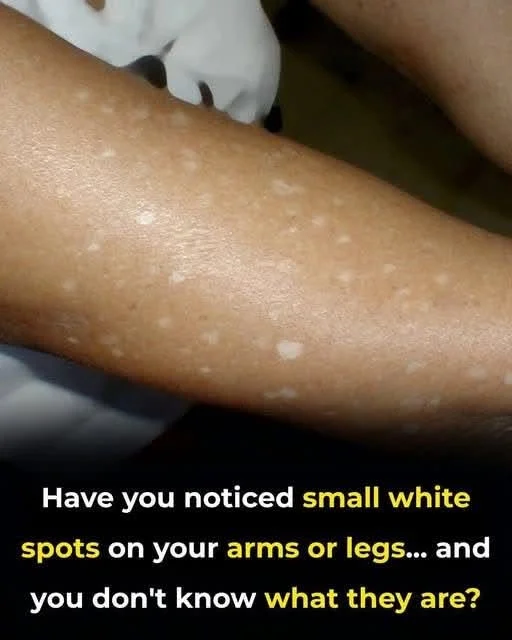
Age spots, also known as solar lentigines or sun spots…
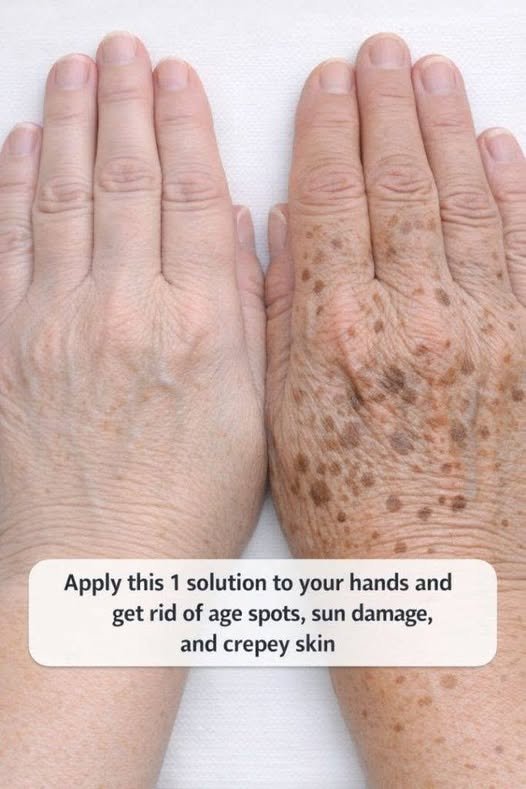
Age spots, also known as solar lentigines or sun spots, are flat, brown, gray, or black areas of hyperpigmentation. They typically appear on areas most exposed to the sun, such as the back of the hands, face, and shoulders. They are most common in adults over 50, but they can develop earlier in people who spend significant time outdoors.
The root cause is cumulative ultraviolet (UV) exposure. Over the years, UV radiation damages skin cells and triggers an overproduction of melanin, the pigment that gives skin its color. This melanin clumps together to form these visible spots. Because the pigment is embedded within the skin’s layers, removing it is a gradual process, not a momentary one.
Why the “3-Minute” Claim Is Misleading
The claim that a home remedy can diminish age spots in minutes is a classic example of clickbait. Several factors explain why the image is not a realistic representation of what any kitchen ingredient can do:
The Biological Timeline: For a topical treatment to fade hyperpigmentation, it must either inhibit melanin production or accelerate the turnover of pigmented cells. Both processes take weeks to months, not minutes. No safe household ingredient can break down pigment in three minutes.
The Visual Deception: The “after” photo may use different lighting, camera angles, or filters. In some cases, the skin may simply be moisturized, which temporarily plumps the skin and makes it look more even. The images could also be digitally altered.
The “0 Effort” Myth: Even legitimate treatments, such as prescription retinoids or hydroquinone, require consistent daily application for months. There is no “zero effort” solution that provides dramatic results.
What Actually Fades Age Spots
If you want to address age spots, the approach must be evidence-based and patient. Dermatologists recommend a combination of prevention and targeted treatment:
1. Sun Protection Is Non-Negotiable The most important step is to prevent new spots and stop existing ones from darkening. Use a broad-spectrum sunscreen with an SPF of 30 or higher daily, even on cloudy days. Wear protective clothing and seek shade during peak sun hours.
2. Topical Treatments (Over Weeks to Months) Over-the-counter and prescription creams can gradually fade age spots. Look for ingredients like:
Retinoids: Vitamin A derivatives that help accelerate cell turnover and fade pigmentation.
Vitamin C and Niacinamide: Antioxidants that can help inhibit melanin production.
Alpha Hydroxy Acids (AHAs): These gently exfoliate the skin, helping to shed pigmented cells.
Hydroquinone: A prescription-strength pigment inhibitor (available in lower concentrations over the counter in some regions).
3. Professional Procedures For faster or more dramatic results, dermatologists offer treatments such as laser therapy, intense pulsed light (IPL), cryotherapy (freezing the spots), and chemical peels. These procedures are performed in a clinical setting and should be discussed with a qualified professional.
The Bottom Line
The “3-minute trick” is not supported by science. While some home remedies, such as applying aloe vera or apple cider vinegar, may have mild soothing properties, they are not proven to remove age spots and can sometimes irritate the skin. The safest and most effective path is to consult a dermatologist. They can recommend a treatment plan tailored to your skin type and help you set realistic expectations. Healthy, even-toned skin is a long-term investment, not a three-minute trick.