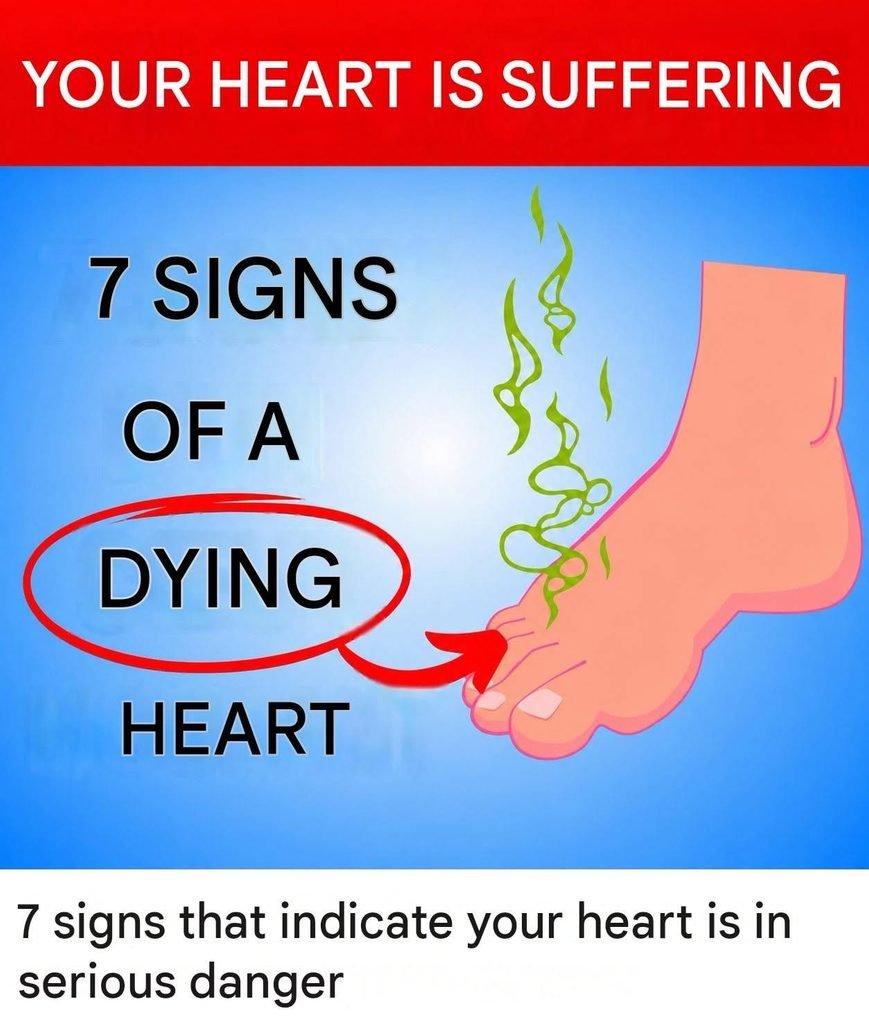
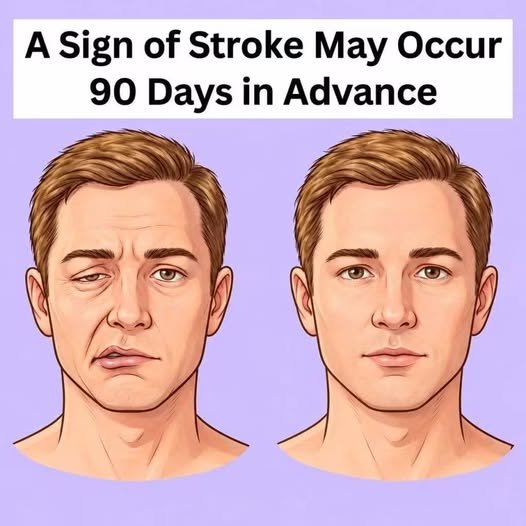
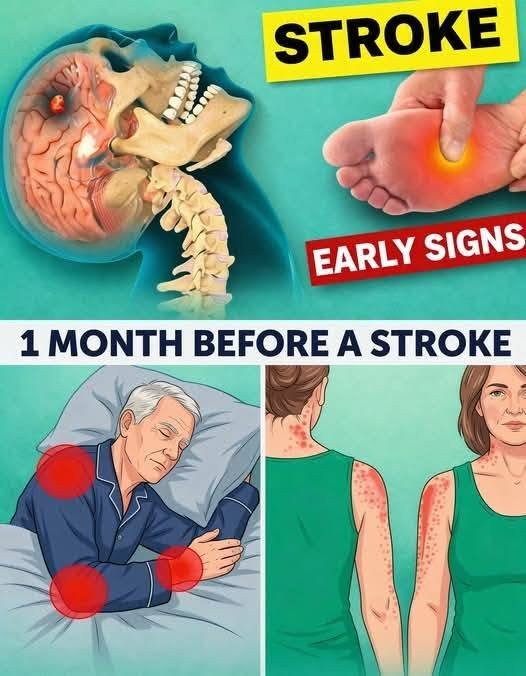
The image above features a red banner reading “YOUR HEART IS SUFFERING” and lists “7 SIGNS OF A DYING HEART,” illustrated with a foot and wavy green lines. The text below states: “7 signs that indicate your heart is in serious danger.”
While the language in the image is alarming and the illustration is not a medical diagram, the underlying message—that the body can show warning signs of heart problems—is worth discussing. Recognizing potential symptoms early is important for seeking timely medical care. However, it is essential to approach such lists with a balanced perspective and not to self-diagnose.
Here are seven symptoms that can be associated with heart issues, along with the context you need to understand them.
1. Chest Pain or Discomfort
Chest pain, pressure, or tightness is the most well-known sign of a heart attack. However, it is important to note that not everyone experiences chest pain, and the discomfort can vary from a mild ache to a severe, crushing sensation.
2. Shortness of Breath
Difficulty breathing or feeling winded after minimal exertion can be a sign that the heart is not pumping efficiently. This can occur with or without chest discomfort.
3. Swelling in the Legs and Feet
Swelling in the lower legs, ankles, or feet (edema) can indicate that the heart is not pumping blood effectively, causing fluid to pool in the tissues. This is a common symptom of heart failure, but it can also have other causes, such as kidney or liver issues.
4. Fatigue
Unexplained, persistent fatigue, especially if it is new or accompanied by other symptoms, can be a sign of heart trouble. Women, in particular, may experience fatigue as a primary symptom of a heart attack.
5. Dizziness or Lightheadedness
Feeling dizzy or faint can be related to a drop in blood pressure or a problem with the heart’s rhythm. It should be evaluated by a doctor, especially if it occurs frequently.
6. Changes in Skin Color or Temperature
The illustration in the image shows a foot with wavy lines, which may represent a sensation of coldness or a change in skin color. Reduced blood flow to the extremities can cause the skin to feel cool or appear pale or bluish. While this can have many causes, it is worth mentioning to a doctor if it is persistent.
7. Palpitations
A feeling of a racing, fluttering, or pounding heart can be a sign of an arrhythmia. While occasional palpitations are often harmless, they should be checked by a medical professional if they are frequent or accompanied by other symptoms.
The Importance of Medical Evaluation
The symptoms listed above can have many causes, ranging from minor to serious. They are not definitive proof of a heart problem, and they should not be used for self-diagnosis. The most important step is to consult a healthcare professional if you experience any of these symptoms, especially if they are new, persistent, or severe.
If you experience chest pain, severe shortness of breath, or fainting, seek emergency medical help immediately.
Conclusion
Paying attention to your body’s signals is important, but it is equally important to rely on professional medical advice. If you are concerned about your heart health, schedule an appointment with your doctor. They can perform a proper evaluation and provide personalized guidance.