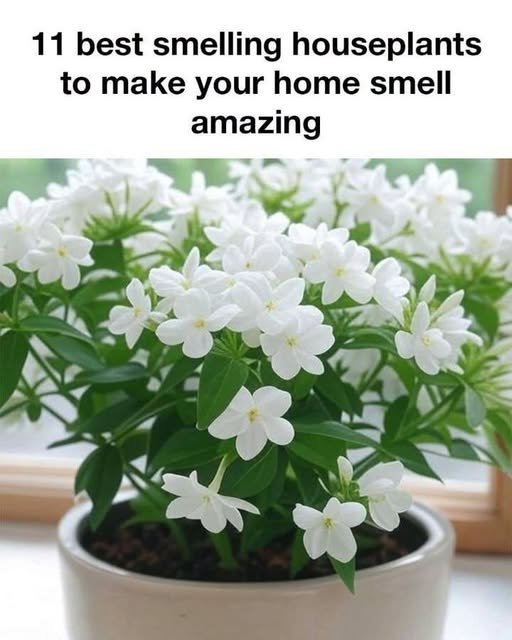
11 Best Smelling Houseplants to Make Your Home Smell Amazing
There is nothing quite like the feeling of walking into a room and being greeted by a wave of natural, intoxicating fragrance. In our modern lives, we often rely on synthetic air fresheners, scented candles, and plug-in diffusers to keep our homes smelling fresh. However, these artificial options can contain harmful volatile organic compounds (VOCs), trigger allergies, and often mask odors rather than eliminating them. The alternative? Bringing nature’s most potent perfumes directly into your living space with fragrant houseplants.
A viral social media image recently captured the imagination of plant lovers everywhere, showcasing a lush, thriving plant covered in delicate, star-shaped white flowers. The text read, “11 best smelling houseplants to make your home smell amazing.” The plant in the image, a stunning Jasmine, is just the tip of the iceberg when it comes to the extraordinary olfactory arsenal available to indoor gardeners.
Fragrant houseplants do more than just perfume the air; they connect us to nature, reduce stress, and actively improve indoor air quality. However, not all houseplants are created equal when it comes to scent, and many require specific care to coax out their aromatic potential.
In Part 1 of this comprehensive guide, we will explore the science of plant fragrance, the psychological benefits of natural scents, and introduce you to the first six of these incredible plants, complete with detailed care guides to ensure they thrive in your home.
The Science and Psychology of Plant Fragrance
Before we delve into the specific plants, it helps to understand why plants smell the way they do and how those scents interact with the human brain.
The Biological Purpose of Scent
Plants produce volatile organic compounds (VOCs)—essential oils—for a variety of evolutionary reasons. Primarily, these fragrances are designed to attract pollinators like bees, butterflies, and moths. The specific blend of chemicals—such as terpenes, esters, and aldehydes—acts as a beacon, guiding insects to the nectar within the flowers. Some scents are also produced to repel pests or to inhibit the growth of competing plants. When we bring these plants indoors, we get to “borrow” these potent evolutionary tools.
The Psychology of Natural Aromatherapy
Our sense of smell is directly linked to the limbic system, the part of the brain responsible for memory and emotion. This is why a specific scent can instantly transport you back to a childhood memory or immediately make you feel calm. Unlike synthetic fragrances, which can be harsh and overwhelming, the scent of a living plant is often subtle, complex, and evolving. Studies have shown that certain plant aromas—like lavender and jasmine—can lower heart rates, reduce cortisol (stress hormone) levels, and promote a sense of well-being.
1. Jasmine (Jasminum polyanthum)
The plant featured in the viral image is likely a Pink Jasmine (Jasminum polyanthum), a vigorous climbing vine beloved for its spectacular display of pink-tinged buds that open into pure white, star-shaped flowers.
The Scent Profile
Jasmine is considered by many to be the king of floral fragrances. Its scent is intoxicating, rich, sweet, and slightly fruity. It is the foundation of some of the world’s most famous perfumes. The fragrance is strongest in the evening, making it a perfect plant for a bedroom or living area where you spend time in the evening.
Care Guide
Light: Jasmine requires bright, direct sunlight for at least 6 hours a day to produce abundant blooms. A sunny south-facing window is ideal.
Water: Keep the soil consistently moist but not waterlogged. Reduce watering slightly in the winter.
Temperature: They prefer cool to moderate temperatures (60-75°F / 15-24°C) and benefit from a drop in temperature at night to encourage blooming.
Care Tip: Jasmine is a climber, so provide it with a trellis or hoop to grow on. Prune it after flowering to maintain its shape and encourage new growth.
2. Lavender (Lavandula)
Lavender is perhaps the most universally recognized and beloved fragrant plant. While it is famous for growing in sunny, dry Mediterranean fields, it can absolutely be grown indoors with the right conditions.
The Scent Profile
The scent of lavender is herbaceous, floral, and slightly woody. It is deeply associated with relaxation, sleep, and stress relief. Placing a lavender plant in your bedroom can create a calming atmosphere that promotes restful sleep.
Care Guide
Light: Lavender is a full-sun plant. Indoors, it needs the brightest spot you can find, such as a sunny windowsill.
Water: The number one killer of indoor lavender is overwatering. Allow the soil to dry out completely between waterings. Use a terracotta pot and a fast-draining cactus mix to prevent root rot.
Airflow: Lavender needs good air circulation. Do not crowd it with other plants.
Care Tip: English lavender (Lavandula angustifolia) varieties like ‘Munstead’ or ‘Hidcote’ are the most fragrant and best suited for containers.
3. Gardenia (Gardenia jasminoides)
Gardenias are often referred to as the “Queen of Fragrance.” They are notoriously finicky plants, but their breathtaking beauty and incredible scent make the effort worthwhile for dedicated plant parents.
The Scent Profile
The gardenia’s scent is creamy, rich, and intensely floral, with notes of vanilla and citrus. A single blooming gardenia can perfume an entire room. It is a scent often described as classic, elegant, and romantic.
Care Guide
Light: Gardenias need bright, indirect light. Too much direct sun can scorch the leaves, but too little light will prevent blooming.
Water: They are highly sensitive to water quality. Use filtered, distilled, or rainwater, and keep the soil consistently moist but not soggy.
Humidity: Gardenias demand high humidity. Place the pot on a pebble tray filled with water or use a humidifier nearby.
Care Tip: These plants are prone to dropping buds if moved or exposed to drafts. Find a stable, warm spot for them and leave them be.
4. Lemon Tree (Citrus limon)
There is something incredibly refreshing about a dwarf lemon tree in the home. Beyond the joy of having fresh citrus on hand, the leaves and blossoms offer a vibrant, energizing fragrance that can instantly uplift your mood.
The Scent Profile
The scent of a lemon tree in bloom is bright, sharp, and citrusy, with a slightly sweet undertone from the blossoms. Even the leaves, when rubbed, release a clean, zesty aroma. It is an excellent scent for a home office or kitchen.
Care Guide
Light: Citrus trees require full sun. Place them in your sunniest window.
Water: Water deeply when the top inch of soil feels dry. Citrus trees need well-draining soil and pots with drainage holes.
Temperature: They prefer warm temperatures (65-85°F / 18-29°C) and hate cold drafts.
Care Tip: Dwarf varieties like the Meyer Lemon are the best choice for indoors. They are self-pollinating, but gently shaking the blossoms can help increase fruit production.
5. Hoya (Hoya spp.)
The Hoya, or Wax Plant, is an incredibly underrated houseplant. While it is primarily grown for its thick, waxy leaves and unique trailing habit, its flowers are a hidden treasure.
The Scent Profile
Hoya flowers often emit a strong, sweet, and complex scent. Depending on the variety, the fragrance can range from a chocolate or caramel aroma to a citrusy, floral perfume. The scent is most intense in the evening or at night, as it evolved to attract nocturnal moths.
Care Guide
Light: Bright, indirect light is best. Some morning sun is beneficial.
Water: Like orchids, Hoyas are epiphytes. They need a very well-draining, chunky soil mix (like orchid bark mixed with potting soil). Let the soil dry completely between waterings.
Care Tip: Never cut off the long, bare stalks (spurs) that the flowers grow from. If you cut them off, the plant will not bloom there again. Keep them!
6. Rosemary (Salvia rosmarinus)
Rosemary is a versatile herb that serves double duty: it is a culinary delight and an aromatic powerhouse. Bringing a rosemary topiary indoors is a great way to add both elegance and fragrance to your home.
The Scent Profile
Rosemary has a strong, woody, pine-like, and slightly minty scent. It is refreshing and invigorating, often associated with focus and memory (there is a long history of rosemary being used for mental clarity).
Care Guide
Light: Rosemary needs full, direct sunlight. At least 6-8 hours a day.
Water: Allow the soil to dry out almost completely before watering. Rosemary is highly susceptible to root rot.
Humidity: Unlike many tropical houseplants, rosemary prefers lower humidity and good air circulation.
Care Tip: If growing indoors, prune it regularly to maintain its shape and prevent it from getting too leggy. Use the pruned pieces in your cooking!
(End of Part 1. Continue to Part 2 to discover the remaining five fragrant houseplants, learn how to maximize their scent indoors, and understand crucial safety rules for pets and children.)