Why Washing Broccoli with Just Water is Wrong (And the Right Way to Do It)
Meta Description: Think a quick rinse is enough for your broccoli? Think again. Discover the hidden bugs hiding in your veggies and the simple kitchen hack to clean them perfectly.
Introduction
Broccoli is a nutritional powerhouse, packed with fiber, vitamins, and antioxidants. It’s a staple in healthy kitchens everywhere. But if you are just rinsing your broccoli under the tap before cooking it, you might be serving up more than just vegetables.
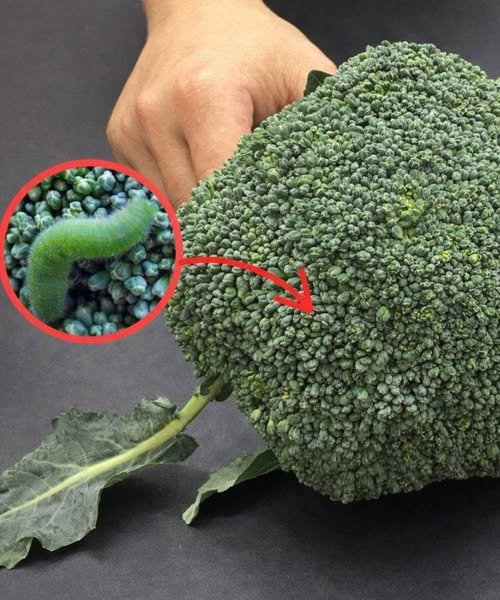
As the image above highlights, broccoli florets are dense, tight clusters that provide the perfect hiding spot for dirt, pesticides, and—most notoriously—tiny green bugs. A simple splash of water often isn’t enough to dislodge these unwanted guests.
Here is the factual breakdown of why water alone fails, and the “correct” methods to ensure your broccoli is truly clean and safe to eat.
The Problem: Why Water Isn’t Enough
Broccoli (along with cauliflower and cabbage) belongs to the brassica family. These vegetables grow in tight, tree-like structures called florets.
The Camouflage: The most common pests found in broccoli are Cabbage Loopers (the green caterpillar shown in the image) and Aphids. Because they are the exact same shade of green as the vegetable, they are nearly impossible to see with the naked eye.
The Trap: The florets are so tight that water pressure from a faucet often just bounces off the top layer. It doesn’t penetrate deep enough to flush out bugs or dirt trapped in the center.
The Pesticides: Broccoli is often treated with pesticides to protect it from these very bugs. Water alone does not effectively remove chemical residues.
The “Correct” Way: The Salt Water Soak
The most effective, natural way to clean broccoli and force hidden bugs out is using a salt water bath. This method relies on osmosis; the salt irritates the bugs and forces them to detach and float to the surface.
What You Need:
A large bowl or clean sink
Cold water
1 to 2 tablespoons of salt (sea salt or table salt works)
(Optional) 1/2 cup of white vinegar
Step-by-Step Instructions:
1. Cut the Florets Do not try to wash the whole head at once. Use a knife to cut the broccoli into smaller, bite-sized florets. This exposes the inner areas where bugs hide. Don’t throw away the stem! Peel the tough outer layer and chop the inside—it’s delicious.
2. The Soak Fill your bowl with cold water and dissolve the salt (and vinegar, if using) into it. Submerge the broccoli florets completely.
3. Wait Let the broccoli sit for 10 to 15 minutes.
What happens: During this time, any hidden caterpillars or aphids will detach from the florets and float to the top of the water. You might also see dirt and debris settle at the bottom.
4. The Rinse Remove the broccoli from the water (don’t pour the water over the broccoli, or you’ll just pour the dirt back on). Rinse the florets thoroughly under cold running water to remove the salt and any remaining debris.
5. Dry Pat the broccoli dry with a clean kitchen towel or use a salad spinner before cooking. This ensures it roasts or steams properly rather than getting soggy.
Alternative Method: The Baking Soda Bath
If your primary concern is removing pesticide residue rather than bugs, baking soda is your best friend.
The Mix: Add 1 teaspoon of baking soda to a bowl of water.
The Science: A study published in the Journal of Agricultural and Food Chemistry found that soaking produce in a baking soda solution was more effective at removing certain pesticide residues than tap water or bleach solutions.
The Process: Soak for 12-15 minutes, then rinse thoroughly.
Conclusion
While finding a worm in your broccoli is gross, it is actually a sign of fresh produce! However, nobody wants to eat them. By skipping the quick rinse and taking 15 minutes to soak your broccoli in salt water or a baking soda solution, you can ensure your vegetables are crisp, clean, and completely bug-free.