What Is the Tiny Hole in a Nail Clipper Actually For?
Nail clippers are a common household tool that many of us use without a second thought. However, a recent social media post has sparked curiosity by asking a simple question: what is that tiny hole at the end of a nail clipper actually for?
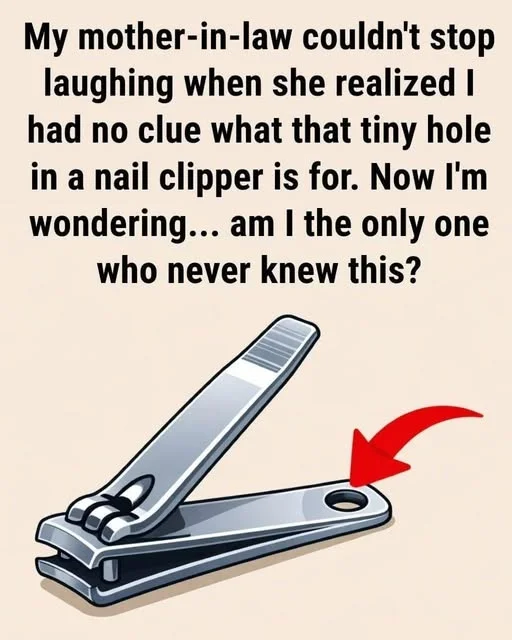
The post describes a situation where a mother-in-law laughed upon realizing the person had no idea what the hole was for, prompting the question, “Am I the only one who never knew this?” It turns out that this small feature has several practical purposes that many people overlook.
The Primary Function: A Nail Catcher
The most commonly cited purpose of the hole is to catch clippings. When you clip your nails, the curved shape of the clipper can cause the clippings to fly off in unpredictable directions. The hole acts as a small reservoir, trapping the clippings inside the clipper rather than letting them scatter across the floor or sink. This makes cleanup much easier and prevents stray clippings from making a mess.
A Hanging Loop
Another practical use for the hole is for storage. The hole allows you to thread the nail clipper onto a keyring, a hook, or a small chain. This is especially useful for people who like to keep their nail clippers in a specific place, such as on a bathroom hook or attached to a travel bag, so they do not get lost.
A Leverage Point
Some people also use the hole as a leverage point. By inserting a small tool, such as a pin or a paperclip, into the hole, you can sometimes gain extra leverage to open a stiff clipper or to help position your fingers more comfortably while clipping.
Why the Confusion Exists
Despite these practical uses, many people have never considered the purpose of the hole. This is likely because nail clippers are such a familiar object that we rarely stop to examine their design details. The hole is a small, subtle feature that serves its purpose quietly, without drawing attention to itself.
Conclusion
The tiny hole in a nail clipper is a simple but clever design element that serves multiple purposes: catching clippings, providing a hanging option, and offering a leverage point. It is a reminder that even the most ordinary objects often have thoughtful details that we may not notice until someone points them out.