What Is The Normal Blood Pressure For Each Age? Understanding the Dynamic Nature of Your Cardiovascular System
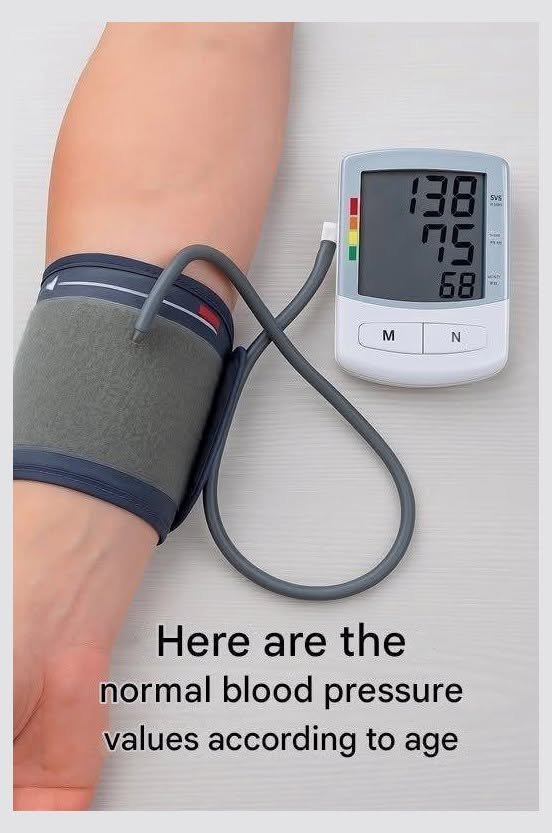
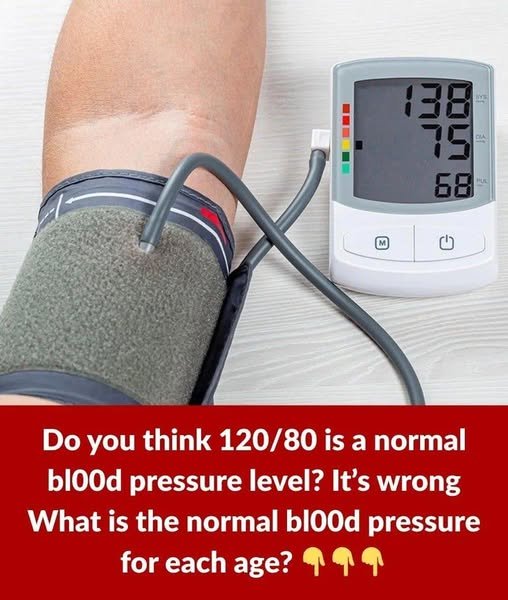
The assertion in the image—that 120/80 isn’t the universal truth—does not mean that 120/80 is bad. It simply means that the human body is dynamic, not mechanical. Our arteries stiffen, our hormones shift, and our hearts adapt to the passage of time. Therefore, evaluating your blood pressure requires looking through the lens of your age, your overall health profile, and your body’s unique physiological makeup.
This comprehensive guide will decode the mystery of blood pressure across the lifespan. We will break down exactly what the numbers mean, explore how and why they change as we age, analyze the reading in the image, discuss the dangers of over-treatment in seniors, and provide the essential strategies for maintaining healthy blood pressure at every stage of life.
The Basics: Understanding Your Blood Pressure Readings
Before diving into the age-specific numbers, it is essential to understand exactly what the monitor is telling you. Blood pressure is the force exerted by circulating blood against the walls of your blood vessels. It is measured using a sphygmomanometer (the cuff) and is expressed in two distinct numbers, measured in millimeters of mercury (mmHg).
The Systolic Number (The Top Number)
The top, higher number is the systolic pressure. It represents the maximum pressure in your arteries when your heart contracts and pumps blood out into the body. This number is heavily influenced by the elasticity of your arteries. When you are young, your arteries are flexible and expand easily to accommodate the surge of blood. As you age, the arteries become stiffer, which causes the systolic pressure to rise significantly.
The Diastolic Number (The Bottom Number)
The bottom, lower number is the diastolic pressure. It measures the pressure in your arteries when your heart is relaxing and filling with blood between beats. This number reflects the resistance in the blood vessels. A high diastolic number indicates that the blood vessels are constricted and not relaxing properly.
The Pulse (Heart Rate)
The third number on the monitor (54 in the image) is the pulse or heart rate. This measures the number of times your heart beats per minute. A resting heart rate of 54 is generally considered healthy for an adult (the normal range is 60-100, but athletes and healthy older adults often have resting rates in the 50s). It is a separate metric from blood pressure but provides valuable context about your cardiovascular fitness.
The Fallacy of the Universal 120/80 Rule
The American Heart Association (AHA) and the American College of Cardiology (ACC) define normal blood pressure as less than 120/80 mmHg. This is a universally recognized benchmark for optimal health, particularly for younger adults.
However, treating 120/80 as a universal rule for every single person, regardless of age or frailty, is where the confusion and potential danger lie. The guidelines are primarily based on large-scale epidemiological studies that focus on the general adult population, often skewing towards younger to middle-aged adults.
The idea that an 85-year-old must strictly maintain a 120/80 reading to be healthy is not only misguided but can sometimes be dangerous. Overly aggressive blood pressure lowering in the elderly can lead to severe dizziness, falls, and compromised blood flow to vital organs. The body’s baseline shifts as the decades pass.
The Age-by-Age Breakdown: What is Normal?
To understand what your specific numbers mean, you must look at them in the context of your age. Here is a comprehensive breakdown of how blood pressure norms shift across the human lifespan.
1. Children and Teenagers (Ages 3 to 18)
Blood pressure in children is not measured using fixed adult numbers. Instead, it is evaluated using percentiles based on the child’s age, sex, and height.
Normal: A reading below the 90th percentile for a child of that specific age, sex, and height.
Elevated: A reading between the 90th and 95th percentiles.
Hypertension: A reading consistently at or above the 95th percentile. For teenagers, as they approach adulthood, the numbers begin to align more closely with adult guidelines. A normal reading for a 16-year-old is typically around 110-120 systolic and 60-75 diastolic.
2. Young Adults (Ages 19 to 40)
This is the age bracket where the 120/80 rule is most strictly applicable. In young, healthy adults, the blood vessels are flexible, and the cardiovascular system is highly efficient.