What Happens to the Body After Gallbladder Removal? Understanding Digestive Changes, Potential Complications, and When Surgery Is Truly Necessary
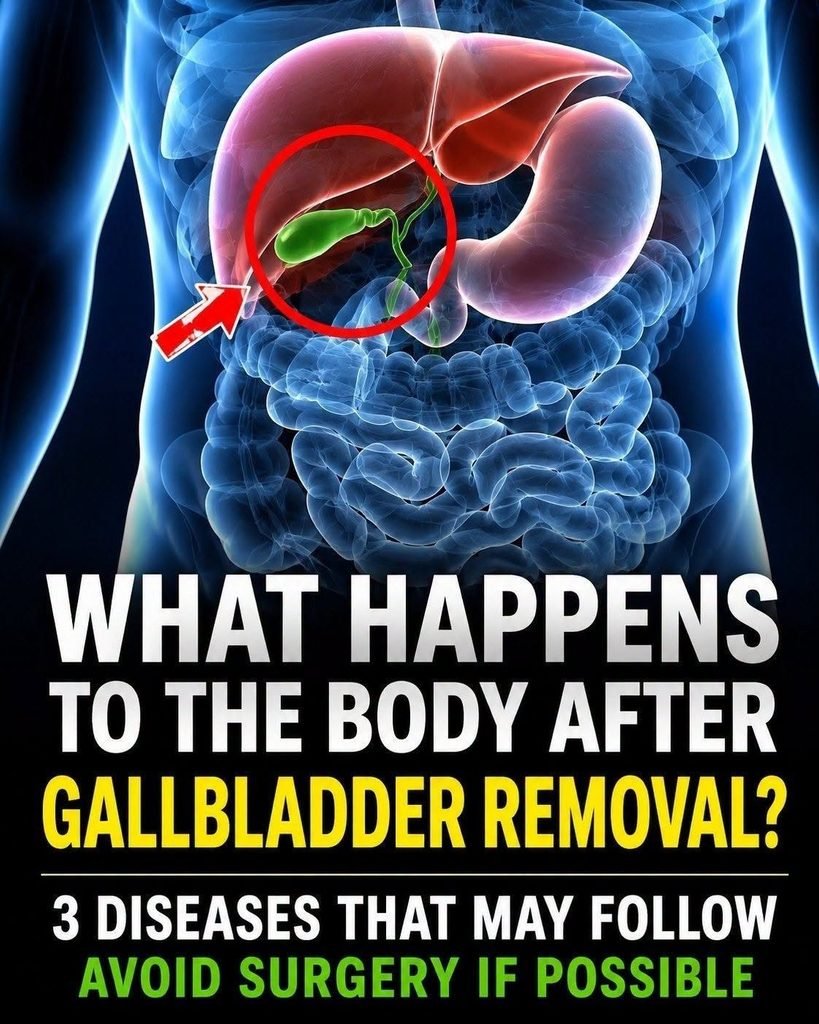
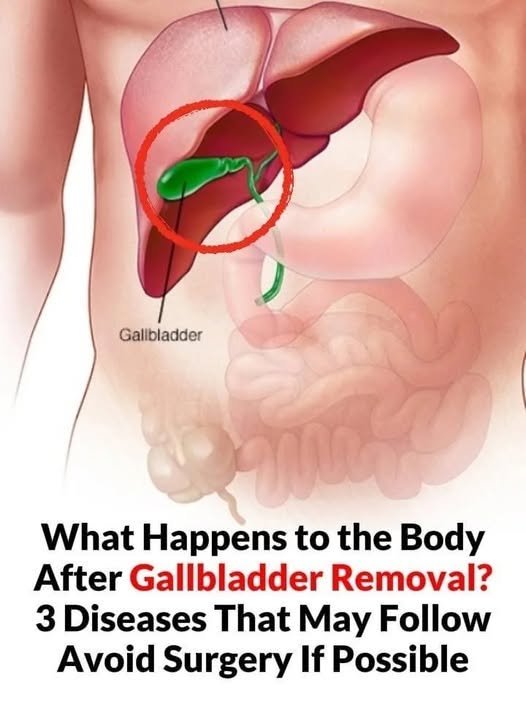
The image is striking: a translucent human torso glows in cool blue light while the liver and surrounding organs stand out in vivid red and pink. A bright green gallbladder sits highlighted inside a red circle, with a bold arrow pointing directly at it. Below, the text asks a question many patients eventually face—What happens to the body after gallbladder removal?—and warns of three diseases that may follow, urging readers to avoid surgery if possible. That visual captures both the anatomical reality and the anxiety surrounding one of the most common abdominal operations performed worldwide.
Gallbladder removal, or cholecystectomy, is typically recommended for symptomatic gallstones, inflammation (cholecystitis), or related complications. The gallbladder itself is a small, pear-shaped organ that stores and concentrates bile produced by the liver. When you eat, especially fatty foods, it releases a concentrated dose of bile into the small intestine to help emulsify fats. Once the organ is removed, bile flows continuously and in a less concentrated form directly from the liver into the intestine. Most people adapt and live normal, healthy lives. Yet a meaningful minority experience ongoing digestive changes, and research has identified associations with certain longer-term conditions.
This article examines the biological mechanisms behind those changes, the evidence for potential complications often discussed in patient communities, and the practical realities of life without a gallbladder. It also addresses the important question of when surgery is clearly indicated versus when more conservative approaches may be reasonable. The goal is not to alarm, but to equip readers with accurate, nuanced information so they can have better conversations with their doctors.
How the Digestive System Adapts Without a Gallbladder