What Happens to the Body After Gallbladder Removal? The 3 Diseases That May Follow and How to Protect Yourself
Introduction: The Hidden Consequences of a Routine Surgery
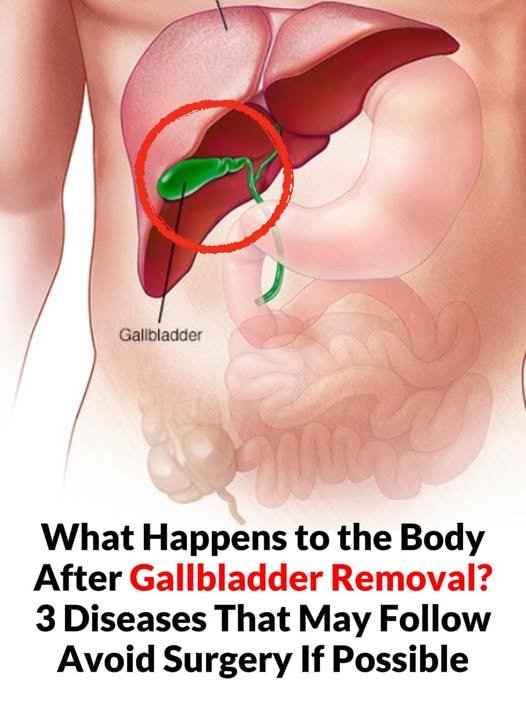
The image presents a stark, anatomically precise view of the human digestive system. A bright red circle highlights the gallbladder—a small, pear-shaped organ nestled beneath the liver, connected to the intricate network of bile ducts and the small intestine. The bold text below issues a provocative warning: “What Happens to the Body After Gallbladder Removal? 3 Diseases That May Follow – Avoid Surgery If Possible.”
For the nearly one million Americans who undergo a cholecystectomy (gallbladder removal) every year, this message challenges the conventional medical narrative that the surgery is a simple, consequence-free solution to painful gallstones. For decades, patients have been told that the gallbladder is a “spare part”—an organ that can be removed without any lasting impact on digestion or overall health.
While it is true that humans can live without a gallbladder, the organ is far from useless. It plays a critical, highly specialized role in the digestive process. When it is removed, the body’s entire metabolic landscape changes. Bile, which was once stored and released in precise, concentrated bursts to digest fatty meals, now drips continuously into the intestines.
This seemingly small alteration can trigger a cascade of physiological adjustments that, for a significant percentage of patients, lead to long-term gastrointestinal and metabolic challenges. This comprehensive two-part guide will explore exactly what happens to the body post-surgery. We will delve into the three specific diseases that research has linked to gallbladder removal, analyze the claim to “avoid surgery if possible,” and provide actionable strategies for protecting your health.