Traditional Hungarian Palacsinta Recipe: Thin, Sweet & Melt-in-Your-Mouth Crepes 🇭🇺🥞
. INTRODUCTION ✨
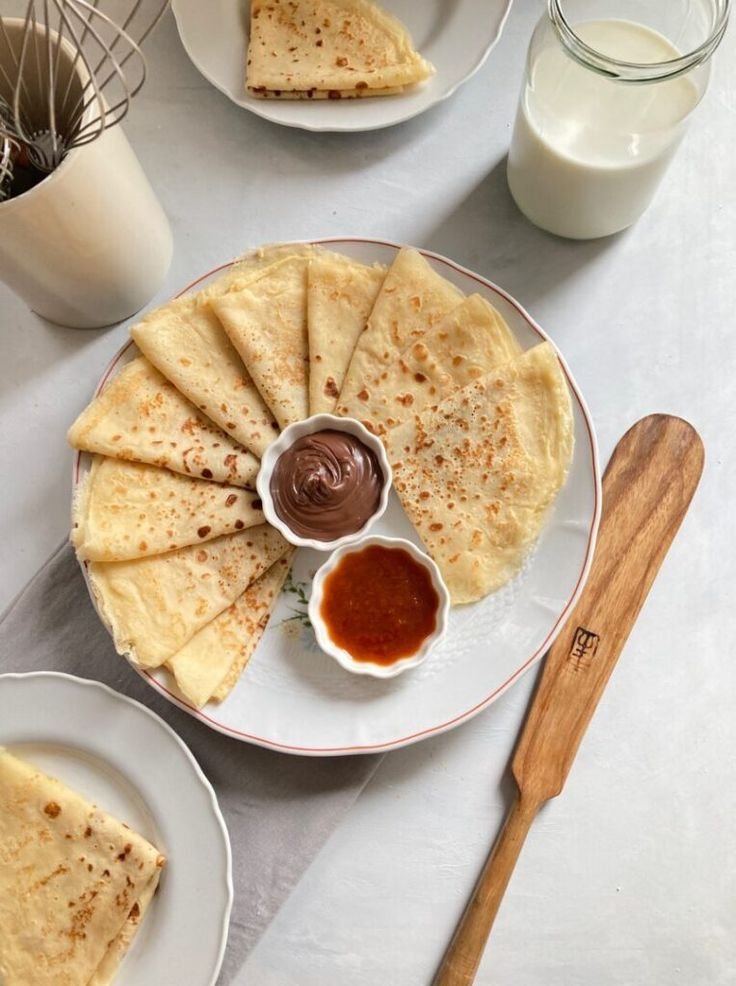
There is a certain magic in a dish that is both incredibly simple and profoundly comforting. Enter the Hungarian Palacsinta (pronounced pah-lah-CHEEN-tah), a traditional sweet crepe that holds a beloved place in every Hungarian household. Unlike thick, fluffy American pancakes, these are paper-thin, delicate, and slightly elastic, designed specifically to wrap around your favorite sweet fillings. They truly melt in your mouth at the very first bite, offering a tender texture that pairs perfectly with a dusting of powdered sugar or a spoonful of warm apricot jam. 🥞
While you might be familiar with French crepes, Hungarian Palacsinta has its own distinct character and cultural significance. They are the quintessential Sunday afternoon treat, a staple at family gatherings, and a nostalgic taste of childhood for millions. The beauty of this recipe lies in its accessibility; it requires only a handful of basic pantry ingredients—flour, milk, eggs, and a pinch of sugar—yet yields an elegant and satisfying dessert.
In this comprehensive guide, we will walk you through the exact techniques used in Hungarian kitchens to achieve that elusive, paper-thin consistency. We will explore the “secret” ingredient that gives them their signature lightness, discuss traditional and modern fillings, and provide you with a foolproof, step-by-step method. Whether you are a seasoned baker or a complete beginner, these 5-minute crepes are simple to make and guaranteed to impress. Get ready to bring a taste of Central Europe into your home with this authentic Hungarian Palacsinta recipe. 🇭🇺💖
D. RECIPE OVERVIEW ⏱️
Preparation Time: 10 minutes
Resting Time: 30 minutes
Cooking Time: 20–25 minutes (approx. 1 minute per crepe)
Total Time: 1 hour
Number of Servings: 4–6 people (Yields about 12–16 crepes depending on pan size)
Difficulty Level: Easy
Cooking Method: Pan-frying (Skillet)
Cuisine: Hungarian / Central European
Course: Dessert, Breakfast, or Snack
Estimated Calories per Serving: Approximately 120–150 calories per plain crepe (excluding fillings).
Note: Nutritional values are estimates and will vary based on specific ingredients, portion sizes, and the chosen fillings.
E. WHAT IS HUNGARIAN PALACSINTA? 🇭🇺
To understand Palacsinta is to understand a cornerstone of Hungarian culinary culture. While often compared to French crepes or Russian blini, Palacsinta has a unique place at the Hungarian table. It is a thin, sweet pancake made from a liquid batter of flour, eggs, and milk, cooked quickly in a hot, lightly greased skillet.
The Role of Palacsinta in Hungarian Cuisine
In Hungary, Palacsinta is an incredibly versatile dish. It is most commonly served as a dessert (desszert), but it can also appear as a main course when filled with savory ingredients. The sweet versions are the most famous globally, typically filled with sweet cottage cheese (túró), apricot or plum jam (lekvár), Nutella, or simply dusted with cinnamon sugar and cocoa powder.
What makes them distinctive is their texture. They are not meant to be crispy like a dosa, nor thick like a Scotch pancake. They should be soft, pliable, and slightly velvety, almost melting on the tongue. This is achieved by keeping the batter very thin and cooking them quickly over moderate heat.
Sweet vs. Savory
While this recipe focuses on the sweet, dessert-style batter (which includes a little sugar and vanilla), it’s worth noting the savory tradition. The most famous savory version is Hortobágyi Palacsinta, which features crepes folded over a rich, creamy, paprika-spiced minced meat filling and baked with a sour cream sauce. Another popular savory version is filled with sautéed mushrooms or a simple cheese mixture.
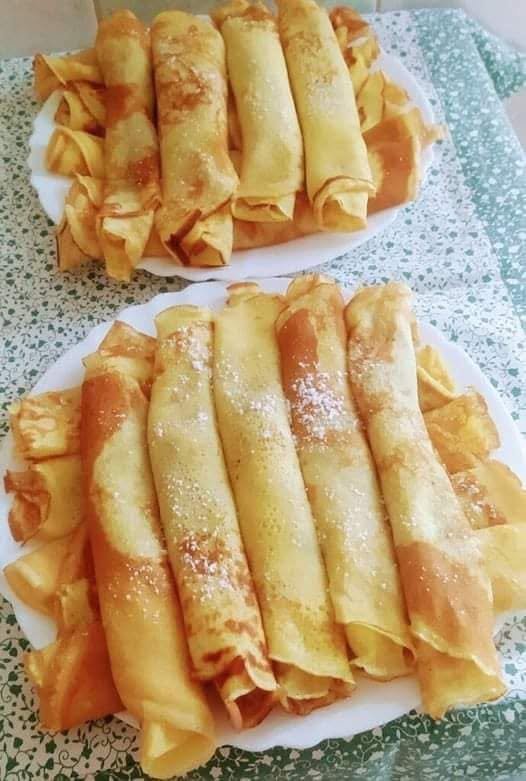
However, the image we are recreating today highlights the classic sweet preparation: beautifully golden, rolled crepes heavily dusted with powdered sugar. This is the ultimate comfort food, bridging the gap between a simple weekday snack and a festive holiday dessert.
F. INGREDIENTS YOU WILL NEED 🛒
To make the perfect Hungarian Palacsinta, accuracy in measuring is helpful, but the technique of mixing is where the magic happens. Here is exactly what you need:
For the Crepe Batter:
2 large eggs (room temperature is best for easier mixing)
2 cups (250g) all-purpose flour
2 cups (500ml) whole milk (plus a splash more if the batter is too thick)
1/2 cup (125ml) sparkling water or unflavored soda water(The secret ingredient for that melt-in-your-mouth lightness!)
2 tablespoons granulated sugar
1 pinch of salt (to balance the sweetness and strengthen the gluten)
2 tablespoons vegetable oil or melted butter (plus more for greasing the pan)
1 teaspoon vanilla extract (optional, but highly recommended for aroma)
For the Filling and Garnish (Suggestions):
Traditional Hungarian Túró (Sweet Cheese): 2 cups (400g) dry curd cottage cheese, mixed with 3 tbsp powdered sugar, 1 tsp vanilla, and the zest of 1 lemon.
Jam (Lekvár): Apricot, plum, or strawberry jam are traditional favorites.
Powdered Sugar (Confectioner’s Sugar): For generous dusting.
Cocoa Powder: For a classic chocolate dusting.
Ground Cinnamon: Often mixed with sugar for rolling.
G. CHOOSING THE BEST INGREDIENTS 🥚
The beauty of Palacsinta is that it uses humble ingredients, but the quality of those ingredients dictates the final result.
The Eggs: Use fresh, large eggs. They provide the structure and the necessary fat to keep the crepes tender. Allow them to sit at room temperature for about 15 minutes before mixing; this helps them incorporate smoothly into the batter without curdling the milk.
The Milk: Whole milk (3.25% fat) is highly recommended. Lower-fat milks can result in a slightly drier or less flavorful crepe. If you use plant-based milk, unsweetened almond or oat milk works best.
The Flour: Standard all-purpose flour is perfect. There is no need for bread flour (too much gluten) or cake flour (too little structure).
The Sparkling Water: This is a traditional Hungarian trick. The carbonation adds tiny air bubbles to the batter, making the crepes lighter and airier. If you don’t have it, you can substitute regular water or more milk, but you might lose a bit of that ethereal texture.
The Fat: Melted butter adds the best flavor, but vegetable oil keeps the crepes from sticking and adds a nice pliability. A mixture of both is ideal.
The Fillings: If using Túró, look for a dry-curd cottage cheese or farmer’s cheese. If using jam, opt for a high-fruit-content preserve (lekvár) rather than a sugary jelly.
H. KITCHEN EQUIPMENT 🍳
You do not need specialized equipment to make authentic Hungarian Palacsinta, but having the right tools makes the process much smoother:
Non-Stick Skillet or Crepe Pan: An 8-inch to 10-inch non-stick pan is essential. If you have a traditional flat crepe pan, even better. The low sides make it easier to swirl the batter.
Mixing Bowls: A large bowl for the wet ingredients and a medium bowl for the dry ingredients.
Whisk: A balloon whisk is best for breaking up lumps of flour and aerating the batter.
Ladle: A 1/4 cup or 1/3 cup ladle helps ensure uniform crepe sizes.
Spatula: A thin, flexible silicone or metal spatula is crucial for flipping the delicate crepes without tearing them.
Sifter (Optional): For dusting the powdered sugar evenly over the finished crepes.
I. STEP-BY-STEP COOKING INSTRUCTIONS 🥣
Follow these detailed instructions to achieve the perfect melt-in-your-mouth Hungarian Palacsinta.
Step 1: Prepare the Dry Ingredients In a medium mixing bowl, whisk together the 2 cups of all-purpose flour, 2 tablespoons of granulated sugar, and the pinch of salt. Whisking these together first ensures that the sugar and salt are evenly distributed throughout the flour.
Step 2: Whisk the Wet Ingredients In a separate large bowl, whisk the 2 large eggs and 2 tablespoons of oil (or melted butter) until well combined and slightly frothy.
Step 3: Combine Wet and Dry Gradually add half of the milk to the egg mixture. Then, slowly sift or add the dry flour mixture into the wet ingredients. Whisk continuously. The batter will be very thick at this stage. This method helps prevent lumps from forming.
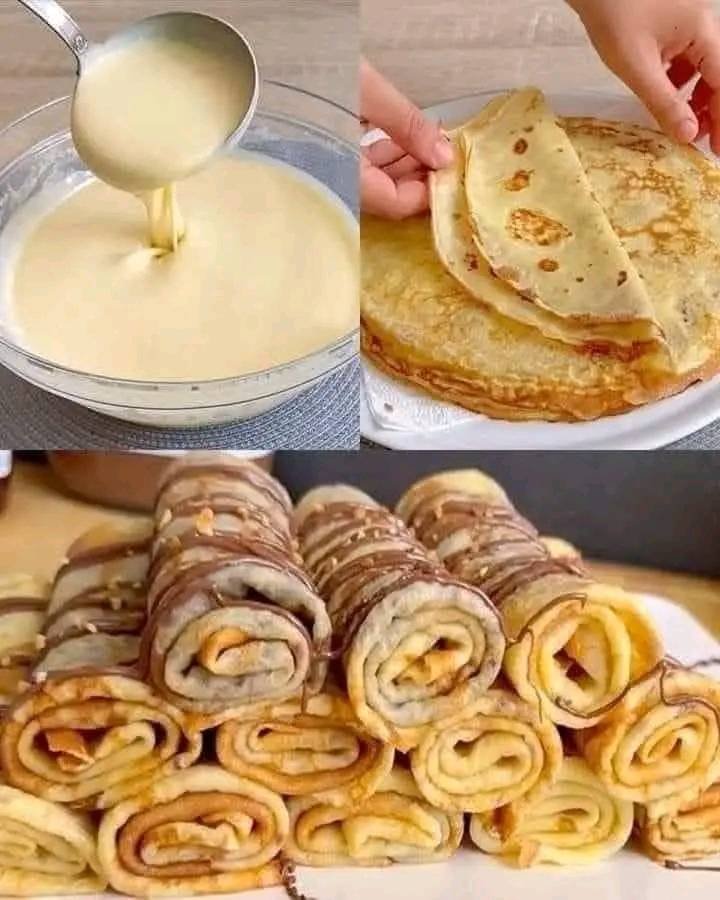
Step 4: Thin the Batter Pour in the remaining milk and the vanilla extract. Whisk until completely smooth. Finally, gently stir in the 1/2 cup of sparkling water. The batter should now be very thin—similar to the consistency of heavy cream. If it still looks like pancake batter, add a splash more milk until it runs easily off the whisk.
Step 5: The Crucial Resting Period Cover the bowl with a clean kitchen towel or plastic wrap and let the batter rest at room temperature for at least 30 minutes. This allows the flour to fully hydrate and the gluten to relax. Do not skip this step! Resting prevents the crepes from tearing during cooking.
Step 6: Heat the Pan Place your non-stick skillet over medium heat. Allow it to heat thoroughly for a few minutes. Test the temperature by sprinkling a drop of water on the pan; it should sizzle and evaporate immediately.
Step 7: Grease the Pan Dip a paper towel into a little vegetable oil or melted butter. Carefully wipe the hot pan with the greased paper towel. You want a very thin, almost invisible layer of fat. Too much oil will make the crepes fry and become crispy rather than soft.
Step 8: Cook the Crepes Using your ladle, pour about 1/4 cup of batter into the center of the hot pan. Immediately lift the pan off the heat and quickly tilt and swirl it in a circular motion until the batter coats the entire bottom in a thin, even layer.
Step 9: Flip and Finish Return the pan to the heat. Cook for about 45 to 60 seconds. You will know it is ready to flip when the edges start to lift slightly, look dry, and the bottom is a light golden brown. Slide your spatula under the crepe and flip it carefully. Cook for another 15 to 20 seconds on the second side. (The second side usually gets spotty brown).
Step 10: Keep Warm Slide the finished crepe onto a large plate and immediately cover it with a clean kitchen towel. The steam trapped under the towel keeps the crepes soft and pliable. Repeat the greasing, pouring, and cooking process with the remaining batter, stacking the crepes on top of each other under the towel.
Step 11: Fill and Roll Once all the crepes are cooked, it is time to fill them. Place a crepe on a flat surface. Spread a thin layer of your chosen filling (jam, sweet cheese, or Nutella) over the surface, leaving a small border around the edges. Fold the crepe in half, and then fold it in half again to create a triangle, or roll it up tightly like a cigar (as seen in the photo).
Step 12: Garnish and Serve Arrange the rolled Palacsinta on a serving plate. Dust them generously with powdered sugar using a sifter. Serve immediately while they are still warm.
J. IMPORTANT COOKING TIPS 💡
Temperature Control: The first crepe is almost always a test run. If the pan is too hot, the batter will set before you can swirl it, resulting in a thick, uneven pancake. If it’s too cold, the crepe will be pale and tough. Adjust your heat as you go.
The Swirl Technique: The key to thin crepes is to pour and swirl simultaneously. Lift the pan off the heat while you swirl—this stops the batter from cooking too fast before it spreads.
Don’t Over-Grease: Wiping the pan with an oiled paper towel is sufficient. If you see pools of oil in the pan, wipe it out. The crepes should be dry-cooked to a soft finish.
Use a Ladle: A consistent amount of batter per crepe ensures uniform cooking and identical sizes.
Rest the Batter: As mentioned, 30 minutes is the minimum. You can actually leave the batter in the fridge overnight for even better results. Just give it a good whisk before cooking.
K. COMMON MISTAKES TO AVOID ❌
Lumpy Batter: If you dump all the flour into the milk at once, you will get lumps. Whisk the eggs first, add the flour alternately with the milk to create a smooth paste.
Skipping the Resting Time: Cooking the batter immediately after mixing will result in crepes that are prone to tearing and have a tough texture.
Pan Not Hot Enough: If the pan isn’t hot enough, the batter won’t set quickly, leading to greasy, tough, and pale crepes.
Using Too Much Batter: If your crepes are thick and spongy, you are using too much batter. A thin layer is all you need for that melt-in-your-mouth texture.
Overcooking: These crepes cook in seconds. Overcooking them makes them dry and brittle, making them impossible to roll without cracking.
Not Covering the Stack: If you don’t cover the cooked crepes with a towel, they will dry out and become stiff around the edges.
L. VARIATIONS AND SUBSTITUTIONS 🔄
Dietary Substitutions
Gluten-Free: You can substitute the all-purpose flour with a high-quality 1-to-1 gluten-free baking flour blend. The texture will be slightly different, but they will still be delicious.
Dairy-Free: Use unsweetened almond or oat milk instead of whole milk, and a neutral oil (like canola or coconut) instead of melted butter. Ensure your fillings are also dairy-free.
Egg-Free: Creating a perfect egg-free crepe is challenging, but you can try using a “flax egg” (1 tbsp ground flaxseed mixed with 2.5 tbsp water per egg). The texture will be more fragile, so handle them gently.
Filling Variations
The Classic “Túrós”: Sweet cottage cheese (túró) mixed with powdered sugar, vanilla, and lemon zest.
The Jam Lover: Apricot, plum, peach, or sour cherry jam.
The Chocolate Lover: Nutella or a homemade chocolate sauce.
The Cinnamon Sugar: Brush the warm crepe with melted butter and sprinkle with a mixture of cinnamon and sugar.
The “Gundel” Style: A famous Hungarian variation where the crepe is filled with a walnut or poppyseed paste, topped with a warm chocolate sauce and flambéed. (Highly recommended for special occasions!).
Savory Adaptations
If you want to make savory Palacsinta, omit the sugar and vanilla from the batter. Fill with sautéed mushrooms, spinach and feta, or make a traditional Hortobágyi Palacsinta by filling them with leftover Pörkölt (meat stew) and baking them in a paprika sour cream sauce.
M. WHAT TO SERVE WITH THIS DISH ☕
Hungarian Palacsinta is versatile enough to be served at any time of day.
For Breakfast or Brunch: Serve with a strong cup of Hungarian coffee, a cappuccino, or a hot cup of tea. A side of fresh berries or a dollop of whipped cream is a lovely touch.
As a Dessert: They are the perfect ending to a heavy Hungarian meal, such as Goulash or Chicken Paprikash. They are light enough not to weigh you down.
The Traditional Pairing: In Hungary, crepes are sometimes served alongside a cold, sweet Fruit Soup (Gyümölcsleves) during the summer months.
For a Snack: Enjoy them on their own with a glass of cold milk or a refreshing lemonade.
N. HOW TO STORE AND REHEAT LEFTOVERS 🧊
Refrigerator: If you have leftover unfilled crepes, allow them to cool completely. Stack them and wrap them tightly in plastic wrap or place them in an airtight container. They will keep in the fridge for 3 to 4 days.
Freezer: Unfilled crepes freeze beautifully! Place a small piece of parchment paper between each crepe to prevent them from sticking together. Wrap the stack tightly in foil or plastic wrap and place in a freezer bag. They will keep for up to 2 months. Thaw overnight in the fridge before using.
Reheating: To reheat, gently warm them in a dry skillet over low heat for 10-15 seconds per side, or microwave them in short 10-second bursts. If they are frozen, thaw them completely before reheating. Do not reheat filled crepes if the filling contains fresh dairy, as it may separate.
O. MAKE-AHEAD AND MEAL-PREPARATION TIPS 🗓️
Make the Batter Ahead: The batter can be mixed and stored in the refrigerator overnight. In fact, an overnight rest improves the texture. Just give it a good stir before cooking.
Cook in Advance: You can cook a large batch of crepes on a Sunday and store them in the fridge for quick weekday breakfasts or desserts.
Prep the Fillings: Mix your sweet cheese filling or set out your jams in advance so the assembly is quick and easy.
P. TROUBLESHOOTING GUIDE 🛠️
Why did my crepes tear? This is usually caused by a batter that is too thick, a pan that is not hot enough, or a lack of resting time. Ensure your batter is very thin (like heavy cream), the pan is properly preheated, and the batter has rested for at least 30 minutes.
Why are my crepes sticking to the pan? You likely need to grease the pan a bit more, or your pan is not non-stick. Use a paper towel dipped in oil to wipe the pan before every few crepes.
Why are my crepes thick and spongy? You are using too much batter per crepe. Use less batter and swirl the pan faster.
Can I use a regular frying pan instead of a non-stick pan? It is possible, but you will need to use more oil, and the crepes may have a slightly different texture. A non-stick skillet is highly recommended for beginners.
My crepes are tough. What went wrong? Overmixing the batter can develop too much gluten, making the crepes tough. Mix until just combined and smooth. Overcooking them can also make them tough.
Q. NUTRITIONAL INFORMATION 📊
Please note: The following nutritional information is an estimate for a plain, unfilled crepe based on the recipe yielding 15 crepes. Actual values will vary based on specific ingredients and portion sizes.
Calories: 115 kcal
Protein: 3.5 g
Carbohydrates: 14 g
Fat: 4.5 g
Saturated Fat: 1 g
Fiber: 0.5 g
Sugar: 2 g
Sodium: 45 mg
(Note: This does not include the nutritional impact of added fillings or powdered sugar).
R. FREQUENTLY ASKED QUESTIONS ❓
1. What is the difference between Hungarian Palacsinta and French Crepes? While structurally similar, Palacsinta often includes a small amount of sugar and vanilla in the batter, making it slightly sweeter by nature. They are also typically rolled or folded into triangles and are almost always served with sweet fillings, whereas French crepes can be either sweet or savory.
2. Can I make this recipe without sparkling water? Yes. The sparkling water adds lightness, but you can substitute it with regular water or milk. The crepes will still be delicious.
3. What is Túró? Túró is a traditional Hungarian fresh cheese, similar to dry-curd cottage cheese or farmer’s cheese. It is slightly tangy and crumbly, and it is the most popular filling for Palacsinta. If you can’t find it, you can use ricotta or pressed cottage cheese.
4. How do I get perfectly round crepes? It takes practice! The key is to pour the batter into the center of a hot pan and immediately lift the pan off the heat, tilting it in a circular motion until the batter covers the entire surface.
5. Can I make these crepes savory? Absolutely. Simply omit the sugar and vanilla from the batter. Savory Palacsinta can be filled with meats, mushrooms, or cheese and baked in a sauce.
6. Can I freeze leftover Palacsinta? Yes, unfilled crepes freeze very well. Stack them with parchment paper between each one, wrap tightly, and freeze for up to two months.
S. FINAL RECIPE SUMMARY 🥞
Hungarian Palacsinta is the epitome of simple elegance. With just a few pantry staples and a little bit of patience, you can create paper-thin, melt-in-your-mouth crepes that are perfect for any occasion. Whether you fill them with traditional sweet cheese, slather them in jam, or simply dust them with powdered sugar, these delicate rolls are a wonderful way to bring a taste of Hungarian comfort food into your kitchen.
We encourage you to try this recipe and make it your own. Experiment with different fillings, perfect your swirling technique, and enjoy the process of creating something beautiful and delicious. Serve them to your family and friends, and watch them disappear in minutes! ✨
T. PRINTABLE RECIPE CARD 🖨️
Traditional Hungarian Palacsinta (Sweet Crepes) 🇭🇺
Paper-thin, delicate Hungarian crepes that melt in your mouth, perfect for sweet fillings and dusting with powdered sugar.
Prep Time: 10 minutes
Rest Time: 30 minutes
Cook Time: 25 minutes
Total Time: 1 hour 5 minutes
Servings: 6 (Makes 12-15 crepes)
Ingredients:
2 large eggs
2 cups (250g) all-purpose flour
2 cups (500ml) whole milk
1/2 cup (125ml) sparkling water
2 tbsp granulated sugar
1 pinch of salt
2 tbsp vegetable oil (plus more for pan)
1 tsp vanilla extract
Instructions:
In a large bowl, whisk eggs and oil until frothy.
Gradually whisk in the milk.
Add the flour, sugar, and salt, whisking continuously until smooth.
Stir in the sparkling water and vanilla. The batter should be very thin.
Cover and let the batter rest at room temperature for 30 minutes.
Heat an 8-inch non-stick skillet over medium heat. Wipe with an oiled paper towel.
Pour 1/4 cup of batter into the center, quickly swirling the pan to coat the bottom.
Cook for 45-60 seconds until edges lift. Flip and cook for 15-20 seconds.
Stack cooked crepes on a plate and cover with a towel.
Fill with jam or sweet cheese, roll, dust with powdered sugar, and serve.
Storage: Store unfilled crepes in an airtight container in the fridge for up to 4 days. Freeze with parchment paper between each crepe for up to 2 months.
U. INTERNAL LINKING SUGGESTIONS 🔗
To enhance the reader’s experience and keep them on your website, link to these complementary topics:
Anchor Text: “Chicken Paprikash recipe” -> Link to your creamy Hungarian Chicken Paprikash.
Anchor Text: “traditional Hungarian Goulash” -> Link to your hearty beef Goulash soup.
Anchor Text: “homemade Nokedli” -> Link to your recipe for Hungarian egg dumplings.
Anchor Text: “Hortobágyi Palacsinta” -> Link to your savory crepe recipe with paprika meat sauce.
Anchor Text: “traditional Hungarian desserts” -> Link to a category page featuring Dobos Torta or Túró Rudi.
V. EXTERNAL SOURCE SUGGESTIONS 🌐
For factual verification and further reading, consider referencing these types of sources:
Food Safety: USDA Food Safety and Inspection Service (for safe handling of eggs and dairy).
Cultural Context: Hungarian Culinary Guild or reputable travel/food encyclopedias for the history of Palacsinta.
Nutritional Data: SelfNutritionData or similar databases for calculating accurate nutritional macros.