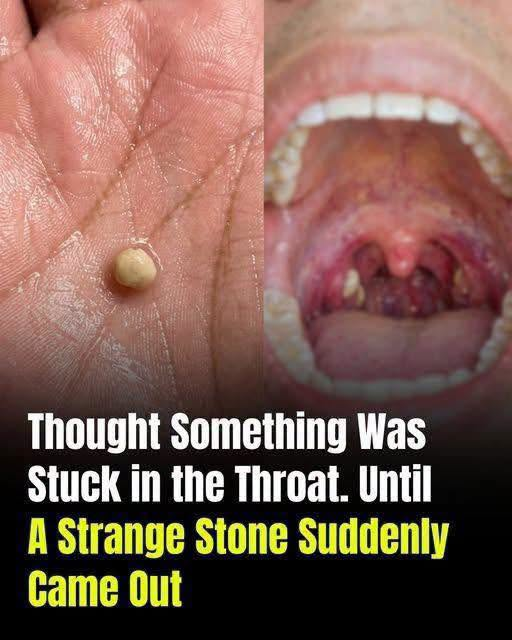
Thought Something Was Stuck in the Throat — Until a Strange Stone Suddenly Came Out
You feel a lump in your throat. It’s annoying, uncomfortable, and feels like something is stuck back there. You try to swallow, drink water, clear your throat — but it won’t go away. Then, one day, a small, pale, stone-like object suddenly pops out.
It sounds bizarre, but it’s actually a common condition. That “stone” is likely a tonsil stone (also called a tonsillolith). Here’s what you need to know about them. 👇
Disclaimer: This post is for informational purposes only and is not a substitute for professional medical advice. If you have persistent throat issues, consult a qualified healthcare provider.
🔬 What Are Tonsil Stones?
Tonsil stones are small, hard, whitish-yellow formations that develop in the crevices of your tonsils. They are made of calcium salts, bacteria, dead cells, and mucus that have become trapped and hardened.
Why they form: Your tonsils have small pits and crevices called crypts. Food particles, bacteria, and mucus can get trapped in these crypts. Over time, they calcify and harden into stones.
Common symptoms:
Bad breath: One of the most common signs.
A feeling of something stuck in the throat.
Difficulty swallowing.
Visible white or yellow spots on the tonsils.
Sore throat or irritation.
Coughing fits when the stone is dislodged.
Are they dangerous? Tonsil stones are usually harmless. However, they can cause discomfort and bad breath. In rare cases, they can lead to infection or abscesses.
💡 What You Can Do
Gargle with salt water: This can help dislodge stones and soothe irritation.
Use a water flosser: Gently irrigate the tonsil crypts to flush out debris.
Cotton swab: Gently press around the stone with a cotton swab to encourage it to come out. Be very careful not to injure the tonsil.
Cough: Sometimes a good cough can dislodge a stone.
Good oral hygiene: Brush, floss, and use mouthwash regularly to prevent buildup.
Stay hydrated: Drink plenty of water to keep your mouth moist.
When to see a doctor:
If you have persistent pain, swelling, or difficulty breathing.
If you see a large stone that won’t come out.
If you have recurrent tonsil stones or infections.
If you have a fever or notice pus.
❓ Frequently Asked Questions
What are tonsil stones? They are small, hard formations made of calcium, bacteria, and dead cells that get trapped in the crevices of the tonsils.
Are tonsil stones dangerous? Usually not. They are harmless, though they can cause bad breath and discomfort.
Why do tonsil stones smell bad? They contain bacteria and sulfur compounds, which produce a strong odor.
How do I get rid of tonsil stones? Gargle with salt water, use a water flosser, or gently press around the stone with a cotton swab. If they persist, see a doctor.
Can tonsil stones be prevented? Good oral hygiene, staying hydrated, and gargling regularly can help prevent them.
When should I see a doctor? If you have persistent pain, swelling, difficulty swallowing, or recurrent infections, see a doctor.
Can tonsil stones cause a sore throat? Yes — they can irritate the throat and cause discomfort.
Do tonsil stones go away on their own? Sometimes. They may dislodge on their own or with gargling. If not, a doctor can remove them.
Should I remove my tonsils? Only if you have chronic tonsil stones or recurrent infections. Discuss it with your doctor.
Can children get tonsil stones? Yes — they can occur at any age, though they are more common in adults.