What Your Urine Color Is Trying to Tell You: A Complete Health Guide
Meta Description: The color of your urine is a vital health indicator. Discover what clear, yellow, amber, brown, and red urine mean for your hydration and overall health.
Introduction
We don’t often pay close attention to the contents of the toilet bowl, but we probably should. The color of your urine is one of the most immediate and accurate indicators of your body’s hydration levels, kidney function, and overall health.
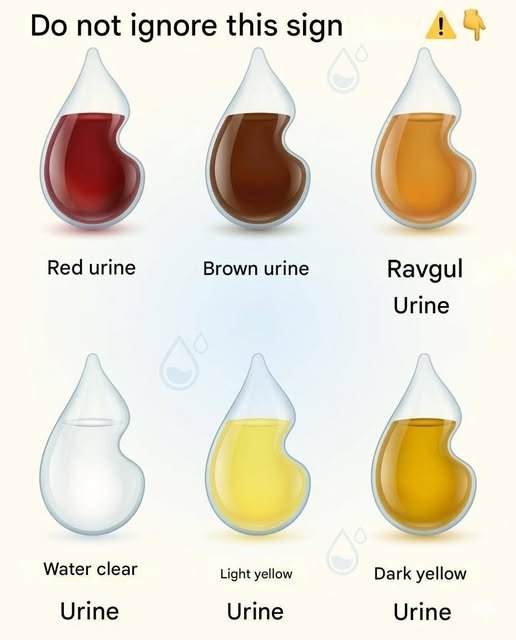
The image above highlights a standard “urine color chart,” ranging from clear to dark brown and red. While the chart contains a typo (“Ravgul” likely refers to Amber or Orange urine), the medical message is clear: different colors signal different physiological states.
Here is a factual breakdown of what each urine color means and when you should be concerned.
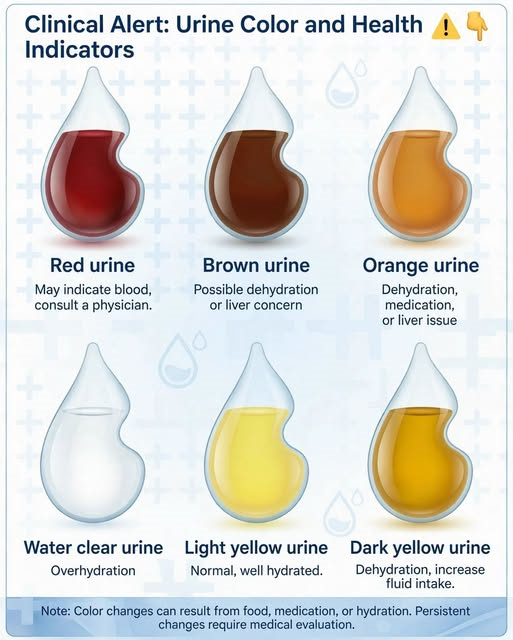
1. Water Clear (Transparent)
What it means: You are drinking too much water. While staying hydrated is crucial, overhydration can be dangerous. When your urine is completely clear, it means your body is flushing out water faster than it can absorb necessary electrolytes (like sodium and potassium).
The Risk: Severe overhydration can lead to hyponatremia, a condition where sodium levels in the blood drop dangerously low, causing nausea, headaches, and in extreme cases, seizures.
The Fix: Cut back on water intake slightly until your urine returns to a pale yellow color.
2. Light Yellow (Pale Straw)
What it means: You are perfectly hydrated. This is the gold standard for urine color. It indicates that your kidneys are functioning properly, filtering waste efficiently, and that your body has a healthy balance of water and electrolytes.
The Goal: Aim to keep your urine in this range throughout the day.
3. Dark Yellow
What it means: You are mildly dehydrated. As your body conserves water, the concentration of urochrome (the pigment that gives urine its yellow color) increases, making the urine darker.
The Fix: Drink a glass or two of water. Your urine should lighten within a few hours.
4. Amber or Orange (The “Ravgul” Color)
What it means: You are severely dehydrated, or there is an issue with your liver or bile ducts. If your urine looks like apple juice or dark amber, your body is critically low on fluids. However, if you are drinking plenty of water and your urine remains orange, it could indicate a buildup of bilirubin, a sign of liver disease or a blocked bile duct.
Other Causes: Certain medications (like phenazopyridine for UTIs) or high doses of B-vitamins can turn urine bright orange.
The Fix: Drink water immediately. If the color persists despite hydration, see a doctor.
5. Brown (Cola-Colored)
What it means: This is a serious warning sign. Brown urine can indicate severe dehydration, but it is also a classic symptom of liver disease (such as hepatitis or cirrhosis).
Another Cause: It can be a sign of rhabdomyolysis, a dangerous condition where damaged muscle tissue breaks down rapidly and releases proteins into the blood that can damage the kidneys. This often happens after extreme, unaccustomed exercise or severe trauma.
The Fix: Seek medical attention promptly, especially if accompanied by pale stools or yellowing of the skin (jaundice).
6. Red or Pink
What it means: There is blood in your urine (hematuria), or you ate something specific. The most alarming cause of red urine is blood, which can indicate urinary tract infections (UTIs), kidney stones, an enlarged prostate, or even tumors in the kidney or bladder.
The Harmless Cause: Eating large amounts of beets, blackberries, or rhubarb can temporarily turn urine pink or red (a condition called beeturia).
The Fix: If you haven’t eaten red-pigmented foods and your urine is red, contact a doctor immediately for a urinalysis.
Other Colors to Watch For
Cloudy or Murky: Often a sign of a urinary tract infection (UTI) or the presence of excess protein or minerals (like kidney stones).
Blue or Green: Very rare. Usually caused by specific dyes in food or medications (like amitriptyline or propofol), or by a rare bacterial infection called Pseudomonas.
How to Maintain Healthy Urine
To keep your urinary system healthy and your urine in the ideal “light yellow” range:
Drink to Thirst: Listen to your body. Drink when you are thirsty, and drink more when you are sweating or exercising.
Monitor Morning Urine: Your first urine of the day will naturally be darker because you haven’t had fluids for 8 hours. Check your color mid-day for a more accurate hydration reading.
Limit Irritants: Excessive caffeine and alcohol act as diuretics, forcing your body to lose water and concentrate your urine.
When to See a Doctor
You should consult a healthcare provider if you notice:
Red or brown urine that is not related to food or medication.
Urine that is consistently cloudy or foul-smelling.
Pain or burning during urination.
A sudden change in urinary frequency or urgency.
Conclusion
Your urine is a daily report card for your health. While light yellow indicates a well-hydrated, healthy body, colors like dark amber, brown, and red are clear signals that something is wrong—ranging from simple dehydration to serious liver or kidney issues. By paying attention to this simple sign, you can catch potential health problems early and take action.
Disclaimer: This article is for informational and educational purposes only and does not constitute professional medical advice. If you are concerned about the color of your urine or are experiencing pain, please consult a healthcare provider.