The Ultimate Guide to Reducing Tartar Naturally: The Two-Ingredient Kitchen Remedy
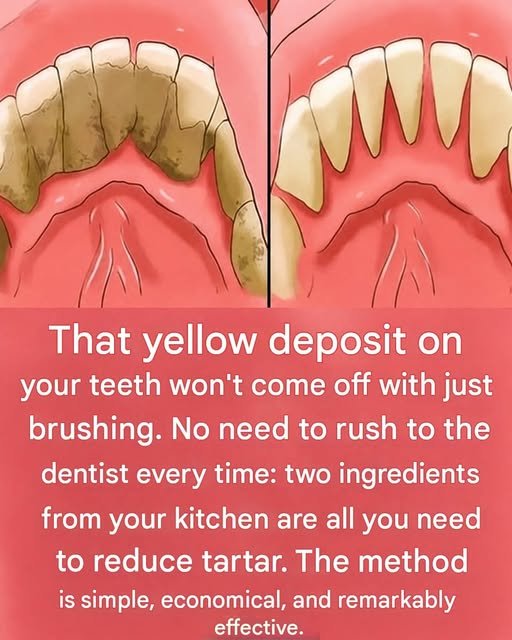
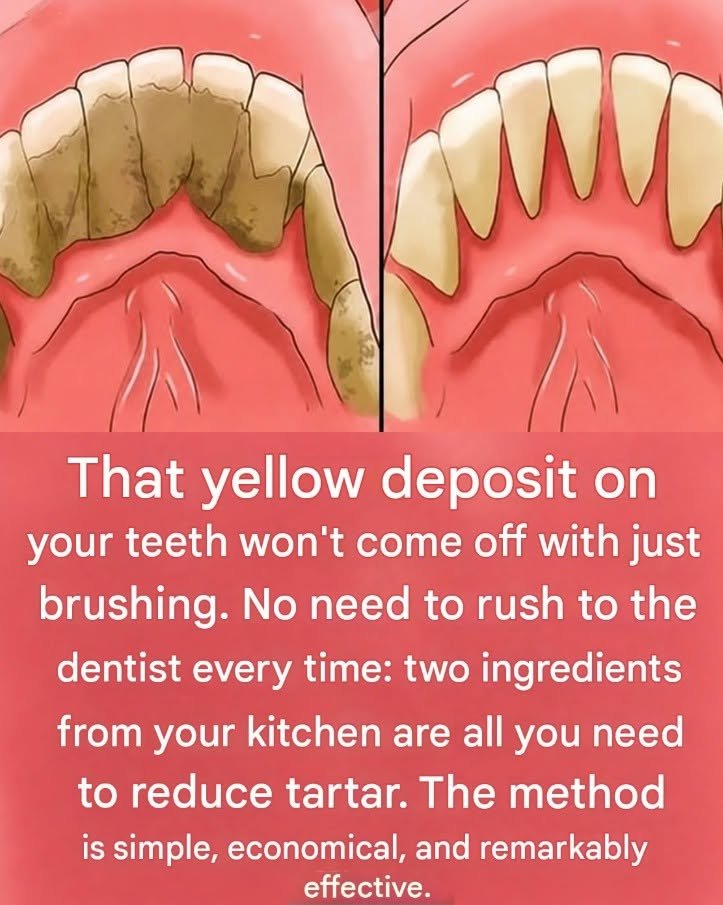
The image before you presents a stark and unsettling comparison. On the left, a set of lower teeth is heavily encrusted with thick, yellow-brown deposits, the gums swollen and receding. On the right, a pristine set of white teeth with healthy, pink gums. The text delivers a compelling promise: “That yellow deposit on your teeth won’t come off with just brushing. No need to rush to the dentist every time: two ingredients from your kitchen are all you need to reduce tartar. The method is simple, economical, and remarkably effective.”
For millions of people, the battle against tartar (also known as dental calculus) feels like a losing one. You brush twice a day, you floss, yet that stubborn yellow buildup seems to appear out of nowhere, particularly along the gumline and behind the lower front teeth. It can make your smile look dull, cause persistent bad breath, and, if left untreated, lead to gum disease and tooth loss.
While the claim that you can completely replace professional dental care with kitchen ingredients is an exaggeration—especially for the severe buildup shown on the left side of the image—there is a profound truth hidden within the text. Two of the most common ingredients hiding in your pantry are incredibly powerful allies in the fight against plaque and tartar.
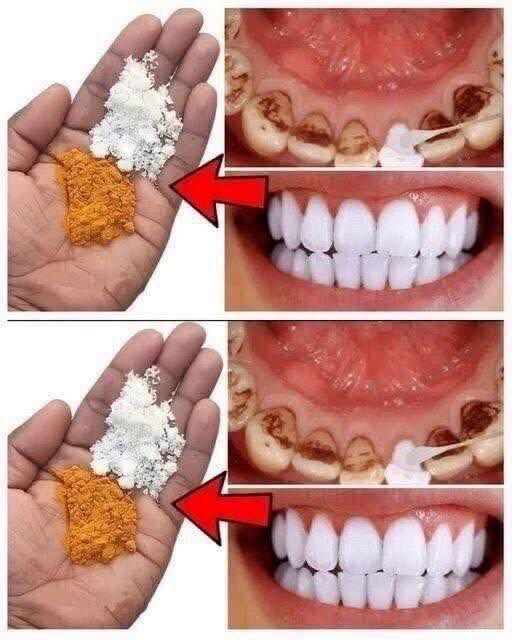
This comprehensive guide will explore the science of how tartar forms, why conventional brushing often fails to stop it, and provide a masterclass on how to use the two most effective kitchen ingredients—Baking Soda and Lemon Juice—to naturally reduce, soften, and prevent tartar buildup. We will also explore the crucial lifestyle habits and professional treatments required to maintain a healthy, gleaming smile.
Part 1: The Hidden Battlefield: Understanding Plaque and Tartar
To defeat tartar, you must first understand what it is and how it forms. The process happens in two distinct stages, and it is heavily influenced by your daily habits, diet, and even your genetics.
The Anatomy of the Tooth
To understand the damage tartar causes, we must first look at the structure of the tooth itself. A tooth consists of two main parts: the crown (the visible part above the gumline) and the root (the part below the gumline that anchors the tooth to the jawbone).
The crown is covered by enamel, the hardest substance in the human body. Enamel is a highly mineralized substance, composed primarily of calcium phosphate, that protects the softer, more vulnerable layers underneath. Beneath the enamel lies the dentin, a yellowish, bone-like tissue that contains microscopic tubules leading to the tooth’s nerve center. At the core of the tooth is the pulp, which contains blood vessels, nerves, and connective tissue.