The $1 Kitchen Staple for Fading Dark Spots: How to Use Baking Soda for Clear Skin
Meta Description: Can a simple box of baking soda really fade dark spots and age spots? Discover the viral DIY skincare hack, how to make the paste, and the crucial safety tips you need to know before trying it.
Introduction
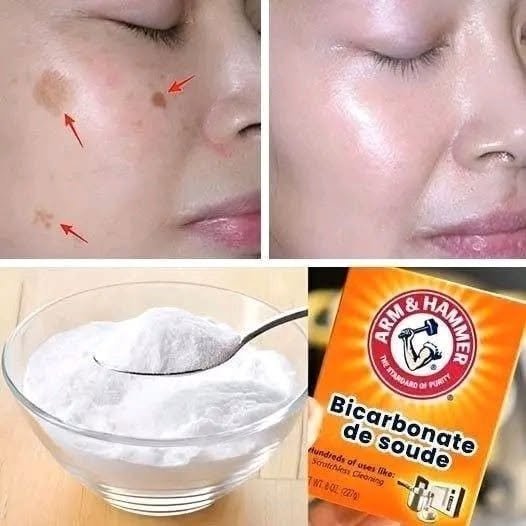
If you’ve been scrolling through social media or browsing home remedy forums lately, you’ve likely seen a striking before-and-after image. On one side, a face dotted with stubborn dark spots and hyperpigmentation. On the other, glowing, flawless, clear skin.
The secret ingredient? It’s not a $100 luxury serum or a complicated chemical peel. It’s sitting right in your kitchen cupboard: Baking Soda (or Bicarbonato de sodio, as seen on the classic Arm & Hammer box).
Baking soda is a legendary household cleaner, but can it really clean up your complexion? Today, we’re breaking down this viral DIY skincare hack, how to do it safely, and what you need to know before you start scrubbing.
Why Baking Soda for Dark Spots?
Baking soda (sodium bicarbonate) is a mild, natural exfoliant. Here is why people swear by it for fading dark spots, age spots, and acne scars:
Physical Exfoliation: The fine, gritty texture of baking soda helps slough off dead skin cells on the surface of the skin. By removing the top layer of dull, pigmented cells, it can reveal brighter skin underneath.
Anti-inflammatory Properties: Baking soda has mild anti-inflammatory and antiseptic properties, which can help calm active breakouts that might otherwise leave behind dark scars.
Alkaline Nature: Its high pH can help neutralize acids on the skin, though this is also its biggest drawback (more on that below!).
The DIY Baking Soda Dark Spot Paste
If you want to try this budget-friendly remedy, here is the safest way to mix it up.
What You Need:
1 teaspoon of Baking Soda (like the Arm & Hammer brand shown in the image)
1 teaspoon of water (or rose water for extra soothing benefits)
Optional: A few drops of honey or aloe vera gel (to buffer the harshness and add moisture)
Instructions:
Mix: In a small glass bowl, combine the baking soda and your liquid of choice. Stir until it forms a smooth, thick paste.
Cleanse: Wash your face with a gentle cleanser and pat dry.
Apply: Using your fingertips, gently dab the paste only onto the dark spots or areas of hyperpigmentation. Avoid the delicate skin around your eyes.
Massage: Gently massage in small, circular motions for about 1 to 2 minutes. Do not scrub aggressively!
Rest: Leave the paste on your skin as a mini-mask for 5 to 10 minutes.
Rinse: Wash off thoroughly with lukewarm water.
Moisturize: Immediately follow up with a good, hydrating moisturizer to restore your skin barrier.
⚠️ Crucial Safety Warning: Read Before You Scrub!
While the “after” photo in the viral image looks amazing, dermatologists urge caution when using baking soda on your face. Here is why you need to be careful:
The pH Problem: Your skin’s natural barrier (the acid mantle) has a slightly acidic pH of around 4.5 to 5.5. Baking soda has a highly alkaline pH of 9. Using it too often can strip your skin of its natural oils, disrupt your barrier, and lead to dryness, irritation, and even more breakouts.
Micro-tears: If you scrub too hard, the gritty crystals can cause micro-tears in the skin, leading to inflammation.
Sun Sensitivity: Exfoliating your skin makes it more sensitive to the sun. If you don’t wear sunscreen the next day, your dark spots could actually get darker!
How to Use It Safely:
Patch Test First: Apply a tiny amount to your inner arm and wait 24 hours to ensure you don’t have a reaction.
Limit Frequency: Do not use this hack every day. Limit it to once or twice a week at most.
Always Wear SPF: Sunscreen is non-negotiable when treating dark spots.
The Verdict: Does It Work?
For many people, using a baking soda paste occasionally can help gently exfoliate the skin and fade superficial dark spots over time, especially when combined with a strict sunscreen routine.
However, if you have sensitive skin, rosacea, or a compromised skin barrier, you might want to skip the baking soda and opt for gentler, dermatologist-approved exfoliants like lactic acid, glycolic acid, or vitamin C serums.
Have you ever tried the baking soda hack for your skin? Let us know your results in the comments below!
Disclaimer: This article is for informational and entertainment purposes only. It does not constitute professional dermatological or medical advice. Always patch-test new DIY skincare remedies and consult a dermatologist if you have persistent skin concerns.