Nighttime Leg Cramps: 7 Common Causes and How to Stop Them Naturally
The Anatomy of a Cramp: What is Actually Happening?
To understand why your leg seizes up in the dark, you must first understand how muscles work.
Muscles operate through a delicate balance of contraction and relaxation, controlled by electrical signals from the nervous system and the presence of specific minerals (electrolytes) in the body. When a muscle contracts, calcium enters the muscle cells, causing the fibers to shorten. To relax, the body must pump that calcium back out and replace it with magnesium.
A cramp occurs when this process malfunctions. The muscle involuntarily contracts and cannot relax. This often happens due to a misfiring of the nerve signals or a depletion of the energy required to pump the calcium out. When the muscle stays locked in a contracted state, it compresses the blood vessels around it, restricting blood flow and causing the intense pain you feel.
Cause 1: Dehydration and Electrolyte Imbalance
This is one of the most common culprits behind nighttime cramps. Electrolytes are minerals that carry an electric charge and are essential for muscle function.
The Key Players
Magnesium: Helps muscles relax. A deficiency is heavily linked to muscle cramps and spasms.
Potassium: Crucial for nerve signaling and muscle contraction.
Calcium: Required for muscle contraction (but if not balanced with magnesium, it can cause a sustained contraction).
Sodium: Maintains fluid balance.
If you are not drinking enough water during the day, or if you lose too much fluid through sweat, your electrolyte levels can drop. Even mild dehydration can disrupt the delicate balance required for normal muscle function, leading to nocturnal cramps.
Cause 2: Muscle Fatigue and Overexertion
If you spent the day walking extensively, standing on hard surfaces, or engaging in intense physical exercise, your muscles may be exhausted.
The Lactic Acid Buildup
Muscle fatigue alters the normal reflexes in the spinal cord, making the muscle more likely to cramp. Furthermore, exercising heavily without proper stretching can lead to a buildup of lactic acid and metabolic waste in the muscles. When you finally relax in bed at night, the muscles are depleted of energy and highly susceptible to spasms.
Cause 3: Poor Circulation and Peripheral Artery Disease (PAD)
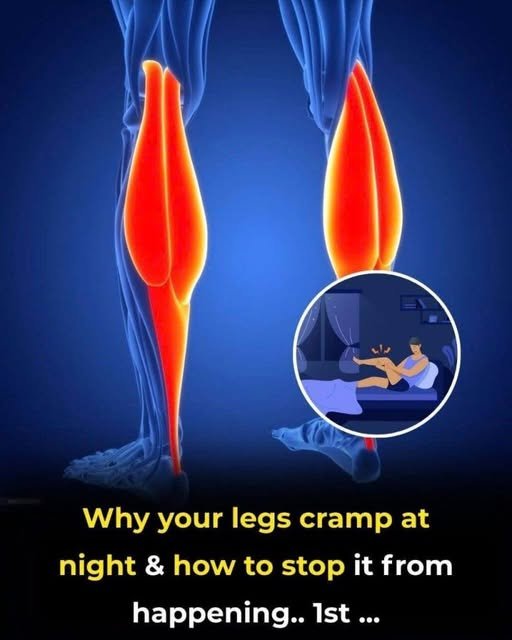
The red glow in similar anatomical diagrams often represents a struggle for oxygen. Poor circulation means that the blood vessels in your legs are narrowed, restricting the flow of oxygen and nutrients to the muscles.
The PAD Warning
The most serious form of this is Peripheral Artery Disease (PAD), where plaque builds up in the arteries. If your leg cramps are accompanied by a cold feeling in your feet, shiny skin on the legs, or cramping that occurs consistently after walking a short distance (claudication), you should consult a doctor immediately.
Cause 4: The Side Effects of Medication
Sometimes, the very medications we take to stay healthy can cause leg cramps. Several common classes of drugs are known to trigger these nighttime spasms:
Diuretics (Water Pills): Often prescribed for high blood pressure or heart conditions, diuretics flush excess fluid (and essential electrolytes like potassium and magnesium) out of the body.
Statins: Used to lower cholesterol, statins can cause muscle pain and cramping in some individuals.
Beta-Agonists: Found in inhalers for asthma, these can cause muscle tremors and cramps.
Blood Pressure Medications: ACE inhibitors and calcium channel blockers can sometimes be culprits.