Never Mix Medications in One Box: 10 Serious Risks Most People Don’t Know
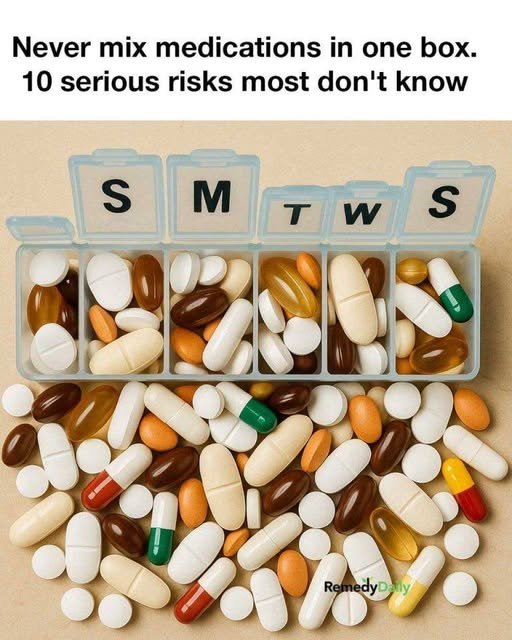
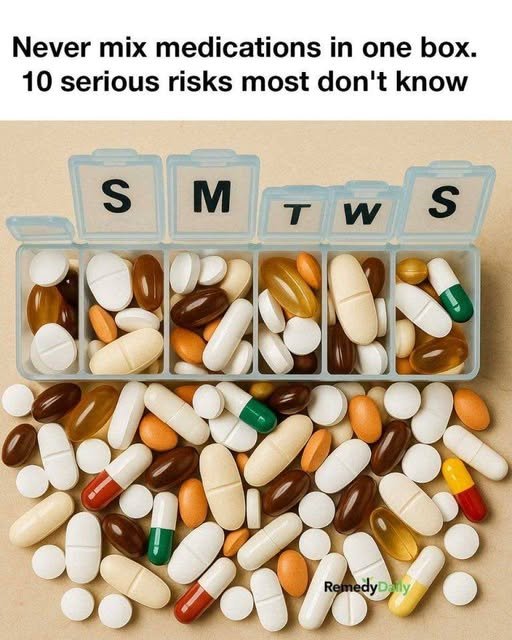
It’s a common habit. You have a weekly pill organizer, and you fill it with all your medications, vitamins, and supplements. It saves time, it’s convenient, and it helps you remember to take everything. But did you know that mixing medications in one box can be risky?
From cross-contamination to incorrect dosing, here are 10 serious risks of mixing your pills in one container. 👇
Disclaimer: This post is for informational purposes only and is not a substitute for professional medical advice. Always consult your doctor or pharmacist about your medications.
⚠️ 10 Serious Risks of Mixing Medications
1. Cross-Contamination When pills touch each other, tiny particles can rub off. If you’re allergic to one medication, trace amounts of it can transfer to another pill you take. This can trigger allergic reactions.
2. Incorrect Dosing When pills are mixed together, it’s easy to lose track of which pill is which. You might accidentally take two of the same medication or miss one entirely.
3. Medication Interactions Some medications interact with each other. If you mix them in one box, you might not realize you’re taking two medications that shouldn’t be combined.
4. Crushed or Damaged Pills Pills can get crushed, chipped, or broken when they rub against each other. This can affect how they dissolve and absorb in your body.
5. Moisture Exposure When you open a pill organizer to take one medication, you expose all the other pills to air and moisture. This can cause them to degrade or clump together.
6. Loss of Identification Once pills are out of their original packaging, it’s easy to forget what they are. If you have an emergency, medical professionals won’t know what you’ve taken.
7. Expiration Confusion If you mix old and new pills, you may not know which ones are expired. Taking expired medication can be ineffective or even harmful.
8. Temperature Sensitivity Some medications need to be stored at specific temperatures. Mixing them with other pills can expose them to conditions that affect their stability.
9. Child and Pet Safety A pill organizer is not childproof. If it’s left within reach, children or pets can easily access the pills.
10. Psychological Confusion If you’re managing multiple medications, mixing them can add to confusion and anxiety. Keeping them separate helps you stay organized and confident.
💡 What You Should Do Instead
Keep medications in their original containers. This preserves their identity, expiration date, and storage instructions.
Use a pill organizer for daily doses only. If you use one, fill it once a week and keep the original bottles for reference.
Store medications separately. Keep different medications in different compartments or boxes.
Talk to your pharmacist. They can review your medications for interactions and advise you on safe storage.
Never share medications. What works for you may be dangerous for someone else.
❓ Frequently Asked Questions
Is it safe to mix medications in a pill organizer? It’s generally safe for daily use if you fill it correctly and keep the original bottles. However, it’s not ideal for long-term storage.
What is cross-contamination? It’s when particles from one medication rub off onto another. This can cause allergic reactions or reduce effectiveness.
Can I mix vitamins and prescription medications? It’s best to keep them separate. Some vitamins and medications can interact, and mixing them can make it harder to track what you’re taking.
How should I store my medications? Keep them in their original containers in a cool, dry place, away from direct sunlight and moisture.
What should I do if I accidentally take the wrong medication? Contact your doctor or poison control immediately. Do not wait for symptoms to appear.
Can I mix medications if they look different? Even if they look different, it’s best to keep them separate. Appearance alone is not a reliable way to identify medications.
How often should I clean my pill organizer? Clean it weekly with warm, soapy water and let it dry completely before refilling.
What if I have trouble remembering to take my medications? Talk to your pharmacist about pill organizers, reminders, or blister packaging services.
Can I mix medications in one box if they’re all for the same condition? No — even medications for the same condition can interact. Always keep them separate and follow your doctor’s instructions.