Learn How to Clear 15 KG (33 LBS) of Waste From Your Colon Overnight:
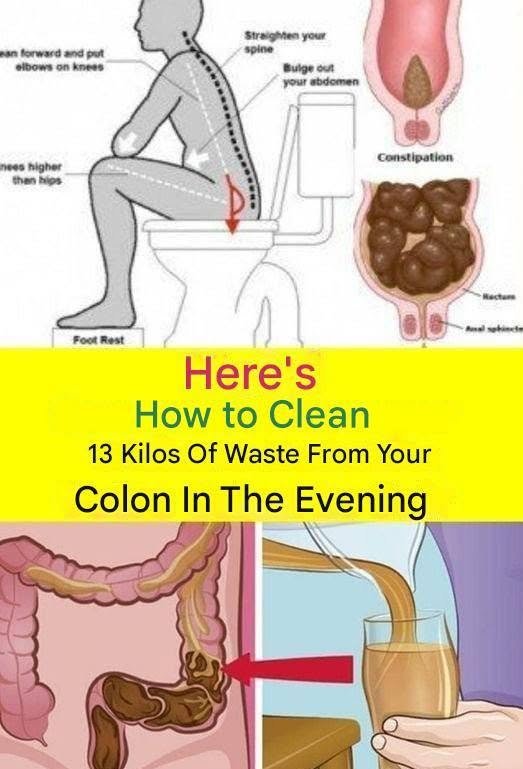
While the text in the green box is hyperbolic and misleading, the diagrams on the top left are surprisingly accurate. The text points to a person sitting on a toilet, leaning forward with elbows on knees, expanding the abdomen, and elevating the knees above the hips. This is not a gimmick; it is based on the biomechanics of the human body.
The Puborectalis Muscle: The puborectalis is a U-shaped sling of muscle that wraps around the lower rectum. In a standing or sitting position with knees at a 90-degree angle, this muscle remains contracted, keeping the rectum kinked. When you squat, the muscle relaxes, straightening the rectum and allowing stool to pass more easily. By placing a footstool under the toilet to elevate the knees, and leaning forward to expand the abdomen, you mimic a squatting posture. This simple change relaxes the puborectalis muscle, reduces straining, and can significantly ease the passing of stool.