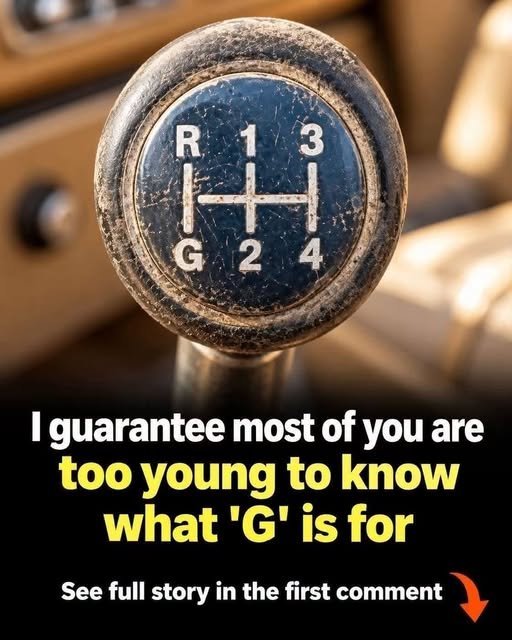
Driver’s Surprised to Learn What ‘G’ Means on a Manual Stick Shift
For generations of drivers, the layout of a manual transmission is a sacred, unspoken language. You know the drill: an H-pattern, first gear top-left, second gear bottom-left, and so on, with reverse tucked away in a corner. But every once in a while, you encounter a vintage gear knob that throws a wrench into your muscle memory. A viral social media image recently highlighted one such mystery: a worn, classic shift knob featuring the standard numbers alongside a mysterious “G” positioned where you might expect to find reverse or first gear.
The post’s caption teased the internet: “I guarantee most of you are too young to know what ‘G’ is for.” The comment sections erupted with wild guesses. Some thought it stood for “Go,” others guessed “Ground,” and a few even suggested it was a special “Garage” gear. But the true answer is far more fascinating, rooted in a blend of rugged agricultural heritage, clever German engineering, and a time when vehicles were built to conquer both highways and uncharted terrain.
The “G” on a manual gear shifter stands for Gelände (a German word meaning “terrain”) or Granny Gear (a colloquial term for an ultra-low crawling gear). It is not just a quirky design choice; it is a functional powerhouse designed to provide maximum torque for heavy hauling, steep climbs, and off-road adventures. Understanding what this gear does—and the clever reverse-lockout trick often associated with it—is like unlocking a secret chapter in automotive history.
This comprehensive guide will decode the mystery of the “G” gear. We will explore its origins, explain the mechanical differences between a Granny Gear and a standard first gear, detail which iconic vehicles featured this setup, reveal the crucial safety trick for engaging reverse, and provide a complete FAQ to satisfy your curiosity.
The Two Faces of “G”: Gelände and Granny Gear
The letter “G” carries dual meanings depending on the vehicle’s origin and purpose. Both meanings, however, point to the same mechanical reality: a gear ratio that is exceptionally low.
The German Connection: Gelände (Terrain)
In the world of European off-roaders, the “G” stands for Gelände. This is the German word for “terrain” or “countryside.” It was used by manufacturers like Mercedes-Benz and Porsche to denote a special low-range gear designed for challenging conditions. The most famous example is the Mercedes-Benz G-Wagen (short for Geländewagen, which translates to “cross-country vehicle”). These utilitarian SUVs were built for military and rugged civilian use, and their manual transmissions often featured a “G” gear to provide the immense low-end torque needed for climbing steep inclines or navigating deep mud.
The American Workhorse: Granny Gear
Across the Atlantic, American truck manufacturers and farmers had their own name for this ultra-low ratio: the Granny Gear (or sometimes “Crawler Gear”). The term was affectionately used by older drivers of tractors and heavy-duty trucks who knew that this gear allowed them to move at a snail’s pace—literally walking speed—while pulling massive loads or idling over rough terrain without stalling the engine. In heavy-duty American trucks like the classic Chevrolet and GMC models, this gear was often marked as “L” (Low) or “G” on the shift pattern.