Drinking Water on an Empty Stomach Immediately After Waking Up: What Really Happens to Your Heart and Body?
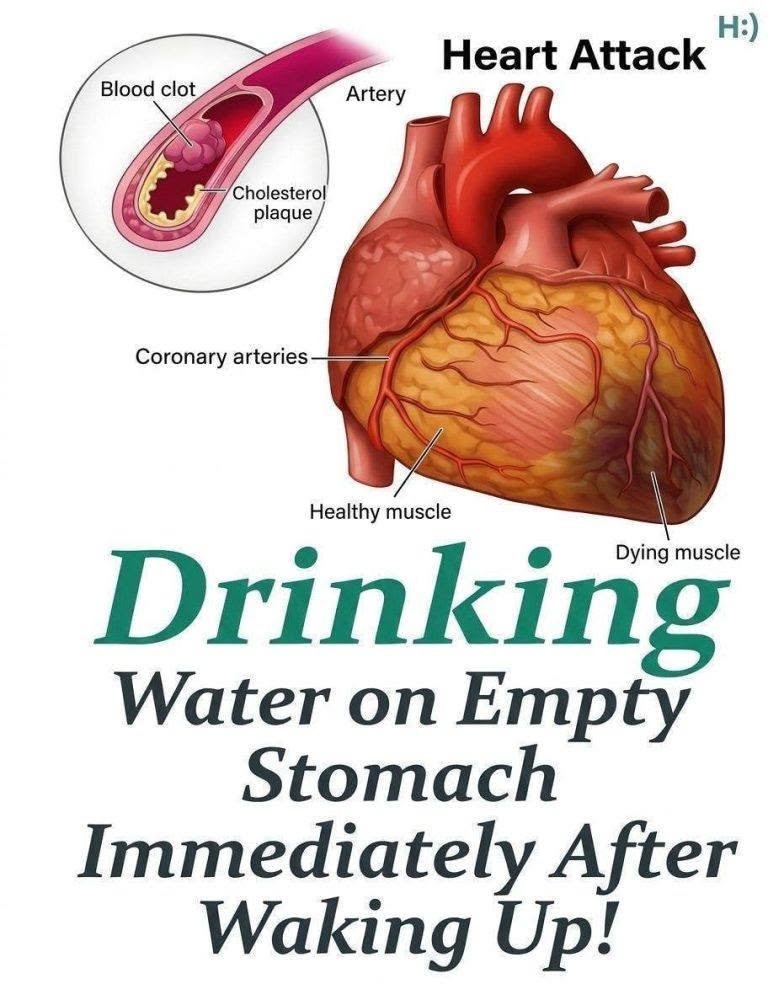
You’ve probably seen the viral posts claiming that drinking water on an empty stomach immediately after waking up can prevent heart attacks, clear your arteries, and transform your health. The image often shows a heart attack diagram alongside a bold claim about drinking water first thing in the morning.
It sounds like a simple, powerful habit — but what does the science actually say? Let’s separate the facts from the fiction. 👇
Disclaimer: This post is for informational purposes only and is not a substitute for professional medical advice. If you have heart disease or any medical condition, consult your healthcare provider.
🔬 The Truth About Drinking Water on an Empty Stomach
The short answer: Drinking water first thing in the morning is a healthy habit, but it does not prevent heart attacks or “clear” your arteries.
Here’s what the science says:
1. Hydration is important for heart health. Staying well-hydrated supports healthy blood circulation and helps your heart pump blood more efficiently. Dehydration can strain the heart, so drinking water in the morning is a good way to start the day hydrated.
2. It does NOT prevent heart attacks. Heart attacks are caused by a blockage in the coronary arteries, usually due to a buildup of cholesterol plaque and a blood clot. Drinking water cannot dissolve plaque or prevent a clot from forming. The claim that it prevents heart attacks is not supported by medical science.
3. It does NOT “clean” your arteries. No drink can “clean” your arteries. Arterial plaque is a structural buildup that requires medical management, not a glass of water.
4. What it actually does:
Rehydrates your body after a night of sleep.
Supports digestion and helps get your digestive system moving.
Boosts metabolism slightly.
Supports kidney function by helping flush waste.
🛒 Ingredients
1–2 glasses (250–500 ml) of room temperature or warm water 💧
Optional: a squeeze of fresh lemon 🍋
👩🍳 Instructions
Keep a glass or bottle of water by your bed.
Drink it immediately after waking up, before eating or drinking anything else.
Sip slowly — don’t gulp it all at once.
Wait 30–45 minutes before having breakfast or coffee.
Repeat daily for a simple, healthy morning habit. 💧
Pro Tip: Add a squeeze of fresh lemon for flavor and a boost of vitamin C. But avoid adding sugar or artificial sweeteners.
❓ Frequently Asked Questions
Does drinking water on an empty stomach prevent heart attacks? No. There is no scientific evidence that drinking water on an empty stomach prevents heart attacks. Heart attacks are caused by blocked arteries, which require medical treatment.
Can water “clean” your arteries? No. No drink can clean or unclog arteries. Plaque buildup requires medical management, including medication or procedures.
Why is drinking water in the morning good for you? It rehydrates your body after sleep, supports digestion, and helps you feel more alert. It’s a healthy habit, but it’s not a cure-all.
How much water should I drink in the morning? 1–2 glasses (250–500 ml) is a good starting point. Listen to your body and drink when you’re thirsty.
Is warm water better than cold water? Warm water may be gentler on the stomach and is often recommended in traditional medicine. Cold water is also fine — choose what feels best for you.
Can I add lemon to my morning water? Yes — lemon adds flavor and vitamin C. However, if you have sensitive teeth or acid reflux, you may want to skip it.
Does this help with weight loss? Drinking water can support weight loss by helping you feel full and boosting metabolism slightly, but it’s not a magic solution.
What are the risks of drinking too much water? Drinking excessive amounts of water can lead to water intoxication (hyponatremia), which is dangerous. Stick to 1–2 glasses in the morning.
Can I drink water before bed instead? Yes — staying hydrated throughout the day is important. Drinking water before bed may cause nighttime urination, so adjust based on your comfort.
What actually prevents heart attacks? A healthy lifestyle: balanced diet, regular exercise, not smoking, managing stress, and taking prescribed medications. Regular check-ups with your doctor are also essential.