Do You Drool in Your Sleep? The 6 Health Conditions Linked to Nighttime Drooling
Meta Description: Waking up to a wet pillow? While drooling is often normal, chronic nighttime drooling can sometimes be a sign of an underlying health issue. Discover the 6 conditions linked to sleep drooling and how to stop it.
Introduction
We’ve all been there. You wake up in the morning, stretch, and realize your cheek is stuck to the pillow. You look over and see a large, damp spot.
Drooling while sleeping (medically known as sialorrhea) is incredibly common. In fact, for most people, it’s just a harmless side effect of sleeping deeply on your side or stomach. Gravity does the rest.
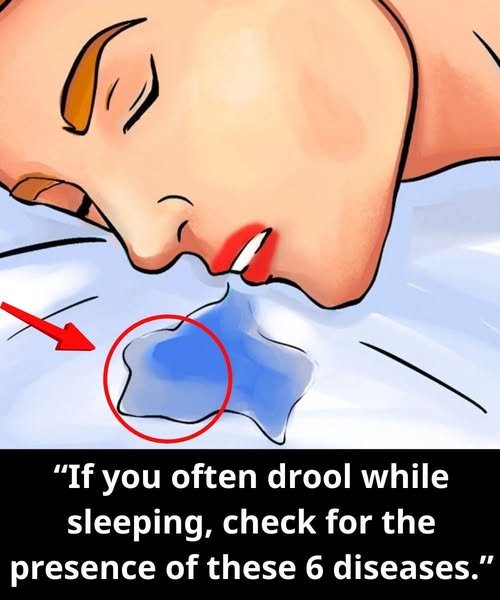
However, as the viral image above warns: “If you often drool while sleeping, check for the presence of these 6 diseases.”
It’s a scary headline. It makes you wonder if that wet pillowcase is a sign of something serious. While the internet loves to turn every minor bodily function into a medical emergency, there is a grain of truth here. If your drooling is excessive, sudden, or accompanied by other symptoms, it could be your body’s way of signaling an underlying issue.
Here is the truth about why you drool at night and the 6 medical conditions that might be causing it.
Part 1: Why Do We Drool in the First Place?
Before we look at the diseases, let’s look at the mechanics. You produce about 1 to 2 liters of saliva every day. Saliva keeps your mouth moist, aids digestion, and protects your teeth.
When you are awake, you swallow frequently without thinking about it. But when you fall into a deep sleep, your facial muscles relax, your mouth falls open, and your swallowing reflex slows down. If you are sleeping on your side or stomach, gravity pulls that pooled saliva right out of your mouth and onto your pillow.
This is normal. But if it’s happening every single night in excessive amounts, here are the 6 conditions to check for.
Part 2: The 6 Conditions Linked to Chronic Drooling
1. Sleep Apnea
This is the most common medical cause of excessive nighttime drooling.
The Link: Obstructive Sleep Apnea (OSA) causes your airway to repeatedly collapse during sleep. To compensate and get enough oxygen, your body forces you to breathe through your mouth.
The Result: An open mouth + relaxed muscles = a wet pillow. If you also snore loudly or wake up gasping, this is a likely culprit.
2. Acid Reflux (GERD)
Gastroesophageal Reflux Disease (GERD) is a major trigger for nighttime drooling.
The Link: When stomach acid backs up into your esophagus while you lie flat, your body’s natural defense mechanism kicks in. It produces a sudden surge of saliva (called “water brash”) to wash the acid back down and neutralize it.
The Result: You wake up with a mouth full of saliva and a soaked pillow, often accompanied by heartburn or a sour taste.
3. Sinus Infections and Allergies
If you can’t breathe through your nose, you have to breathe through your mouth.
The Link: Colds, flu, sinus infections, or seasonal allergies cause nasal congestion. When your nose is blocked, you become a chronic mouth breather at night.
The Result: Just like with sleep apnea, the open mouth allows saliva to escape.
4. Neurological Conditions
This is the one that usually scares people when they see viral posts like the one above.
The Link: Conditions that affect muscle control and swallowing—such as Parkinson’s disease, ALS, Multiple Sclerosis, or a history of stroke—can make it difficult to swallow saliva effectively, even during the day, but especially at night.
The Reality Check: If you have no other neurological symptoms (like tremors, weakness, or speech issues), it is highly unlikely that drooling is your first sign of a neurological disease.
5. Medication Side Effects
Check your medicine cabinet.
The Link: Certain medications, particularly those used to treat Alzheimer’s disease, schizophrenia, or severe depression, can cause a side effect called hypersalivation (producing too much saliva).
The Result: Your body simply makes more fluid than your relaxed sleeping throat can handle.
6. Dental Issues or Infections
Your mouth is trying to protect itself.
The Link: If you have a tooth infection, severe gum disease (gingivitis), or even tonsillitis, your body will produce excess saliva to try and flush out the bacteria and soothe the inflamed tissue.
The Result: Increased saliva production leads to more drooling.
Part 3: How to Stop the Drool
If you’ve ruled out serious medical conditions and just want to keep your pillow dry, try these simple fixes:
Change Your Sleep Position: Try sleeping on your back. It takes gravity out of the equation. (You can use a body pillow to keep yourself from rolling over).
Treat Nasal Congestion: If you can’t breathe through your nose, use a saline spray, nasal strips, or a humidifier before bed to keep your airways clear.
Elevate Your Head: Sleep with an extra pillow or raise the head of your bed slightly. This helps keep stomach acid down (preventing GERD) and makes swallowing easier.
Stay Hydrated: It sounds counterintuitive, but drinking enough water during the day keeps your saliva thin and easy to swallow. Thick, sticky saliva is harder to manage at night.
Check Your Meds: If you started a new medication and the drooling started at the same time, ask your doctor if it’s a known side effect.
When to See a Doctor
Occasional drooling is nothing to worry about. However, you should schedule a visit with your doctor if:
The drooling is sudden and severe.
You have trouble swallowing food or liquids during the day.
You feel like you are choking or gasping for air at night.
You have unexplained facial numbness or muscle weakness.