Are Your Nails Always Splitting or Breaking? What Your Body Is Trying to Tell You
There is a unique and persistent frustration that comes from having brittle, splitting fingernails. You might be typing at work, opening a package, or simply washing your hair, only to look down and see that a nail has peeled, cracked, or broken off entirely. For many people, this is a constant battle that leaves their hands looking unkempt and can even cause pain, snagging on clothing, or leading to minor infections.
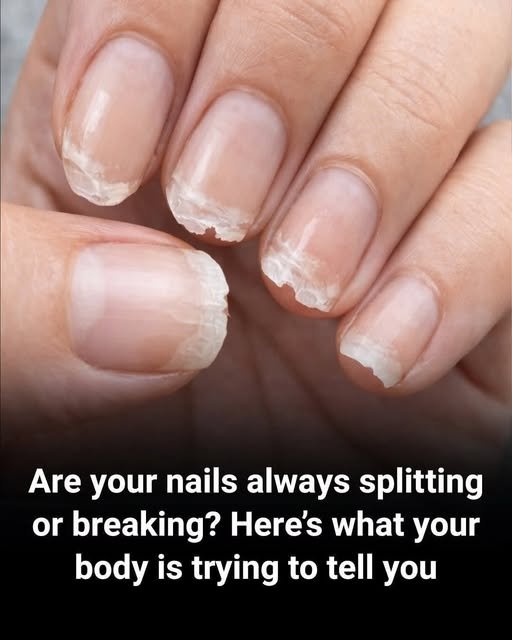
The image above poses a highly relatable and medically relevant question: “Are your nails always splitting or breaking? Here’s what your body is trying to tell you.” It is a common instinct to assume that persistent nail issues are a direct reflection of a hidden, serious internal disease. And while our nails can indeed offer valuable clues about our overall systemic health, the reality is often far less dramatic.
For the vast majority of individuals, brittle, splitting nails are the result of everyday environmental wear and tear, lifestyle habits, or minor nutritional gaps rather than a severe underlying illness. However, because our nails are a visible extension of our internal biology, persistent changes should not be ignored. Understanding the anatomy of the nail, the external and internal factors that contribute to its strength, and the subtle signals that warrant a closer look from a healthcare professional is essential for restoring both the health of your hands and your peace of mind.
The Anatomy of a Brittle Nail: What Is Onychoschizia?
To understand why nails split, it helps to know what they are made of. Fingernails are primarily composed of keratin, the same tough, fibrous protein found in your hair and the outer layer of your skin. A healthy nail is made up of several layers of tightly packed keratin cells. These layers are held together by natural oils and moisture, which provide flexibility and resilience.
When the nail loses its ability to retain moisture, or when the physical bonds between these layers are compromised, the nail becomes dry and brittle. This leads to a condition dermatologists call onychoschizia—the technical term for nails that split, peel, or flake, usually starting at the free edge (the tip) and moving downward. Another related condition is onychorrhexis, which refers to longitudinal ridging and splitting down the length of the nail.
Brittle nails are incredibly common. While they can affect anyone, they are particularly prevalent in women and tend to become more common as we age. The good news is that because nails are essentially a reflection of your immediate environment and habits, they often respond very well to targeted changes.
The Most Common Culprits: Environmental and Lifestyle Factors
Before jumping to conclusions about underlying diseases, it is essential to address the most frequent causes of splitting nails. For most people, the “message” the body is sending is simply that the nails are being exposed to too much trauma or moisture fluctuation.
1. The Repeated Wet-and-Dry Cycle
This is perhaps the single biggest enemy of healthy nails. Frequent handwashing, doing dishes without gloves, and swimming can wreak havoc on your nails. When nails absorb water, they expand. As they dry out, they contract. This constant expansion and contraction puts immense stress on the keratin layers, causing them to separate and peel. If you work in a profession that requires frequent handwashing, such as healthcare or food service, or if you are a parent constantly washing your hands, you are highly susceptible to this type of nail damage.
2. Harsh Chemicals and Cleaning Agents
Household cleaning products, laundry detergents, and even harsh hand soaps are designed to strip away oils and grime. Unfortunately, they also strip away the natural oils that protect your nails. Acetone-based nail polish removers are particularly drying and can severely weaken the nail plate if used frequently without giving the nails a break.
3. Mechanical Damage and “Using Nails as Tools”
Using your nails to open cans, peel off labels, or pry things apart is a leading cause of breakage. The nail plate is a delicate structure, and the stress of leverage can easily cause it to crack or split. Additionally, aggressive nail care—such as harsh filing back and forth (which creates micro-tears in the nail edge), pushing back cuticles too vigorously, or picking off gel polish—can permanently damage the nail’s structure. The cuticle acts as a seal; damaging it opens the door to moisture loss and infection.
4. Natural Aging
As we age, the nails naturally undergo changes. The production of natural oils decreases, the nail plate can become thinner, and the nails grow more slowly. This natural drying process makes older adults more prone to splitting and peeling. While unavoidable, this type of brittleness can be managed with diligent moisturizing.
What Your Body Might Be Telling You: Internal Health Clues
While external factors are the most common cause, the image correctly suggests that your body might be sending internal signals. If you have addressed all the external causes—wearing gloves, avoiding harsh chemicals, moisturizing—and your nails are still persistently brittle, it may be worth looking inward.
1. Nutritional Deficiencies
Your body prioritizes vital organs over nails. If you are lacking certain nutrients, your nails are often the first to suffer.
Iron: Iron deficiency, with or without anemia, is a well-known cause of nail changes. It can lead to brittle nails that break easily, and in severe cases, a condition called koilonychia (spoon-shaped nails).
Biotin (Vitamin B7): Biotin is a B-vitamin that is essential for keratin infrastructure. While true biotin deficiency is rare, some studies suggest that supplementation can increase nail thickness and reduce splitting. However, the evidence is not conclusive for everyone.
Zinc, Calcium, and Vitamin C: Severe deficiencies in these nutrients can also affect nail health, though this is less common in people who eat a balanced diet. Vitamin C is crucial for the production of collagen, a component of healthy nails.
2. Thyroid Dysfunction
Both an underactive thyroid (hypothyroidism) and an overactive thyroid (hyperthyroidism) can cause nail changes. Thyroid hormones regulate metabolism, and imbalances can affect the growth and health of your nails, leading to brittleness, splitting, and ridges. However, this is usually accompanied by other symptoms such as fatigue, weight changes, and temperature sensitivity.
3. Skin Conditions like Psoriasis
Psoriasis is an autoimmune condition that primarily affects the skin, but it can also impact the nails. Nail psoriasis can cause pitting, splitting, discoloration, and the separation of the nail from the nail bed. If you have psoriasis elsewhere on your body, it is more likely that your nail symptoms are related.
4. Medical Treatments
Certain medical treatments, including chemotherapy and some medications (like retinoids or diuretics), can cause severe nail changes. If you have recently started a new medication and noticed a sudden change in your nails, consult your prescribing doctor.
When to See a Doctor
While most splitting nails are a benign nuisance, there are specific red flags that warrant a medical evaluation. You should consult a dermatologist or healthcare provider if you experience:
Persistent and severe splitting that does not improve with home care and moisturizing.
Changes in nail color (dark streaks, yellowing, or unusual pigmentation).
Thickening or crumbling of the nail.
Pitting (small dents in the nail surface).
Separation of the nail from the nail bed.
Pain, swelling, or redness around the nail.
Symptoms that occur alongside other systemic issues like fatigue, unexplained weight changes, or hair loss.
A doctor can rule out underlying conditions like anemia, thyroid disease, or fungal infections and recommend a targeted treatment plan.
Practical Solutions for Stronger, Healthier Nails
If your nails are splitting, the good news is that they are remarkably responsive to care. Once the damaged part grows out, you can replace it with healthy nail. Here is a comprehensive, evidence-based routine to protect and strengthen your nails:
1. Moisturize Relentlessly
The key to preventing splitting is locking in moisture. Apply a rich hand cream or a dedicated cuticle oil (containing jojoba oil, which closely mimics the skin’s natural sebum) directly to your nails and cuticles multiple times a day, especially after washing your hands or bathing.
2. Protect Your Hands
Wear rubber gloves whenever you do dishes or clean with harsh chemicals. This creates a barrier that prevents water and chemicals from stripping the oils from your nails.
3. Adopt Smart Nail Care Habits
Keep nails short: Shorter nails are less likely to catch on things and break.
File correctly: Use a fine-grit nail file and file in one direction rather than sawing back and forth. This reduces micro-tearing at the nail edge.
Use acetone-free polish removers: Acetone is incredibly drying.
Take a break from gel and acrylics: These treatments require aggressive removal processes that can severely thin the nail plate.
4. Review Your Diet
Ensure you are consuming a balanced diet rich in iron, zinc, and protein. Include foods like lean meats, beans, leafy greens, nuts, and seeds. If you suspect a deficiency, ask your doctor for a blood test before starting any supplements.
5. Be Patient
Nails grow slowly—about 3 to 4 millimeters per month. It can take six months or more for a damaged nail to fully grow out and be replaced by healthy tissue. Consistency in your care routine is essential.
Frequently Asked Questions
Q: Is drinking more water good for splitting nails? While staying hydrated is important for overall health, drinking water does not directly moisturize the nails. Nails are dead keratin, and they get their moisture from the oils produced by the skin around them and from topical moisturizers, not from the water you drink.
Q: Do biotin supplements actually work for brittle nails? There is some evidence that biotin supplementation can help strengthen brittle nails, particularly in people with an underlying deficiency. However, if your diet is balanced and you do not have a deficiency, the benefits may be minimal. It is always best to consult a doctor before starting supplements.
Q: How long does it take for splitting nails to heal? Because nails grow slowly, it can take anywhere from three to six months to see significant improvement. The damaged part must grow out completely before the new, healthier nail takes its place.
Q: Can I use nail hardeners to fix splitting nails? Some nail hardeners can provide temporary strength, but those containing formaldehyde can actually make nails more brittle over time. It is generally better to focus on moisturizing and protecting the nails rather than relying on chemical hardeners.
Q: Does nail polish help or hurt brittle nails? Nail polish can provide a protective barrier that helps retain moisture, which can be beneficial. However, frequent use of harsh polish removers and the removal process itself can cause damage. If you use polish, use a protective base coat and avoid acetone removers.
Conclusion
Brittle, splitting nails are a common frustration, but they are rarely a sign of a severe medical crisis. For most people, the message the body is sending is a straightforward one: your hands are being exposed to too much moisture, too many chemicals, or too much mechanical stress. By adopting a diligent routine of moisturizing, protecting your hands from harsh soaps and chemicals, and being gentle with your nail care, you can often restore strength and resilience.
However, it is important to pay attention to your body. If your nails are persistently brittle despite excellent care, or if the splitting is accompanied by other symptoms, it is a wise decision to consult a healthcare professional. Your nails are a visible indicator of your overall well-being, and giving them the attention they deserve is an act of self-care that pays off in both health and appearance.