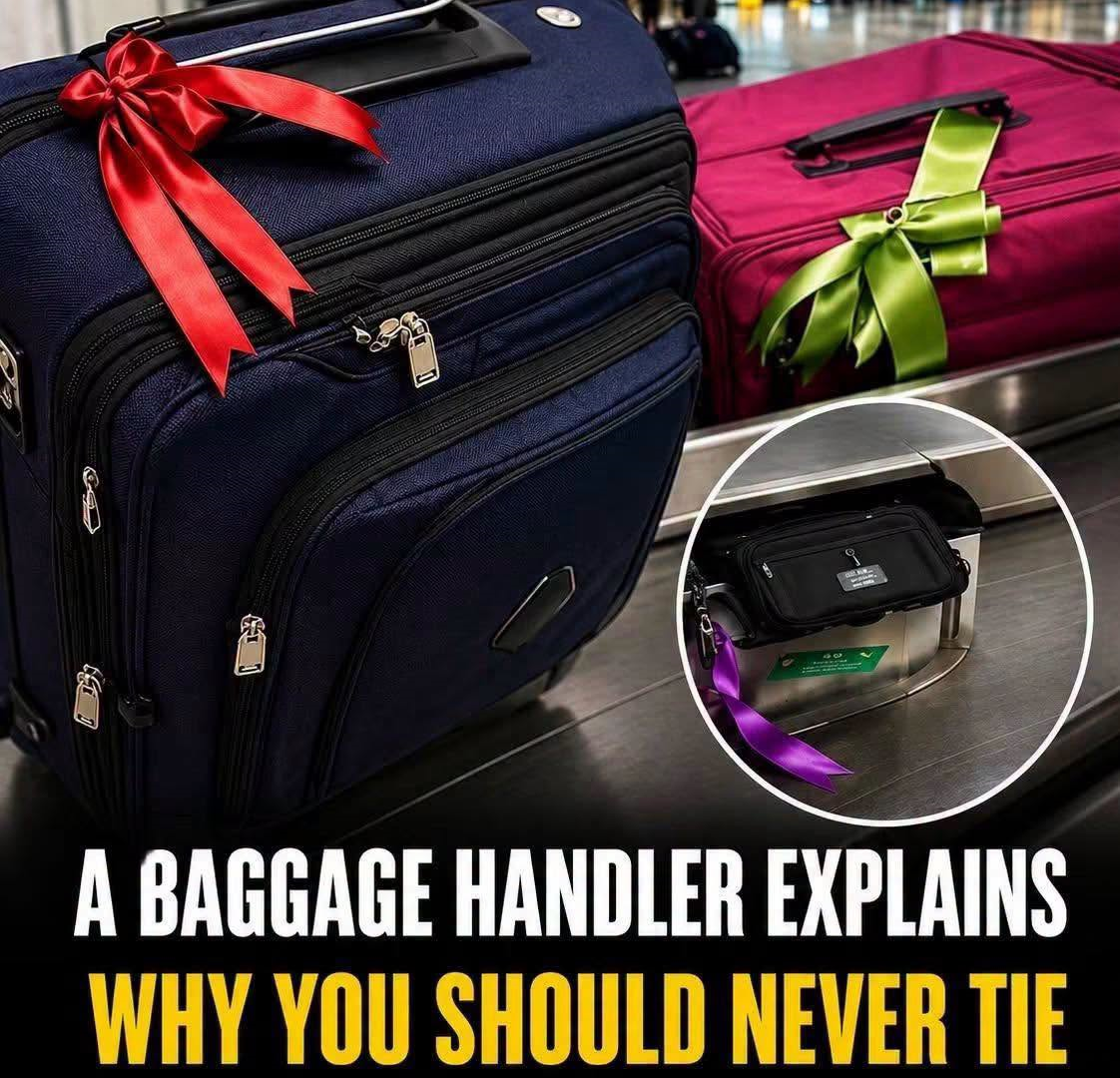
Airport Warning: Why You Must Stop Attaching Ribbons to Your Suitcase
Introduction: The End of a Beloved Travel Tradition
For decades, tying a brightly colored ribbon, a piece of yarn, or a festive bow to the handle of a suitcase has been one of the most universally practiced travel hacks. The logic is simple and appealing: when you arrive at a crowded baggage carousel after a long, exhausting flight, you want to spot your luggage quickly. A red ribbon, a neon green strip of fabric, or a distinctive knot promises to save you from the frustrating dance of squinting at dozens of identical black suitcases. It is a rite of passage for many travelers, a small personalization that makes the generic world of air travel feel a bit more like your own.
However, a recent and urgent warning from airports around the world has thrown a harsh spotlight on this seemingly innocent habit. A viral image featuring a black suitcase with a bright green ribbon tied to its handle, accompanied by the stark text, “Airport: why you must stop attaching ribbons to your suitcases,” has sparked widespread concern and confusion among frequent flyers. The warning from airport authorities is not a mere suggestion; it is a critical safety and logistical directive that every passenger needs to understand before their next trip.
The reasons behind this warning are deeply rooted in the complex, highly automated, and unforgiving realities of modern airport baggage handling systems. What might seem like a harmless piece of decorative fabric to a traveler is viewed by a multi-million-dollar sorting machine as a potential hazard, a jam waiting to happen, and a threat to the entire logistical ecosystem of the airport.
This comprehensive two-part guide will explore the hidden dangers of luggage ribbons. We will delve into the mechanics of the Baggage Handling System (BHS), explain how loose items cause catastrophic jams, and examine the intense scrutiny of airport security scanners. We will also provide you with a comprehensive list of safe, practical, and highly effective alternatives to identify your luggage without putting your belongings—or the airport’s schedule—at risk.
The Anatomy of the Baggage Handling System: A Symphony of Machinery
To fully grasp why a simple ribbon is so problematic, it is essential to understand what happens to your bag once it disappears behind the rubber flaps at the check-in counter. It enters the Baggage Handling System (BHS), a vast, intricate labyrinth of conveyor belts, scanners, ramps, and sorting mechanisms that operate at incredibly high speeds.
The Journey of a Checked Bag
When you hand your suitcase to the airline agent, it is tagged with a barcode and placed on the first conveyor belt. From there, it travels through a network that can span several miles within a single airport. The bag passes through automated scanners that read the barcode, determining its final destination. It is then routed through a series of diverter arms, merges onto different belts, and is sorted into specific chutes or carts to be loaded onto the correct aircraft.
This entire process is designed for speed and efficiency. Modern airports handle tens of thousands of bags per hour, relying on a highly synchronized mechanical ballet. The machinery is designed to handle standard, hard-sided, or soft-sided rectangular shapes. It is not designed to handle loose, dangling objects.
The Danger of the Snag
The primary issue with tying a ribbon to your suitcase is the physical reality of how these machines operate. The conveyor belts are powered by motors and consist of joints, seams, and pulleys. The sorting mechanisms feature moving parts, metal edges, and sensors that require a clear line of sight.
A ribbon tied to a handle creates a loose, trailing edge that swings freely. As the bag moves along the belt, this loose ribbon can easily become entangled in the machinery. It can snag on a belt joint, wrap around a roller, or get caught in the pinch points of a diverter arm.
When a ribbon snags, the bag abruptly stops while the machinery continues to move. This sudden halt creates a chain reaction. Bags behind it continue to pile up, creating a massive traffic jam. The system is designed to detect jams, and when one occurs, the entire section of the conveyor belt must be shut down to prevent further damage.
The Consequences:
Massive Delays: A single snagged ribbon can halt the entire baggage sorting process for an entire section of the airport, delaying flights and causing hundreds of passengers to arrive at their destination without their luggage.
Damaged Luggage: When a bag is caught in the machinery, the force of the conveyor belt can be immense. It can rip the handle clean off your suitcase, tear the zippers, crack hard shells, or completely destroy the bag.
Damage to Equipment: The snagged ribbon or the jammed suitcase can also cause significant damage to the airport’s expensive conveyor belts and sensors, leading to costly repairs and further delays.
The Security Factor: Obstructing the X-Ray
Beyond the mechanical dangers of the conveyor belt, ribbons also pose a significant challenge to airport security and the Transportation Security Administration (TSA). Every checked bag must be screened for explosives and prohibited items before it is loaded onto an aircraft.
The X-Ray Vision Dilemma
Checked baggage is screened using powerful Automated Explosive Detection Systems (ATEDS), which use advanced X-ray technology to create detailed images of the bag’s contents. Security officers rely on these clear images to identify potential threats.
When a bag is covered in loose ribbons, straps, or bows, it creates an additional layer of material that the X-rays must penetrate. While the ribbon itself is not a threat, a thick knot or a cluster of ribbons can obscure the image of the contents underneath. It can create shadows or visual clutter that makes it difficult for the security software or the human officer reviewing the image to determine exactly what is inside.