A Chicken Forgotten in the Freezer for 2 Years: Safe to Eat or Time to Toss?
Introduction: The Mystery Meat in the Deep Freeze
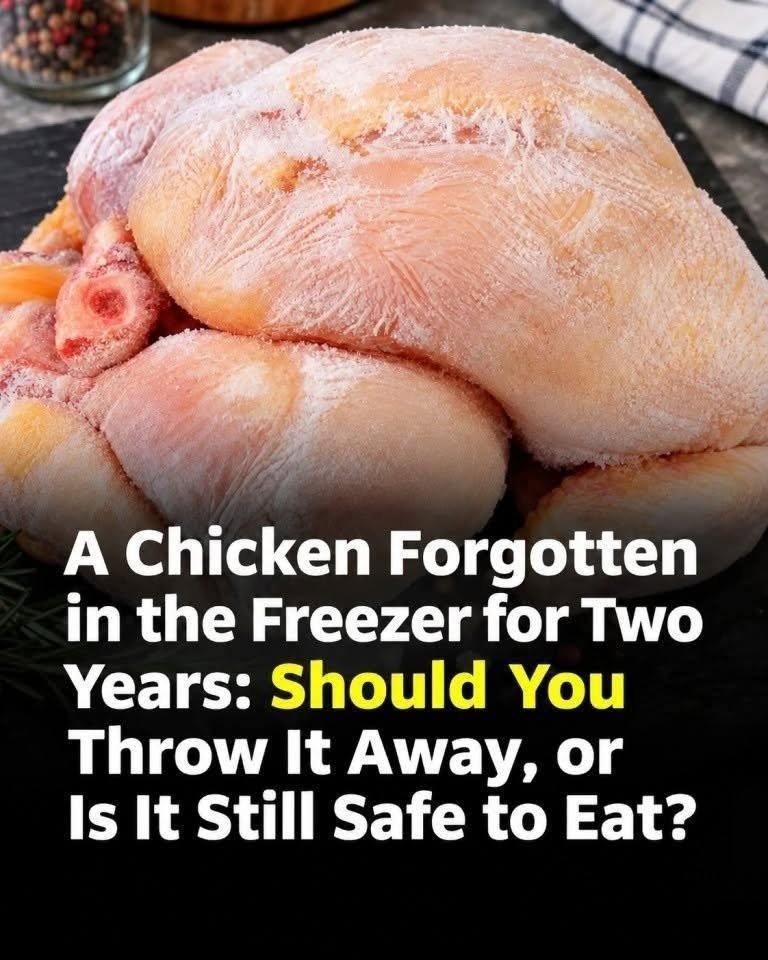
We have all been there. You are digging through the deep recesses of your chest freezer, searching for a bag of frozen peas or a pint of ice cream, when your hand brushes against something solid, bulky, and covered in a thick layer of ice. You pull it out, wipe away the frost, and realize with a jolt of surprise that it is a whole chicken. The label says it was purchased… two years ago.
The image perfectly captures this scenario: a large whole chicken, heavily encrusted with ice crystals and freezer frost, sitting on a cutting board. The text asks the million-dollar question: “A Chicken Forgotten in the Freezer for Two Years: Should You Throw It Away, or Is It Still Safe to Eat?” The prompt adds a tantalizing hint: “The food safety answer might surprise you!”
The instinctual reaction for most people is to toss it directly into the trash. Two years feels like an eternity in food storage terms. It feels dangerous, unhygienic, and undoubtedly unappetizing. However, the science of food safety and the physics of freezing tell a very different, highly surprising story.
This comprehensive guide will explore the absolute truth about long-term frozen poultry. We will separate the myth of “expiration dates” in the freezer from the reality of bacterial dormancy. We will examine the physical degradation of meat over time, explain why your two-year-old chicken is technically safe to eat but might taste terrible, and provide you with the exact protocols for thawing, inspecting, and cooking a forgotten bird.