8 Warning Signs of Stroke That May Appear One Month Before + 9 Powerful Tips to Prevent It
The concept of a “warning period” before a stroke is one of the most critical yet misunderstood topics in cardiovascular health. While a stroke is often perceived as a sudden, catastrophic event—a “brain attack” that strikes without notice—medical evidence increasingly suggests that the body frequently sends distress signals weeks or even months before the acute crisis occurs. These prodromal symptoms are not merely random aches or fatigue; they are often manifestations of Transient Ischemic Attacks (TIAs), micro-emboli, or systemic vascular instability that precede a major occlusion. Recognizing these subtle cues can be the difference between permanent disability and a life-saving intervention.
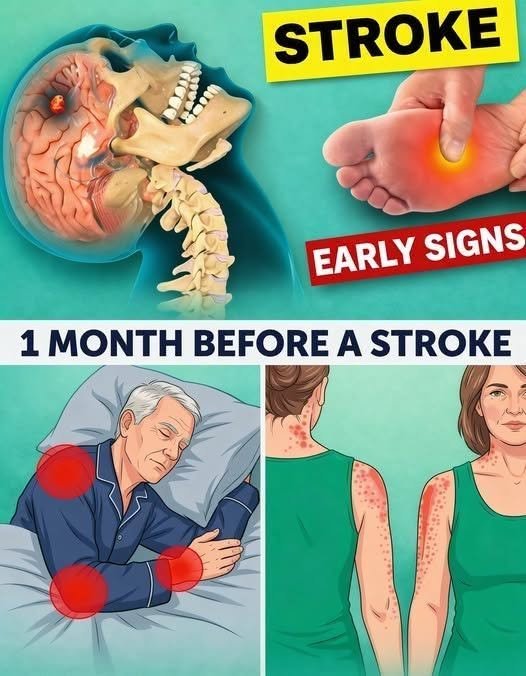
However, it is vital to approach this topic with scientific precision. The image provided highlights specific symptoms like joint pain and skin rashes alongside brain imagery. While these can be associated with vascular issues, they are not universal predictors of stroke for every individual. This article dissects the eight most clinically significant warning signs that may appear in the month leading up to a stroke, separating established medical facts from common misconceptions. Furthermore, we will explore nine powerful, evidence-based prevention strategies that address the root causes of cerebrovascular disease. Understanding the biology of the “pre-stroke” phase empowers you to act before the window of opportunity closes, transforming passive worry into proactive health management.