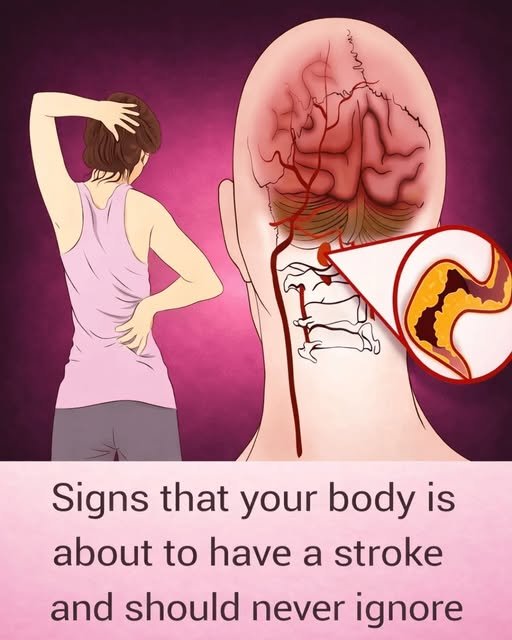
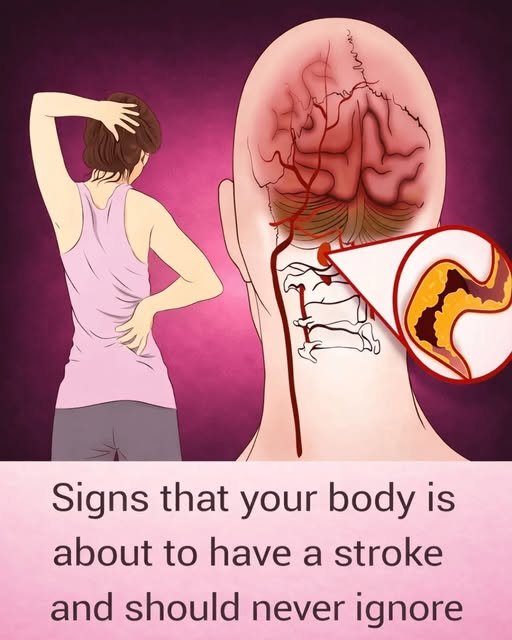
8 Warning Signs of Stroke That May Appear One Month Before + 9 Powerful Tips to Prevent It
The Biology of the Pre-Stroke Phase: Why Symptoms Emerge Early
To understand why warning signs appear a month before a stroke, one must understand the mechanism of cerebral ischemia. A stroke typically results from either a blockage (ischemic) or a bleed (hemorrhagic). In the weeks leading up to an ischemic stroke, the vascular system is often in a state of high volatility. Atherosclerotic plaques in the carotid arteries or the heart may become unstable, shedding tiny clots (micro-emboli) that travel to the brain. These micro-clots may temporarily block small vessels, causing fleeting symptoms that resolve quickly because the body’s natural clot-busting enzymes (like tPA) dissolve them before permanent damage occurs.
This phenomenon is known as a Transient Ischemic Attack (TIA), often called a “mini-stroke.” Studies indicate that approximately 10-15% of all strokes are preceded by a TIA, and nearly half of these occur within the week before the major event. However, the “one month” window is also characterized by systemic inflammation and hemodynamic stress. The body’s attempt to compensate for reduced blood flow or high blood pressure can manifest as fatigue, dizziness, or sensory changes. These are not just “local” brain events but systemic warnings that the cardiovascular system is failing to maintain homeostasis. Recognizing this biological context helps patients understand that a headache or a moment of confusion is not an isolated incident but a potential data point in a larger pattern of vascular decline.
1. Sudden Severe Headache and 2. Unexplained Dizziness
Among the most alarming pre-stroke warnings is a sudden, severe headache, often described by patients as “the worst headache of my life” or a “thunderclap” headache. While this is the hallmark sign of a hemorrhagic stroke (bleeding), it can also precede an ischemic event if a vessel is stretching under extreme pressure or if a dissection (tear) in the artery wall is occurring. Unlike a typical tension headache, this pain often has no trigger—it doesn’t follow stress or dehydration—and may be accompanied by nausea or vomiting. If a headache appears suddenly and peaks in intensity within seconds to minutes, it requires immediate emergency evaluation, regardless of whether other stroke symptoms are present.
Unexplained dizziness or vertigo is another frequent prodromal symptom, particularly for strokes affecting the posterior circulation (the back of the brain, which controls balance). This isn’t just lightheadedness from standing up too fast; it is often a true sensation of spinning or a profound loss of equilibrium that makes walking difficult. This occurs when the cerebellum or brainstem receives insufficient blood flow. When combined with other symptoms like double vision or slurred speech, dizziness becomes a high-risk indicator. Patients often dismiss this as an inner ear issue or aging, but when it arises suddenly and persists for more than a few minutes without a clear cause, it warrants a neurological workup to rule out vertebrobasilar insufficiency.
3. Vision Changes and 4. Sensory Numbness or Tingling
Visual disturbances are among the earliest and most specific warning signs of impending stroke. This can manifest as transient monocular blindness (amaurosis fugax), where a patient experiences a temporary “curtain” or shade descending over one eye, lasting from seconds to minutes. This occurs when a clot temporarily blocks the retinal artery. Alternatively, patients may experience binocular diplopia (double vision) or blurred vision that comes and goes. Because the visual cortex and optic pathways are highly sensitive to oxygen deprivation, even minor fluctuations in blood flow can trigger these symptoms. Any sudden change in vision, even if it resolves completely, should be treated as a medical emergency.
Sensory abnormalities, such as numbness, tingling, or a “pins and needles” sensation, often affect one side of the body. This unilateral presentation is key; bilateral tingling is more likely to be metabolic or anxiety-related, whereas one-sided sensory loss points to a focal brain lesion. Patients might notice their hand feeling “asleep” without having leaned on it, or a patch of skin on the face feeling strange. This occurs when the somatosensory cortex or the thalamus is compromised. In the month before a stroke, these sensations may be intermittent, appearing during periods of high blood pressure or physical exertion and fading at rest. The recurrence of these specific sensory deficits is a strong predictor of future infarction.
5. Muscle Weakness and 6. Speech and Language Difficulties
Motor weakness is perhaps the most recognized stroke symptom, but in the pre-stroke phase, it can be subtle and fleeting. Instead of total paralysis, a patient might experience “clumsiness” or a loss of fine motor control. A dominant hand might struggle to hold a pen, button a shirt, or grip a cup. Leg weakness might manifest as a sudden stumble or a foot that drags slightly while walking. This “drift” occurs when the motor cortex or corticospinal tract is intermittently deprived of oxygen. The key differentiator from orthopedic issues is the sudden onset and the lack of pain; neurogenic weakness is typically painless, whereas muscle strains or arthritis hurt.
Speech and language difficulties, collectively known as aphasia or dysarthria, are equally critical warnings. Dysarthria involves the mechanical inability to articulate words clearly due to muscle weakness in the face and tongue; speech sounds slurred or mumbled, like the person is intoxicated. Aphasia, conversely, is a cognitive language disorder; the person knows what they want to say but cannot find the words, or they speak in nonsensical phrases. They may also have trouble understanding others. These symptoms can be terrifyingly brief, lasting only a minute or two, but they represent a direct disruption of the brain’s language centers. Receptive aphasia (trouble understanding) is often missed by observers who assume the person is just confused or distracted, making education on this sign vital.