The Surprising Truth About Freezing Milk: What You Need to Know Before You Try It
Picture this: You have just returned from the grocery store with a cart full of supplies, including a large jug of milk that was on sale. However, you realize that you and your family will never be able to consume the entire gallon before the expiration date hits. Or perhaps you are preparing for a long trip, a severe weather event, or simply trying to reduce your weekly grocery bills by buying in bulk. The solution seems obvious: throw the milk in the freezer. But as you place the jug on the shelf, a moment of hesitation strikes. Is it actually safe to freeze milk? Will it ruin the taste, the texture, or the nutritional value?
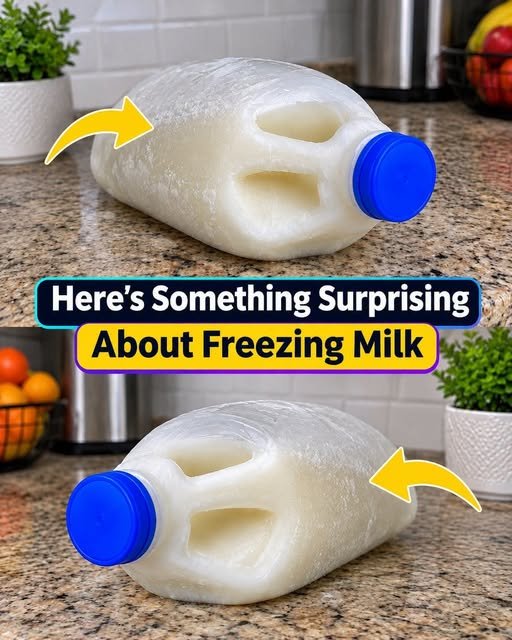
A viral image circulating online shows a plastic milk jug frozen completely solid, with the caption, “Here’s Something Surprising About Freezing Milk.” The visual is striking, but it also raises a lot of practical questions. Most people are accustomed to freezing meat, bread, and even some fruits and vegetables, but dairy products are often treated differently. There is a widespread belief that freezing milk is a culinary mistake that results in a curdled, watery, or separated mess.
The truth is that freezing milk is entirely safe, highly practical, and a fantastic way to reduce food waste and save money. However, it does come with a few caveats. The physical and chemical structure of milk changes when subjected to freezing temperatures, which can alter its texture and appearance upon thawing. If you understand the science behind these changes and follow a few simple rules, you can safely extend the shelf life of your dairy for months without sacrificing quality.
This comprehensive guide explores everything you need to know about freezing milk. We will break down the science of what happens to milk in the freezer, explain why it sometimes looks yellow or separated, provide step-by-step instructions for proper freezing and thawing, and discuss the best ways to use thawed milk. We will also examine whether freezing affects nutritional value and explore how other dairy alternatives hold up in the cold.
Is It Safe to Freeze Milk? The Short Answer
The short answer is yes, absolutely. According to food safety experts and government agencies, freezing milk is a perfectly safe method of long-term preservation. The cold temperatures of a freezer (typically 0°F or -18°C) effectively halt the growth of bacteria and slow down enzymatic activity, which are the primary causes of milk spoilage.
Because the freezing process does not change the fundamental chemical composition of the milk in a way that is harmful to human health, it remains safe to consume almost indefinitely. From a strict food safety perspective, a frozen jug of milk will not make you sick, provided it was fresh when it went into the freezer and it is thawed properly.
However, while it is safe, freezing does change the physical characteristics of milk. The key is to manage the changes in texture and appearance so that the thawed product remains pleasant to use.
The Science of Freezing Milk: Why It Changes
To understand why thawed milk often looks and tastes slightly different from fresh milk, it helps to understand its basic composition. Milk is an emulsion—a mixture of water, fat, proteins, and carbohydrates. On average, cow’s milk contains about 87% water, with the remaining percentage consisting of fat globules, protein (casein and whey), lactose (milk sugar), and various vitamins and minerals.
The Expansion Factor
The most immediate physical change occurs when the water in the milk freezes. Water expands when it turns into ice, and milk is mostly water. This expansion can cause a glass bottle to shatter or a plastic jug to crack if there is not enough room for the liquid to expand. This is why leaving a small amount of headroom in the container is crucial if you are freezing milk yourself. Commercial milk jugs are designed to hold liquid, not solid ice, so freezing a full gallon in its original container is usually a recipe for a mess.
Separation and Curdling
The more significant change occurs at the molecular level. When milk freezes, the water content forms ice crystals. The fat globules, proteins, and minerals are pushed out of the freezing water and become concentrated in the remaining unfrozen liquid. This process can cause the emulsion to break, separating the water from the fat and protein.
Upon thawing, you might notice that the milk looks grainy, watery, or slightly curdled. You may see white flakes floating in clear or bluish liquid, and a layer of fat may rise to the top. This is not spoilage; it is simply the physical separation of the milk components. The fat and proteins have clumped together because the freezing process altered their structure. Vigorous shaking or blending can often re-emulsify the milk, but it may never be perfectly smooth again.
The Surprising Color Change: Why Frozen Milk Looks Yellow