Before a Heart Attack: Recognizing the Body’s Warning Signs
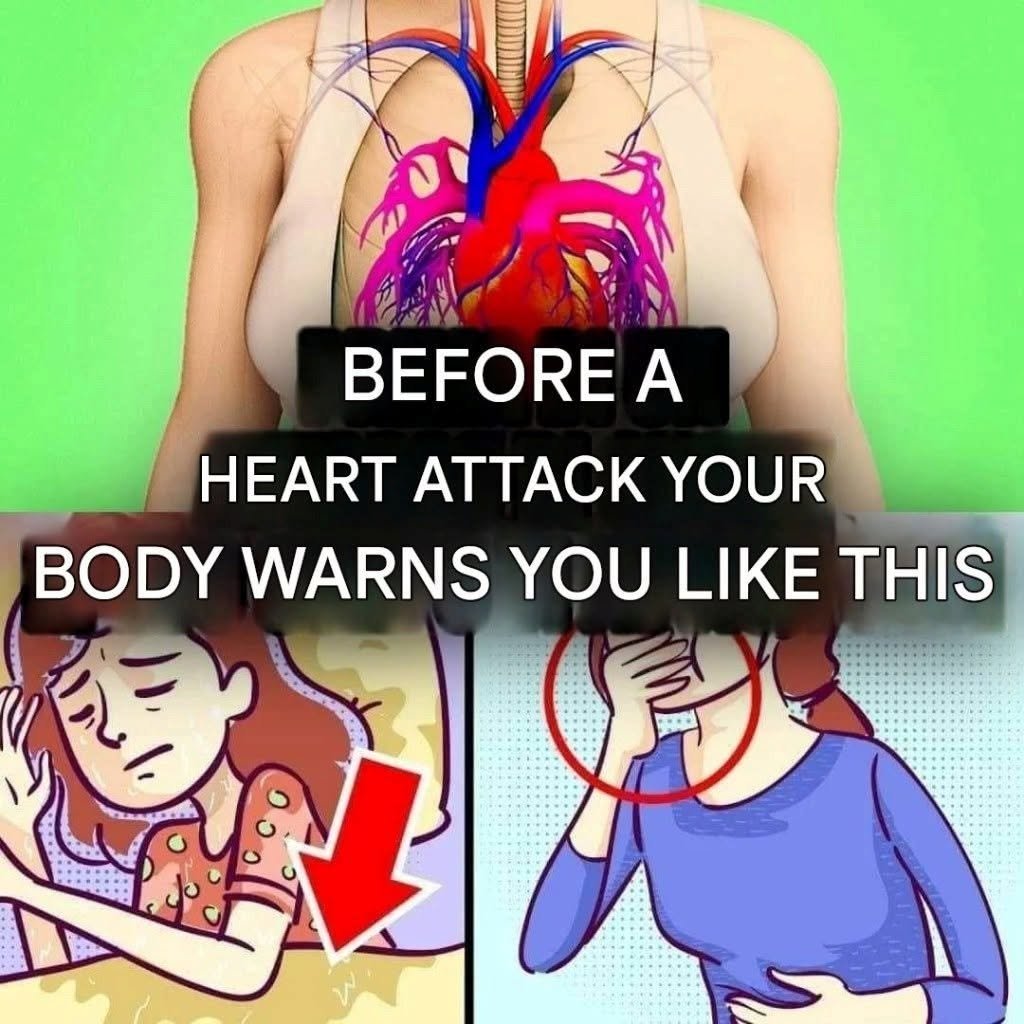
The image above features an anatomical illustration of the heart and blood vessels, alongside two panels showing women experiencing symptoms of discomfort. The text reads: “Before a Heart Attack Your Body Warns You Like This.”
A heart attack often does not happen without warning. Many people experience subtle symptoms in the days or weeks leading up to the event. Recognizing these early warning signs is critical, as prompt medical attention can save lives and limit damage to the heart muscle.
The Importance of Early Warning Signs
While some heart attacks occur suddenly, research suggests that many people experience prodromal symptoms—early signs that precede the main event. These symptoms can be easy to dismiss as stress, indigestion, or fatigue, but they are the body’s way of signaling that something is wrong.
Warning Signs to Watch For
The two panels in the image show women experiencing symptoms that are often overlooked. Here are the key warning signs to be aware of:
1. Chest Discomfort This is the most common sign. It may feel like pressure, squeezing, fullness, or pain in the center of the chest. It can last for more than a few minutes or come and go.
2. Shortness of Breath Feeling winded or unable to catch your breath, especially if it occurs with or without chest discomfort, can be a warning sign.
3. Fatigue Unexplained, extreme fatigue, particularly in women, is a common early symptom. It may feel like exhaustion that does not improve with rest.
4. Pain Radiating to Other Areas Pain or discomfort may spread to the arms (especially the left arm), back, neck, jaw, or stomach.
5. Nausea or Indigestion Some people experience nausea, vomiting, or a feeling of indigestion before a heart attack.
6. Dizziness or Lightheadedness Feeling dizzy or faint can be a sign of a drop in blood pressure or a problem with the heart’s rhythm.
7. Sleep Disturbances Some people report difficulty sleeping or waking up feeling unrefreshed in the weeks before a heart attack.
Why Women May Experience Different Symptoms
The image specifically highlights women, and this is significant. Women are more likely than men to experience atypical symptoms, such as fatigue, shortness of breath, nausea, and pain in the jaw or back, rather than the classic crushing chest pain. This can lead to delayed diagnosis and treatment.
The Importance of Acting Quickly
If you or someone you know experiences any of these symptoms, call for emergency medical help immediately. Do not wait to see if the symptoms go away. Time is critical in heart attack treatment.
Conclusion
Recognizing the warning signs of a heart attack can make a significant difference in the outcome. If you notice any of these symptoms, especially if they are new or persistent, seek medical attention promptly. Listening to your body and acting quickly is the best way to protect your heart.