Thought Something Was Stuck in My Throat… Until This Strange “Stone” Suddenly Came Out!
Meta Description: That feeling of something stuck in your throat? It might not be food—it could be a tonsil stone! Discover what these smelly little stones are, why they form, and how to get rid of them safely.
Introduction
We’ve all had that annoying sensation: a tickle in the back of the throat, a feeling like a piece of popcorn hull or a fish bone is lodged deep down. You cough, you clear your throat, you drink water—but nothing works.
Then, suddenly… pop.
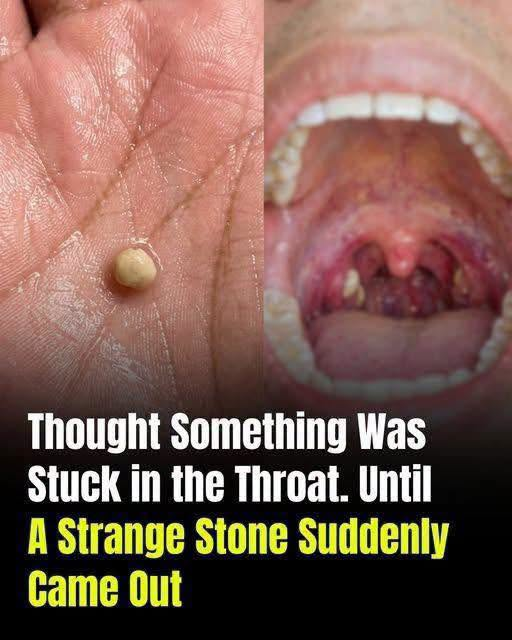
A small, yellowish-white “stone” dislodges itself. You hold it in your palm (as seen in the image above), confused and slightly grossed out. You crush it, and—wow—the smell is absolutely terrible.
Welcome to the world of Tonsil Stones (medically known as tonsilloliths).
If the image above made you gag a little, don’t worry—you aren’t alone. Millions of people suffer from these mysterious, smelly calcifications. Here is everything you need to know about what they are, why they happen, and how to stop them from coming back.
What Exactly Is That “Stone”?
That little beige pebble in the hand isn’t a kidney stone or a gallstone. It is a buildup of debris trapped in your tonsils.
Your tonsils are not smooth; they have nooks and crannies called tonsil crypts. Think of them like little pockets or caves in the tissue at the back of your throat.
Over time, these crypts can trap:
Dead cells
Mucus
Saliva
Food particles
Bacteria
When this mixture gets stuck, it hardens and calcifies into a stone. The reason they smell so bad (like rotten eggs) is that the bacteria feeding on this debris produce volatile sulfur compounds—the same stuff that causes chronic bad breath (halitosis).
Why Do I Keep Getting Them?
If you’ve had one tonsil stone, you’re likely prone to getting more. Several factors contribute to their formation:
Chronic Tonsillitis: If your tonsils are frequently inflamed or infected, the crypts become deeper and more prone to trapping debris.
Large Tonsils: People with naturally larger tonsils have more surface area and deeper crypts for stones to hide in.
Post-Nasal Drip: Chronic allergies or sinus issues cause excess mucus to drip down the throat, providing more “glue” for the stones to form.
Poor Oral Hygiene: While not the only cause, a buildup of bacteria in the mouth definitely speeds up the process.
Dry Mouth: Saliva helps wash away debris. If you are dehydrated or breathe through your mouth while sleeping, stones are more likely to form.
How to Safely Remove Tonsil Stones
Seeing that stone in the mirror (like the right side of the image) can be tempting to pick at, but be careful! Your tonsils are delicate tissue filled with blood vessels.
Safe Home Remedies:
Salt Water Gargle: Mix 1/2 teaspoon of salt in warm water and gargle vigorously. This can help dislodge loose stones and soothe inflammation.
Coughing: Sometimes, a forceful (but controlled) cough is enough to pop them out naturally.
Water Flosser (Low Setting): If you have a Waterpik, use it on the lowest setting to gently spray water into the crypts to flush them out. Warning: High pressure can damage tonsil tissue!
Cotton Swab: Gently press on the tissue next to the stone (not the stone itself) to push it out. Never dig blindly.
Medical Treatments:
If stones are large, painful, or constant, an ENT (Ear, Nose, and Throat doctor) can help. Options include:
Laser Cryptolysis: Resurfacing the tonsils to eliminate the crypts where stones hide.
Coblation Cryptolysis: Using radio waves to smooth out the tonsil tissue.
Tonsillectomy: In severe cases, removing the tonsils entirely is the only permanent cure.
Prevention: Stop Them Before They Start
You can’t always prevent tonsil stones, but you can reduce their frequency:
Gargle Daily: Make salt water or alcohol-free mouthwash part of your nightly routine.
Stay Hydrated: Drink plenty of water to keep saliva flowing.
Scrape Your Tongue: Reducing overall bacteria in the mouth helps keep tonsil crypts cleaner.
Treat Allergies: Managing post-nasal drip reduces the mucus that feeds stone formation.
When to See a Doctor
Tonsil stones are usually harmless, just annoying. However, see a doctor if:
Your tonsils are red, swollen, or bleeding.
You have severe pain swallowing.
One tonsil is significantly larger than the other.
You see blood in your saliva.
Conclusion
That “strange stone” in the image might be gross, but it’s actually a sign that your body’s filtration system is working overtime. While they are unpleasant, tonsil stones are rarely dangerous.
With good hygiene and a little patience, you can keep your throat clear and your breath fresh. So next time you feel that tickle, don’t panic—it’s probably just a little calcium souvenir from your tonsils!
💬 Over to You!
Have you ever coughed up a tonsil stone? What’s your best trick for getting rid of them without gagging? Share your experiences (and war stories) in the comments below! 👇
Disclaimer: This article is for informational and educational purposes only and does not constitute professional medical advice. If you have persistent throat pain or difficulty swallowing, please consult an ENT specialist.