Never Mix Medications in One Box: 10 Serious Risks Most People Don’t Know
Using a pill organizer? Think twice before mixing your medications. Discover the 10 serious risks of mixing pills in one box and how to manage your prescriptions safely.
Introduction
For many people managing multiple prescriptions, a weekly pill organizer seems like a lifesaver. It’s convenient, it’s compact, and it helps you remember if you’ve taken your daily dose.
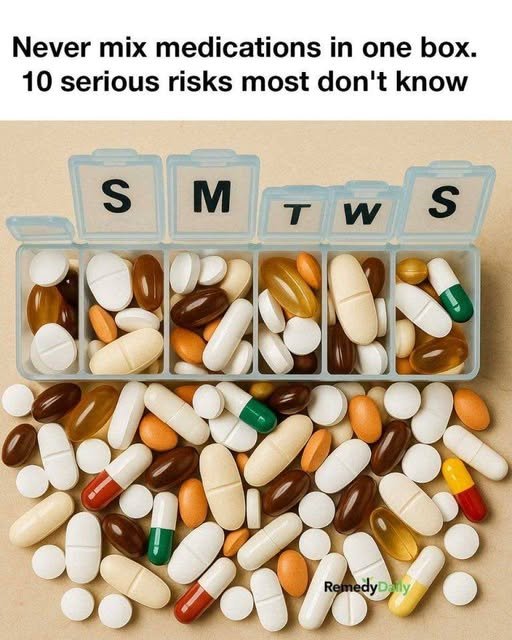
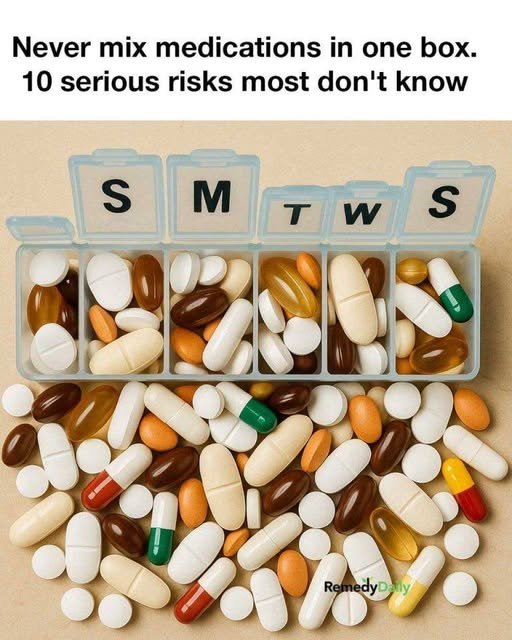
However, the image above carries a stark warning: “Never mix medications in one box.”
While sorting pills into a daily organizer is generally safe if done correctly, the practice of removing medications from their original packaging and mixing them haphazardly—whether in a single bag, a large bottle, or a disorganized box—can lead to dangerous, even life-threatening consequences.
From chemical degradation to fatal dosage errors, here are the 10 serious risks of mixing medications that most people don’t know about.
1. Loss of Identification (The “Mystery Pill” Problem)
The most immediate risk of mixing pills is losing track of what they are. Many generic medications look identical—small, white, and round. If you mix them together and one falls on the floor, or if you forget which day you are on, you have no way to identify which pill is which. Taking the wrong medication can lead to severe health complications.
2. Loss of Crucial Information
The original prescription bottle is not just a container; it is an information hub. It contains:
The name of the drug.
The dosage strength.
The prescribing doctor’s name.
The pharmacy’s contact information.
Specific instructions (e.g., “Take with food,” “Do not crush”). When you mix pills into a generic box, you strip away this vital safety net.
3. Expiration Date Confusion
Different medications have different shelf lives. Your blood pressure medication might expire in six months, while your vitamin supplement expires in two years. Once you mix them in a box, you lose track of the expiration dates. Taking expired medication can be ineffective or, in the case of certain drugs like tetracycline antibiotics, actually toxic.
4. Physical Drug Interactions (Chemical Degradation)
This is a risk few people consider. Some medications are chemically unstable when they come into direct contact with other pills.
Moisture Transfer: Some pills are hygroscopic (they absorb moisture from the air or other pills). If mixed, a “wet” pill can degrade a “dry” pill.
Chemical Reaction: In rare cases, the active ingredients on the surface of two different pills can react when pressed together in a small box, neutralizing the medication or creating a harmful compound.
5. Dosage Errors and “Look-Alike” Pills
If you take two different medications that look identical but have different dosages (e.g., 10mg of one drug and 20mg of another), mixing them in a box makes it impossible to tell them apart. Accidentally taking a double dose of a blood thinner or heart medication can be fatal.
6. Light and Air Degradation
Original prescription bottles are often made of specific materials (like amber plastic) designed to protect the medication from UV light and oxygen. Many standard pill organizers are clear plastic and not airtight. Exposing light-sensitive medications (like nitroglycerin or certain blood pressure drugs) to air and light in a mixed box can cause them to break down and lose potency rapidly.
7. Emergency Room Nightmares
Imagine you are in a car accident or suffer a medical emergency and are unable to speak. Paramedics and ER doctors need to know exactly what medications you are on to treat you safely. If your medications are just a mix of unlabelled pills in a plastic box, medical professionals cannot identify them, which can delay life-saving treatment or lead to dangerous drug interactions with emergency medications.
8. Accidental Ingestion by Children or Pets
To a child or a pet, a box full of colorful, mixed pills looks exactly like candy or treats. Original prescription bottles have child-resistant caps for a reason. A standard snap-open pill organizer offers zero protection. If a child gets hold of a mixed box, they could ingest a lethal dose of multiple different drugs at once.
9. Legal and Travel Issues
If you travel, especially internationally or by air, you are often required to carry medications in their original, labelled prescription bottles. TSA agents and customs officials need to verify that the pills belong to you and are legally prescribed. A mixed box of unlabelled pills can be confiscated, or worse, lead to legal trouble if the drugs are controlled substances.
10. Cross-Contamination
If you handle different medications with your hands to mix them into a box, you risk cross-contamination. For example, if you handle a potent hormone medication or a chemotherapy drug and then handle your daily vitamins without washing your hands thoroughly, you could inadvertently ingest traces of the powerful drug.
How to Manage Medications Safely
Does this mean you should never use a pill organizer? No. Pill organizers are excellent tools for adherence, but they must be used correctly.
✅ The Safe Way to Use a Pill Box:
Keep the Original Bottles: Always keep the original prescription bottles in a safe place at home. Only put a few days’ worth of pills in the organizer at a time.
Use a Weekly Organizer with Separate Compartments: Ensure your organizer has separate slots for Morning, Noon, Evening, and Night (as seen in the image) to prevent mixing different daily doses.
Wash Hands: Always wash your hands before handling pills to prevent contamination.
Check Expiration Dates: Before filling your weekly box, check the bottles to ensure none of the medications are expired.
Consult Your Pharmacist: Ask your pharmacist if any of your specific medications are light-sensitive or prone to degradation before putting them in a plastic organizer.
Conclusion
Convenience should never come at the cost of safety. While organizing your medications is a smart habit, “mixing” them without care strips away the safety features built into pharmaceutical packaging.
Respect the original bottle, keep your medications identified, and always consult your healthcare provider before changing how you store your prescriptions. Your health is too important to leave to chance.
Disclaimer: This article is for informational and educational purposes only and does not constitute professional medical or pharmaceutical advice. Always consult with a doctor or pharmacist regarding the proper storage and administration of your medications.