Mystery Solved: What Are Those Silver “Cups” Found in Grandma’s Cupboard?
Meta Description: Found strange, dimpled silver cups in your grandmother’s kitchen cupboard? Don’t throw them away! Discover the history and purpose of these vintage sewing tools.
Introduction
If you have ever helped an older relative clean out their kitchen cabinets, you know that the “crockery cupboard” often holds far more than just tea cups and saucers. It is a treasure trove of random household items, mysterious gadgets, and forgotten relics.
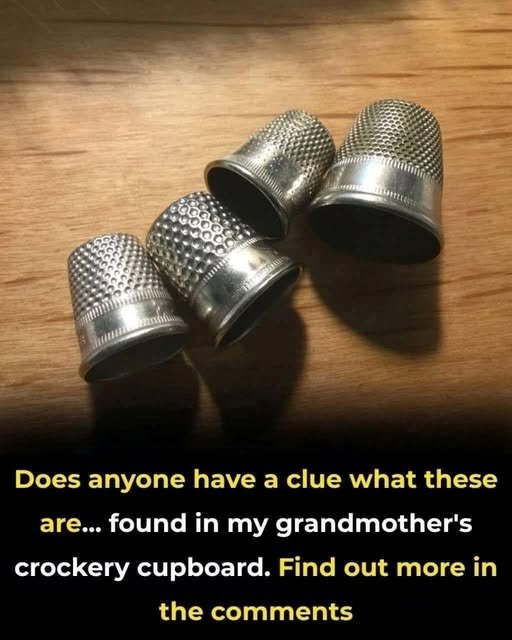
Recently, a photo went viral showing four small, silver, cup-shaped objects with textured tops, found tucked away in a grandmother’s crockery cupboard. The owner was baffled, asking the internet: “Does anyone have a clue what these are?”
If you have ever stumbled across similar items in your own home, you are not alone. Here is the answer to the mystery, along with a look back at a forgotten household essential.
The Reveal: They Are Thimbles!
Those little silver cups are thimbles.
Specifically, they appear to be vintage metal (likely silver-plated or sterling silver) thimbles used for hand sewing.
What Do They Do?
For centuries, before the invention of sewing machines, all clothing and linens were stitched by hand. A thimble is a protective tool worn on the tip of the middle finger.
The Dimples: The textured, dimpled top isn’t just for decoration. It is designed to grip the blunt end of a sewing needle.
The Function: When pushing a needle through thick fabric (like denim, canvas, or heavy wool), the needle can hurt your finger. The thimble allows the sewer to push the needle through the material with force without piercing their own skin.
Why Were They in the Crockery Cupboard?
Finding sewing notions in a kitchen cupboard might seem strange today, but it was very common for previous generations.
The “Junk Drawer” Phenomenon: In many older homes, the kitchen was the center of the house. The drawers and cupboards that held the “good china” often had adjacent shelves or drawers where miscellaneous household items—like buttons, thread, scissors, and thimbles—were tossed for easy access.
Multi-Tasking: Grandmothers and great-grandmothers often mended clothes while sitting in the kitchen, perhaps near a warm stove or while supervising children. Keeping the sewing kit near the kitchen table was practical.
Safe Keeping: Silver thimbles were sometimes considered valuable or sentimental. Storing them in a sturdy wooden cupboard kept them safe from being lost under the sofa cushions.
Are They Valuable?
While a common silver-plated thimble might only be worth a few dollars to a collector, they can hold significant historical and sentimental value.
Sterling Silver: If the thimbles are marked “Sterling” or “925,” they are made of solid silver and have intrinsic melt value, as well as higher collectible worth.
Hallmarks: Many vintage thimbles have maker’s marks on the rim. Collectors of “simulacra” (thimble collecting is a real hobby!) look for specific brands like Simons Bros., Ketcham & McDougall, or English hallmarks.
Sentimental Value: Often, these thimbles were passed down through generations. They represent hours of labor, love, and care put into making and mending the family’s clothing.
Conclusion
So, if you find a stash of dimpled silver cups in your grandmother’s cupboard, don’t toss them in the trash! You have just uncovered a piece of domestic history.
These humble tools were essential for survival and thriftiness in the days before fast fashion. Next time you see one, imagine the countless shirts, quilts, and socks that were lovingly mended by the hands that once wore them.