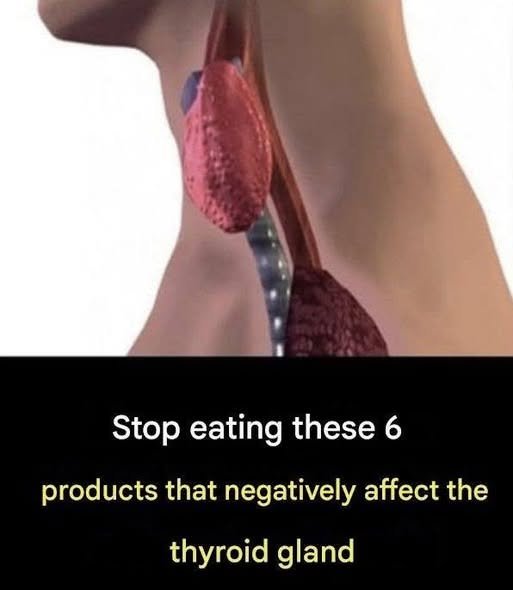
Stop Eating These 6 Products That Negatively Affect the Thyroid Gland
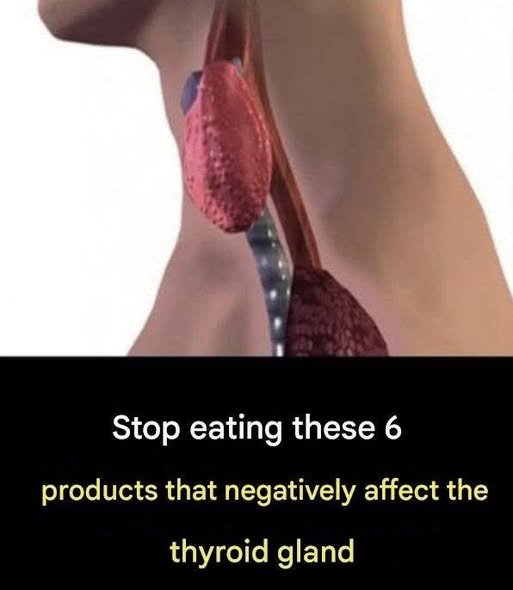
Your thyroid is a small, butterfly-shaped gland in your neck that controls your metabolism, energy levels, and mood. When it’s not functioning properly, it can affect nearly every system in your body.
While certain foods can support thyroid health, others can interfere with its function — especially if you have an underlying thyroid condition. Here are 6 products that may negatively affect your thyroid gland, and what you should know about them. 👇
Disclaimer: This post is for informational purposes only and is not a substitute for professional medical advice. If you have a thyroid condition, consult your healthcare provider before making dietary changes.
⚠️ 6 Products That May Affect Your Thyroid
1. Processed Foods Highly processed foods are often loaded with refined sugars, unhealthy fats, and additives. They can cause inflammation and contribute to weight gain, which can worsen thyroid function.
2. Excess Iodine Iodine is essential for thyroid function, but too much can be harmful. High-iodine foods like seaweed, kelp, and iodized salt can disrupt thyroid function, especially in people with autoimmune thyroid conditions.
3. Gluten For people with Hashimoto’s thyroiditis (an autoimmune thyroid condition), gluten can trigger inflammation and worsen symptoms. Some studies suggest a gluten-free diet may help.
4. Soy Soy contains compounds called isoflavones that can interfere with thyroid hormone absorption. If you take thyroid medication, avoid consuming soy products within a few hours of your dose.
5. Cruciferous Vegetables Vegetables like broccoli, cabbage, kale, and cauliflower contain goitrogens — compounds that can interfere with thyroid function when consumed in very large amounts. Cooking them reduces their goitrogenic effect.
6. Caffeine Caffeine can interfere with the absorption of thyroid medication. It can also worsen symptoms like anxiety and heart palpitations in people with hyperthyroidism.
❓ Frequently Asked Questions
What foods are bad for the thyroid? Processed foods, excess iodine, gluten, soy, raw cruciferous vegetables, and caffeine may all negatively affect thyroid function.
Can diet affect thyroid function? Yes — certain foods can interfere with thyroid hormone production and absorption. A balanced diet is important for thyroid health.
What is the best diet for thyroid health? A diet rich in whole foods, lean proteins, healthy fats, and antioxidants. If you have a thyroid condition, work with your doctor or a dietitian to create a plan.
Should I avoid cruciferous vegetables if I have thyroid issues? You don’t need to avoid them completely. Cooking them reduces goitrogens, and moderation is key.
Does soy affect thyroid medication? Yes — soy can interfere with the absorption of thyroid medication. Take your medication on an empty stomach and wait 4 hours before consuming soy.
Can caffeine affect my thyroid? Yes — caffeine can interfere with thyroid medication absorption and worsen symptoms of hyperthyroidism.
What is Hashimoto’s thyroiditis? It’s an autoimmune condition where the immune system attacks the thyroid gland, often leading to hypothyroidism.
When should I see a doctor about my thyroid? If you experience symptoms like fatigue, weight changes, hair loss, or mood swings, see a doctor for a thyroid function test.