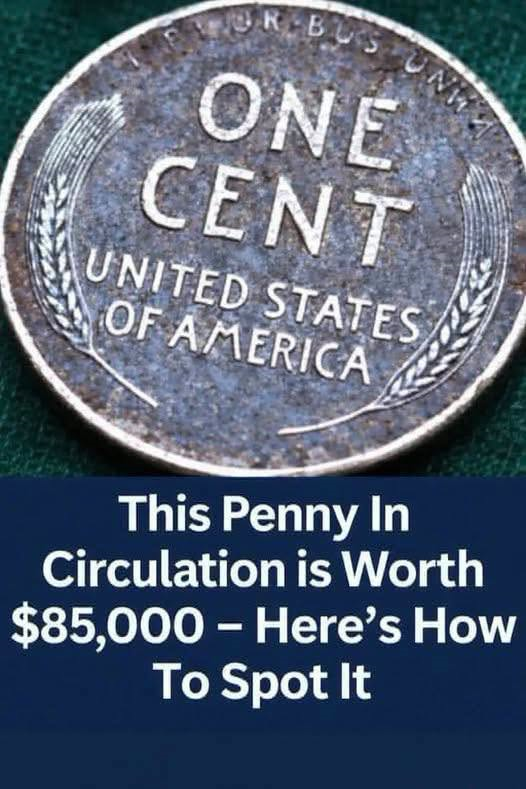
🪙 $85,000 Penny? Here’s How to Spot a Rare 1943 Copper Wheat Cent
A penny worth $85,000? It sounds impossible, but it’s true — and there might be one hiding in your pocket change.
The 1943 copper wheat penny is one of the most famous rare coins in American history. It was never supposed to exist in ordinary circulation, which is exactly why it’s worth a small fortune today. Here’s the story behind this rare coin and how to tell if you’ve found one. 👇
Disclaimer: This post is for informational purposes only. Coin values vary based on condition, authenticity, and market demand. Always have a suspected rare coin authenticated by a professional before selling.
🔬 Why Is the 1943 Copper Penny So Rare?
During World War II, copper was a critical war material. The United States Mint switched to producing pennies from zinc-coated steel in 1943 to save copper for military use.
However, a small number of copper blanks from the previous year were left in the presses by mistake. These were struck into 1943 pennies, creating one of the most famous error coins in American numismatics.
How rare are they? Only a handful of genuine 1943 copper pennies are known to exist. Because they were never supposed to be made, collectors prize them highly.
How much are they worth? Authenticated examples in excellent condition have been valued in the tens of thousands of dollars. Figures around $85,000 are often mentioned for a strong mint-state example, though the exact price depends on condition, origin, demand, and professional grading.
🧲 How to Spot a Genuine 1943 Copper Penny
Because of the coin’s legendary status, counterfeits are everywhere. Here’s how to check if you’ve found a real one:
1. Check the date. Look for a 1943 penny. The date should be clear and unaltered.
2. Use a magnet. This is the easiest first check. A genuine 1943 copper penny is not magnetic — it won’t stick to a magnet. A copper-plated steel penny will stick.
3. Look for signs of alteration. Many fakes begin as 1948 copper pennies with the final digit filed down to look like a 3. Look closely at the “3” — if it looks uneven, scratched, or suspiciously different from the other digits, it’s likely altered.
4. Check the color and wear. A genuine copper penny will have the natural color and wear patterns of a 1940s copper cent. A copper-plated steel cent may look artificially bright or have a slightly different texture.
5. Weigh it. A genuine 1943 copper cent should weigh about 3.11 grams. A steel cent weighs about 2.7 grams. A small scale can help you tell the difference.
6. Get it authenticated. If you think you have a genuine 1943 copper penny, do not clean it. Take it to a professional coin dealer or send it to a grading service like PCGS or NGC for authentication.
❓ Frequently Asked Questions
Is the 1943 copper penny really worth $85,000? Yes — authenticated examples in excellent condition have been valued in the tens of thousands of dollars. The exact price depends on condition, rarity, and demand.
How can I tell if my 1943 penny is copper or steel? Use a magnet. If it sticks, it’s steel. If it doesn’t stick, it might be copper — but it could also be a fake.
Are there fake 1943 copper pennies? Yes — many counterfeits exist. Some are altered 1948 pennies, while others are copper-plated steel cents.
Should I clean my rare penny? No — never clean a rare coin. Cleaning can damage the surface and reduce its value significantly.
What should I do if I find one? Handle it carefully by the edges, do not clean it, and take it to a professional coin dealer or grading service for authentication.
Where can I get a coin authenticated? Professional grading services like PCGS (Professional Coin Grading Service) and NGC (Numismatic Guaranty Corporation) are the most trusted.
Are there other rare pennies worth money? Yes — the 1909-S VDB, 1914-D, and 1922 No D pennies are also highly valuable.
What if my penny is magnetic but looks copper? It’s likely a copper-plated steel cent, which is a common fake. It is not a genuine 1943 copper penny.