5 Warning Signs Your Liver May Be in a Severe Stage: See a Doctor Immediately If You Notice Even One
The Liver’s Role: Why a Failing Liver Affects the Entire Body
To understand why a failing liver causes symptoms as diverse as itchy skin, swollen bellies, and mental confusion, we must first understand what the liver actually does.
The Master Filter
Every drop of blood in your body passes through the liver. It acts as a massive filtration system, removing toxins, metabolic waste products, and harmful chemicals from the bloodstream. When the liver is damaged (by fatty liver disease, hepatitis, alcohol abuse, or other causes), it loses its ability to filter these toxins. They build up in the blood, poisoning the entire system.
The Chemical Factory
The liver is responsible for synthesizing proteins, including albumin, which keeps fluid in the blood vessels. It produces clotting factors that allow your blood to clot when you are injured. It manages the metabolism of cholesterol, carbohydrates, and fats. It also stores excess sugar as glycogen for later use. When the liver fails, this entire biochemical factory goes offline, leading to system-wide chaos.
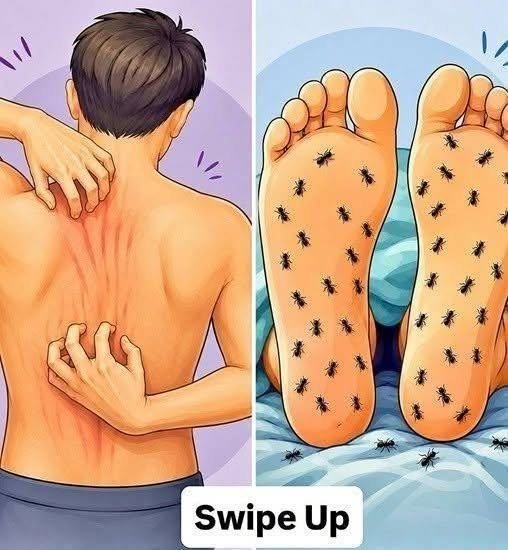
The primary image focuses heavily on the arms, showing a person scratching their skin with visible redness. This is the most visually obvious sign in the graphic, and it is a profound indicator of liver distress.
Why Does Liver Disease Cause Itching?
It is a common misconception that liver itching is caused by bile salts accumulating under the skin. While that can play a role, modern research indicates the primary cause is lysophosphatidic acid (LPA). When the liver is damaged and bile flow is blocked (a condition called cholestasis), the body produces excess LPA. This compound accumulates in the bloodstream and directly triggers the nerve endings in the skin, causing an intense, maddening itch.
The Characteristics of Liver Itch
Liver-related itching (pruritus) is different from a normal mosquito bite or dry skin.
It is often worse at night, disrupting sleep.
It affects the entire body, but is most severe on the palms of the hands and the soles of the feet.
It feels like an itch that is deep beneath the skin and cannot be scratched away.
It is often accompanied by dry, red, or scaling skin due to chronic scratching.
Warning Sign 2: Jaundice (Yellowing of the Skin and Eyes)
Jaundice is one of the most classic and recognizable signs of liver disease. If you or a loved one notices a yellowish tint to the skin or the whites of the eyes, it is a medical emergency.
The Bilirubin Connection
When red blood cells break down, they produce a yellow substance called bilirubin. A healthy liver processes bilirubin and excretes it into the bile, which is eventually eliminated in the stool.
When the liver is severely damaged, it cannot process this bilirubin. The bilirubin builds up in the bloodstream, causing the skin and the whites of the eyes (sclera) to turn yellow.
Accompanying Symptoms
Jaundice is often accompanied by dark-colored urine (the color of tea or cola) and pale, clay-colored stools. This happens because the bilirubin, unable to be processed by the liver, is instead excreted by the kidneys into the urine. If the bile flow is blocked, the stool loses its normal brown color.