4 Foods That Can Carry Dangerous Parasites (And How to Eat Them Safely)
Meta Description: Certain raw or undercooked foods can harbor dangerous parasites. Discover the 4 highest-risk foods for parasitic infection and the proper cooking methods to keep yourself safe.
Introduction
Parasites are organisms that live in or on a host organism to get nutrients and shelter. While many people associate parasites with contaminated water or poor hygiene, food is also a primary transmission route.
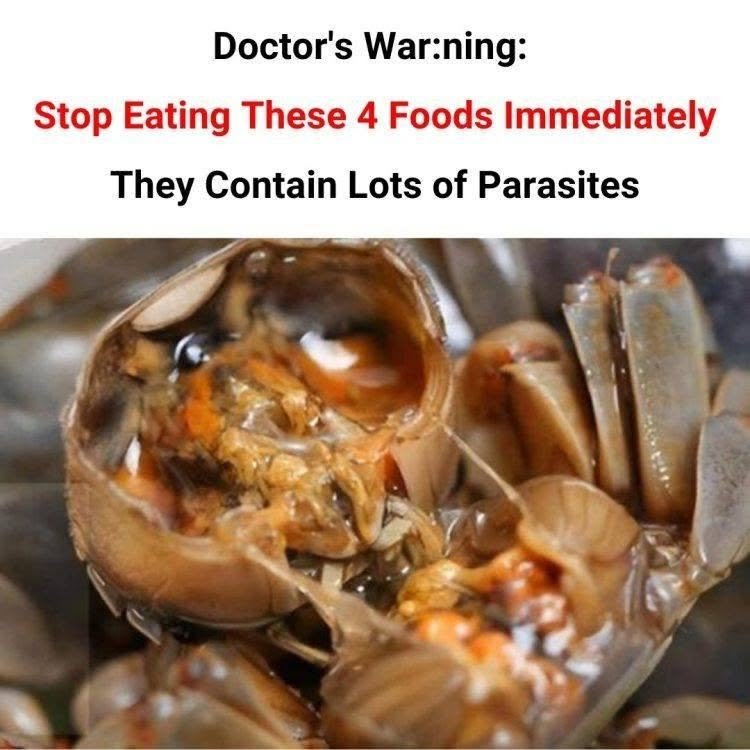
The image above highlights raw freshwater crabs, which are notorious carriers of lung flukes. However, they are not the only culprit. Consuming raw, undercooked, or improperly prepared foods can expose you to various parasites that can cause severe gastrointestinal and systemic illnesses.
Here are the 4 foods most commonly associated with parasitic infections and the facts on how to consume them safely.
1. Raw or Undercooked Freshwater Crabs and Crayfish
The image specifically highlights raw crustaceans, which are a major vector for a dangerous parasite known as the lung fluke (Paragonimus westermani).
The Risk: Freshwater crabs and crayfish often serve as intermediate hosts for lung flukes. When humans eat these crustaceans raw, pickled, salted, or undercooked, the larvae are released in the digestive tract, migrate through the intestinal wall, and travel to the lungs.
The Illness: This causes a disease called paragonimiasis. Symptoms include chronic cough, chest pain, shortness of breath, and coughing up blood. In severe cases, the parasites can migrate to the brain, causing neurological symptoms.
How to Stay Safe: Never eat raw freshwater crabs or crayfish. They must be boiled or steamed at high temperatures until the meat is completely opaque and firm.
2. Raw or Undercooked Freshwater Fish
While saltwater fish are commonly eaten raw in dishes like sushi and sashimi (and are generally safer if properly frozen), freshwater fish pose a much higher parasitic risk.
The Risk: Freshwater fish are common carriers of the Chinese liver fluke (Clonorchis sinensis) and the fish tapeworm (Diphyllobothrium latum).
The Illness: Liver flukes can cause clonorchiasis, leading to inflammation of the bile ducts, liver damage, and an increased risk of bile duct cancer. Fish tapeworms can grow up to 30 feet long inside the human intestine, causing abdominal pain, weight loss, and severe Vitamin B12 deficiency (anemia).
How to Stay Safe: Avoid eating raw freshwater fish. If you intend to eat raw fish, ensure it is saltwater fish that has been commercially frozen to specific temperatures (typically -4°F for 7 days) to kill parasites, as required by FDA guidelines for sushi-grade fish.
3. Undercooked Pork
Pork has historically been one of the most well-known carriers of foodborne parasites, though modern farming practices have significantly reduced the risk in developed nations.
The Risk: Undercooked pork can harbor the pork tapeworm (Taenia solium) and the microscopic roundworm Trichinella spiralis.
The Illness: Eating undercooked pork containing Trichinella larvae causes trichinosis, which leads to nausea, diarrhea, vomiting, fatigue, fever, and severe muscle pain. The pork tapeworm is even more dangerous; if a person ingests the eggs (often through fecal-oral contamination), the larvae can migrate to the brain and muscles, causing cysticercosis, a potentially fatal condition.
How to Stay Safe: Always cook pork to a safe internal temperature of at least 145°F (63°C) for whole cuts, followed by a 3-minute rest time, and 160°F (71°C) for ground pork.
4. Undercooked Wild Game and Beef
While beef tapeworms are less common in commercially raised cattle in many countries, they remain a risk in areas with poor sanitation or in wild game.
The Risk: Undercooked beef can carry the beef tapeworm (Taenia saginata). Wild game (like bear, wild boar, or venison) can carry Trichinella and Toxoplasma gondii.
The Illness: Beef tapeworm infections (taeniasis) are often asymptomatic but can cause abdominal discomfort and digestive issues. Toxoplasmosis from wild game can be particularly dangerous for pregnant women and immunocompromised individuals, potentially causing severe flu-like symptoms and neurological issues.
How to Stay Safe: Cook all beef to at least 145°F (63°C) for whole cuts. When hunting and consuming wild game, ensure the meat is cooked thoroughly to an internal temperature of 160°F (71°C) to destroy any potential parasites.
General Rules for Parasite Prevention
To protect yourself from foodborne parasites, follow these fundamental food safety guidelines:
Cook Thoroughly: Heat is the most effective way to kill parasites. Use a meat thermometer to ensure your food reaches the recommended internal temperature.
Freeze Properly: If you plan to eat fish raw, it must be frozen at very low temperatures for a specific duration to kill parasites. Standard home freezers are usually not cold enough for this; rely on commercially frozen “sushi-grade” fish.
Practice Good Hygiene: Wash your hands, cutting boards, and utensils thoroughly after handling raw meat or seafood to prevent cross-contamination.
Wash Produce: Thoroughly wash all raw fruits and vegetables, especially if they were grown in areas where human or animal waste might be used as fertilizer, as soil can harbor parasite eggs.
Conclusion
While the thought of parasites in food is unsettling, the risk is highly manageable. Foods like freshwater crabs, freshwater fish, pork, and wild game can carry dangerous parasites if not prepared correctly. By understanding the risks and adhering to proper cooking temperatures and food safety practices, you can safely enjoy a wide variety of foods without exposing yourself to parasitic infections.
Disclaimer: This article is for informational and educational purposes only and does not constitute professional medical advice. If you suspect you have a parasitic infection after consuming raw or undercooked food, please consult a healthcare provider for proper diagnosis and treatment.