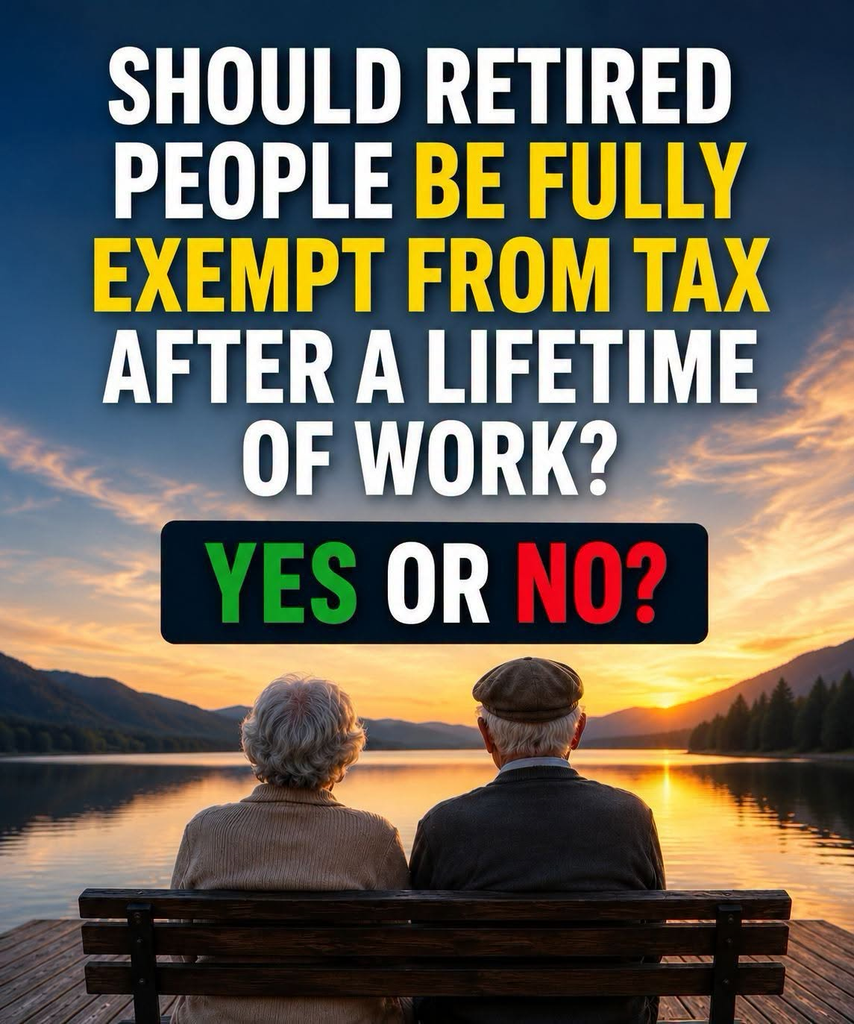
💭 Should Retired People Be Fully Exempt From Tax After a Lifetime of Work? YES or NO?
It’s a question that sparks debate in households, coffee shops, and government halls around the world: After decades of working, paying taxes, and contributing to society, should retirees be completely exempt from paying taxes?
Some argue it’s a well-deserved reward for a lifetime of contribution. Others argue it’s not economically feasible and could strain public services.
We want to know what you think. But first, let’s look at both sides of the argument. 👇
✅ The Case for “YES” – Full Tax Exemption for Retirees
1. A Lifetime of Contribution Retirees have spent 40+ years paying income tax, property tax, and sales tax. Many argue they’ve already paid their fair share and deserve a break in their golden years.
2. Fixed Incomes Most retirees live on fixed incomes, such as Social Security, pensions, or savings. Inflation and rising costs of living hit them harder than most. Tax exemption would provide much-needed financial relief.
3. Reduced Burden on Families When retirees struggle financially, their families often step in to help. Tax relief could reduce the financial strain on younger generations.
4. Encourages Spending If retirees have more disposable income, they’re more likely to spend it, which can stimulate the local economy.
5. A Moral Argument Many believe that after a lifetime of work and contribution, retirees have earned the right to live out their years without the burden of taxes.
❌ The Case for “NO” – Why Full Exemption Is Complicated
1. Economic Impact Fully exempting retirees from taxes would create a massive shortfall in government revenue. This could lead to cuts in public services like healthcare, infrastructure, and education.
2. Not All Retirees Are Struggling Some retirees are wealthy, with substantial pensions, investments, and savings. Exempting all retirees — regardless of income — could be seen as unfair.
3. Strain on Younger Generations If retirees stop paying taxes, the tax burden shifts to younger, working-age adults, who are already facing their own financial challenges.
4. Alternative Solutions Instead of full exemption, many argue for targeted relief — such as raising the standard deduction for seniors, reducing property taxes, or exempting Social Security benefits from taxation.
5. Complexity Implementing a full tax exemption for retirees would be complex and could lead to unintended consequences, such as loopholes and abuse.
🌍 What Do Other Countries Do?
United States: Social Security benefits may be taxed depending on income. Many states offer senior property tax exemptions.
Canada: Seniors receive tax credits and pension income splitting.
United Kingdom: Personal allowance increases for those over 65 (though this has changed in recent years).
Germany: Pensions are taxed, but there are generous deductions for seniors.
Japan: Seniors receive deductions but still pay taxes on pensions.
There is no universal standard — every country handles it differently.
❓ Frequently Asked Questions
Are retirees currently exempt from taxes? No — in most countries, retirees still pay income tax, property tax, and sales tax. Some receive deductions or credits.
What taxes do retirees typically pay? Income tax on pensions and investments, property tax, sales tax, and sometimes taxes on Social Security benefits.
Why do some people want retirees to be tax-exempt? They argue that retirees have paid taxes their whole lives and deserve relief on fixed incomes.
Why do some people oppose it? They argue it would reduce government revenue, strain public services, and shift the tax burden to younger workers.
Are there alternatives to full exemption? Yes — targeted relief like higher standard deductions, property tax freezes, and exempting Social Security from taxation.
Do all retirees struggle financially? No — some are wealthy, while others live on very limited incomes. This is why many argue for income-based relief rather than blanket exemption.
What do you think? We want to hear from you! Should retirees be fully exempt from taxes? Vote YES or NO in the comments.