Why Sleeping on Your Right Side Could Be Hurting Your Digestion (And Why Left is Best)
Meta Description: Do you wake up with heartburn? The way you sleep might be the culprit. Discover the science behind why sleeping on your left side is better for your stomach and how to fix your sleep posture.
Introduction
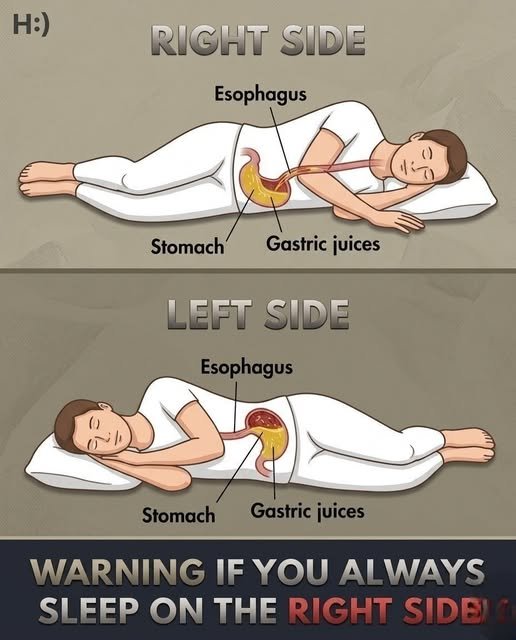
We spend about a third of our lives sleeping, yet few of us think about how our body is positioned during those hours. We toss and turn, finding whatever feels comfortable. But as the diagram above warns, if you always sleep on your right side, you might be inviting health problems into your bed.
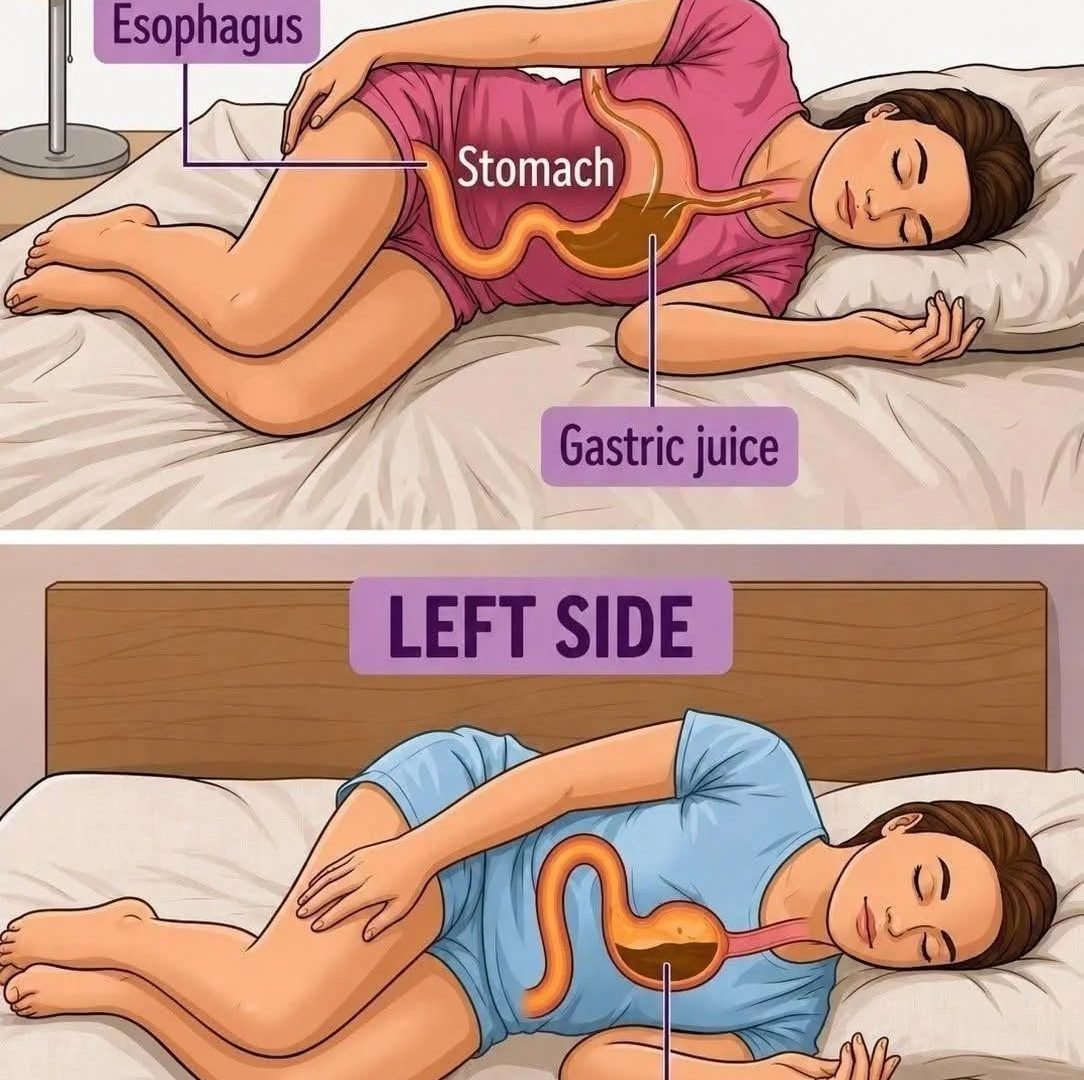
The image illustrates a fascinating anatomical reality: the position of your stomach changes relative to your esophagus depending on which side you lie on. This simple shift in gravity can be the difference between a peaceful night’s sleep and a night plagued by acid reflux and indigestion.
Here is the breakdown of why your sleep side matters and why the “Left Side” is the winner for your digestive health.
The Anatomy of Sleep: Right vs. Left
To understand the warning in the image, you have to look at the shape of your stomach. It isn’t a perfect circle; it’s a curved, J-shaped organ that sits primarily on the left side of your abdomen.
1. The Danger of the Right Side (Top Image)
When you sleep on your right side, your body is positioned in a way that is anatomically unfavorable for digestion.
The Position: As shown in the top diagram, the stomach is positioned higher than the esophagus (the tube connecting your throat to your stomach).
The Result: Gravity works against you. The “Gastric juices” (stomach acid) pool right at the junction where the stomach meets the esophagus.
The Risk: This makes it incredibly easy for acid to leak back up into the esophagus. This is the primary cause of Acid Reflux and GERD (Gastroesophageal Reflux Disease). If you wake up with a sour taste in your mouth or heartburn, you are likely a right-side sleeper.
2. The Benefit of the Left Side (Bottom Image)
When you flip over to your left side, you align your anatomy with gravity.
The Position: The stomach hangs lower than the esophagus.
The Result: The gastric juices settle at the bottom of the stomach curve, far away from the esophageal opening.
The Benefit: Even if the valve between the stomach and esophagus relaxes (which happens during sleep), the acid stays down where it belongs. This significantly reduces the risk of heartburn and allows for better digestion.
3 Surprising Benefits of Sleeping on Your Left Side
Beyond just preventing heartburn, sleeping on your left side (the “Savasana” position in yoga) has other health benefits:
Better Lymphatic Drainage: The lymphatic system, which filters waste and toxins, drains primarily into the left side of the body (via the thoracic duct). Sleeping on the left helps this system function more efficiently.
Improved Circulation to the Heart: For pregnant women especially, sleeping on the left prevents the heavy uterus from pressing on the liver and improves blood flow to the heart and fetus.
Reduced Snoring: While sleeping on your back is the worst for snoring, sleeping on your side (left or right) keeps airways open. However, left-side sleeping is often recommended for those with sleep apnea.
How to Train Yourself to Sleep on the Left
If you are a dedicated right-side or stomach sleeper, switching positions can be tough. Here are a few tips to make the switch:
The Pillow Barrier: Place a firm body pillow behind your back. This physically prevents you from rolling over onto your right side during the night.
Elevate Your Head: If you must sleep on your right, use a wedge pillow to keep your head and chest elevated. This uses gravity to keep acid down, mimicking the benefits of left-side sleeping.
Don’t Eat Before Bed: Regardless of which side you sleep on, eating a heavy meal within 3 hours of bedtime is a recipe for disaster. Give your stomach time to empty.
Conclusion
The warning in the image is backed by science. While sleeping on the right side isn’t “fatal,” it is a major contributor to digestive issues and poor sleep quality for millions of people.
Tonight, try to consciously roll over to your left side. Your stomach—and your esophagus—will thank you for it!
Disclaimer: This article is for informational purposes only. If you suffer from chronic acid reflux or sleep apnea, please consult a medical professional for a proper diagnosis and treatment plan.