Why Daily Showers After 65 May Do More Harm Than Good
Introduction: Rethinking the Daily Hygiene Routine
For most of our lives, we have been conditioned to believe that a daily shower is the gold standard of personal hygiene. It is a ritual so deeply ingrained in modern culture that skipping a day can feel socially unacceptable, or even a sign of poor health. However, as we cross the threshold of 65, the physiological rules that govern our bodies begin to change dramatically. The same daily routine that kept a 30-year-old feeling fresh and clean can become a source of silent irritation, dry skin, and even increased health risks for a senior.
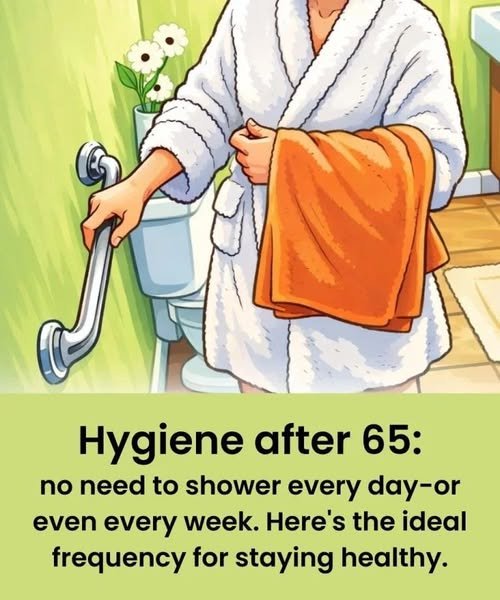
The image accompanying this article presents a thought-provoking claim: “Hygiene after 65: no need to shower every day—or even every week. Here’s the ideal frequency for staying healthy.” For many, this statement sounds counterintuitive, almost alarming. But beneath the surface lies a profound truth about the biology of aging skin. As we grow older, our skin undergoes structural and functional changes that make it far more vulnerable to the drying and damaging effects of frequent washing.
This comprehensive guide will explore the science behind senior skin care. We will examine why the traditional advice to shower daily might actually be doing more harm than good for older adults. We will look at the delicate balance of the skin’s microbiome, the mechanics of the aging skin barrier, and the hidden dangers lurking in the bathroom that make frequent showering a risk. Ultimately, we will uncover the ideal hygiene routine for people over 65 that prioritizes skin health, safety, and comfort.