Why Daily Showers After 65 May Do More Harm Than Good
The Safety Factor: The Bathroom as a Hazard Zone
Beyond the dermatological concerns, there is another major reason to limit shower frequency for seniors: safety. The bathroom is one of the most dangerous rooms in the house for older adults.
The Risk of Falls
According to the CDC, falls are the leading cause of injury and injury-related death for adults over 65. The shower is a prime location for these accidents. The combination of slippery wet tiles, steam that can cause dizziness, and the need to step over the high lip of a bathtub creates a high-risk environment.
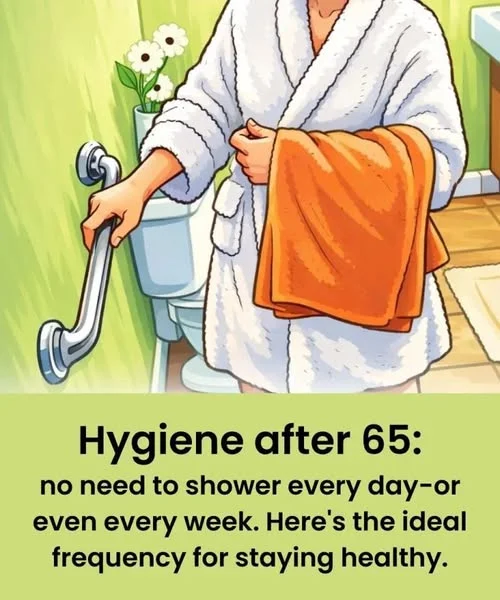
The image accompanying this article prominently features a senior utilizing a sturdy metal grab bar next to the toilet and shower area. This is a crucial safety modification. However, the more frequently a senior showers, the more often they are exposed to the risk of slipping. By reducing full showers to two or three times a week, you are effectively reducing their exposure to slip-and-fall hazards.
Balance, Fatigue, and Temperature Sensitivity
Older adults often suffer from balance issues and reduced stamina. Standing for 15 to 20 minutes in a hot, steamy shower can cause blood pressure to drop, leading to dizziness and lightheadedness. Furthermore, aging skin is much thinner and more sensitive to temperature changes; a senior might not realize the water is scalding until they have already suffered a burn.
The Ideal Frequency: What Does “Healthy” Actually Look Like?
The viral text claims there is “no need to shower every day—or even every week.” While the daily part is rooted in science, going a full week without washing is generally not recommended for hygiene and odor control. The ideal frequency for a healthy adult over 65 is two to three times per week.
The “Pits and Bits” Daily Routine
On the days between full showers, seniors should focus on the areas that produce the most sweat and odor. This includes the armpits, groin area, feet, and face. These areas can be easily washed at the sink using a washcloth with warm water and a very gentle cleanser. This “sponge bath” or “cat bath” maintains proper hygiene without stripping the rest of the body of its protective oils.
Best Practices for a Senior Shower
When a senior does take a full shower, it is crucial to do it in a way that protects their skin and ensures their safety:
Use Lukewarm Water: Hot water is incredibly damaging to the lipid barrier. Keep the shower short (5 to 10 minutes).
Choose a Gentle Cleanser: Avoid harsh, highly fragranced soaps. Use a pH-balanced, soap-free body wash containing moisturizing ingredients like ceramides or glycerin.
Focus on the “Pits and Bits”: It is not necessary to scrub the entire body with soap. Focus on the armpits, groin, and feet; let the water rinse the rest.
The 3-Minute Moisture Rule: The most critical step for senior skin health is moisturizing immediately after the shower. While the skin is still slightly damp, pat dry and apply a thick, fragrance-free moisturizer within three minutes. This traps the water in the skin and helps repair the lipid barrier.
Conclusion: Quality Over Quantity
The viral post claiming that seniors don’t need to shower every day—or even every week—is not as radical as it sounds. It is a necessary recalibration of our hygiene standards based on the biological realities of aging. The skin of a 65-year-old is fundamentally different from the skin of a 25-year-old. It is thinner, it produces less oil, and it has a more fragile microbiome.
Daily showers, while well-intentioned, strip the skin of its natural protection, leading to severe dryness, itching, and an increased risk of infection. By reducing the frequency of full showers to two or three times a week, supplementing with daily sponge baths, and adopting a gentle, moisturizing shower routine, seniors can protect their delicate skin barrier. Furthermore, reducing shower frequency naturally reduces the risk of dangerous falls in the bathroom. By embracing a routine that prioritizes quality over quantity, seniors can maintain proper hygiene, protect their skin, and stay safe and comfortable in their golden years.
Frequently Asked Questions
Is it true that seniors don’t need to shower every day?
Yes. As we age, the skin loses oil and moisture, and the lipid barrier becomes fragile. Daily showering can strip away the skin’s natural oils, leading to severe dryness, itching, and an increased risk of infection. For most healthy seniors, showering 2 to 3 times a week is sufficient.
Can seniors skip showering for a whole week?
For most seniors, showering once a week is the bare minimum. However, it is crucial to wash the face, armpits, groin, and feet daily using a washcloth (a “sponge bath”). This prevents body odor and maintains hygiene in the areas that accumulate the most bacteria.
What is the best soap for older adults?
Seniors should avoid harsh, highly fragrant, or antibacterial soaps. The best choices are gentle, pH-balanced, soap-free cleansers (syndets) that contain moisturizing ingredients like ceramides or glycerin.
Why is hot water bad for senior skin?
Hot water is highly effective at dissolving the skin’s natural lipid barrier. Because senior skin already has fewer lipids, hot water strips away what little protection remains, leading to cracked, dry, and irritated skin. Lukewarm water is always recommended.
How can I prevent itchy skin after a shower?
To prevent itchy skin, keep showers short (under 10 minutes) and use lukewarm water. Pat the skin dry gently with a towel, and apply a thick, fragrance-free moisturizer within 3 minutes of getting out of the shower while the skin is still damp. This locks in hydration.
Are grab bars necessary in the shower for seniors?
Yes. Grab bars are essential safety devices. Seniors are at a high risk of falls due to balance issues, slippery tiles, and dizziness from hot water. Grab bars, along with non-slip mats and a shower chair, dramatically reduce the risk of injury.
How often should seniors wash their hair?
Hair washing frequency depends on hair type and activity level, but once or twice a week is generally sufficient for seniors. Washing hair can be physically taxing and risky (due to getting soap in the eyes and reaching overhead), so washing it in a sink while seated is a safer alternative.
What is a “sponge bath” and how is it done?
A sponge bath involves washing specific areas of the body (face, underarms, groin, feet) with a warm, damp washcloth and a small amount of gentle cleanser. It allows seniors to maintain hygiene on the days they don’t take a full shower, reducing their risk of slipping in the tub.