Which Egg Comes From a Healthy Chicken? Understanding Egg Yolk Color
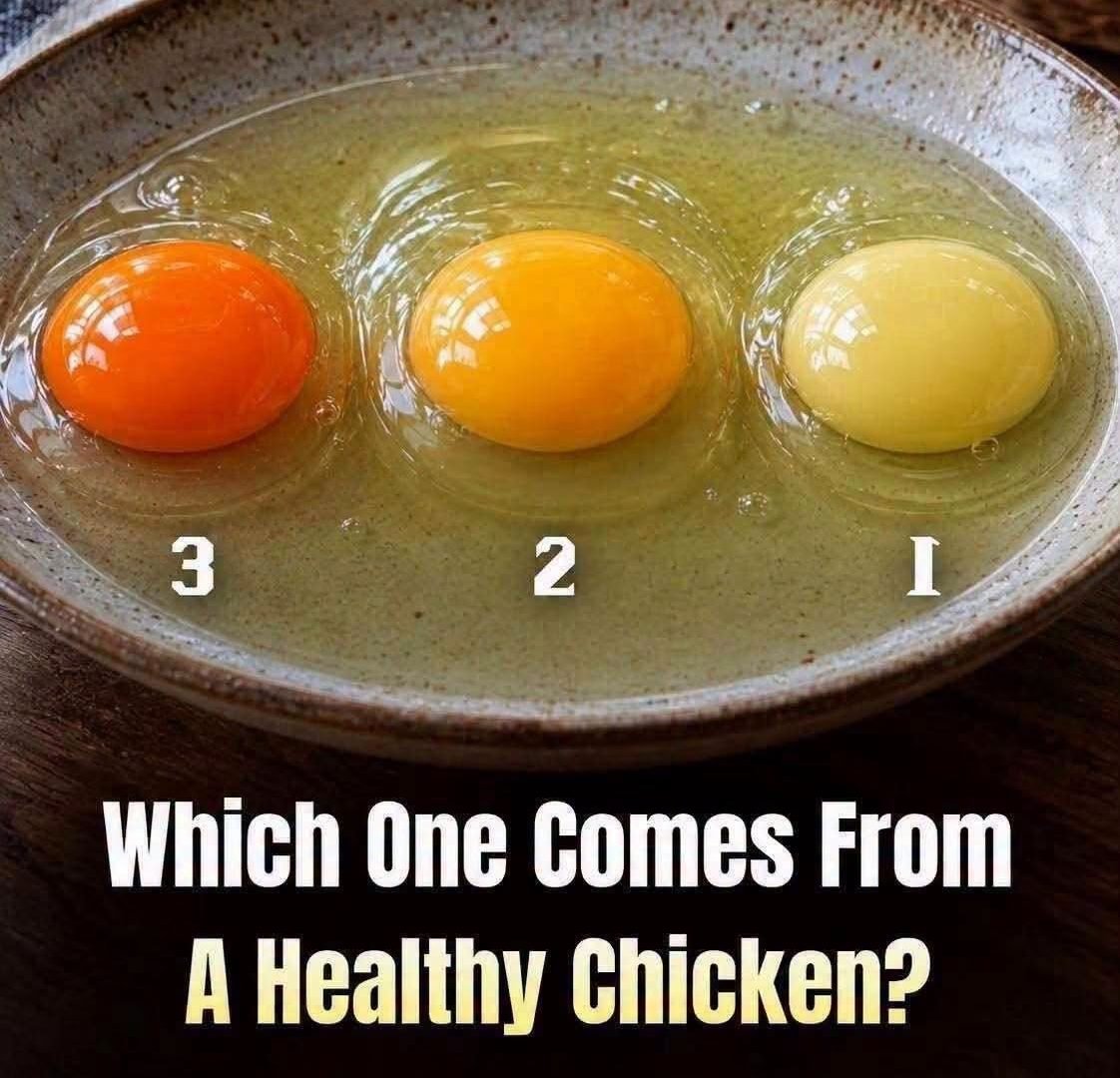
The image above presents a common kitchen dilemma: three cracked eggs in a pan, each with a distinctly different yolk color. Egg number 1 has a deep orange yolk, egg number 2 has a pale yellow yolk, and egg number 3 has a bright golden-orange yolk. The question asks, “Which one comes from a healthy chicken?”
The answer, from a nutritional and agricultural standpoint, is that you cannot tell a chicken’s overall health or the egg’s nutritional value solely by the color of its yolk. Yolk color is primarily determined by the hen’s diet, not her health status. However, the color can tell you something about what the chicken has been eating.
What Determines Yolk Color?
The color of an egg yolk comes from pigments called carotenoids—specifically lutein and zeaxanthin—that the hen consumes in her feed. Chickens cannot synthesize these pigments themselves; they must get them from their diet.
Pale Yellow Yolks (Egg 2): These typically come from hens fed a diet based on white corn or wheat, which are low in carotenoids. This is common in conventional, large-scale farming operations.
Deep Orange Yolks (Eggs 1 and 3): These come from hens that have access to feed rich in carotenoids. This could be from eating grass, alfalfa, marigold petals, or corn gluten meal. Free-range or pasture-raised hens often produce deeper-colored yolks because they forage for plants and insects.
Does Yolk Color Equal Health?
While a deeper orange yolk often indicates a diet richer in carotenoids, it does not automatically mean the chicken is healthier or that the egg is more nutritious. A hen can be perfectly healthy and produce a pale yellow yolk if her feed is nutritionally complete but low in pigments. Conversely, a hen fed artificial color additives (which is legal and common in some regions) can produce a deep orange yolk without ever seeing the outdoors.
The nutritional content of an egg—including protein, vitamins, and minerals—is influenced by many factors beyond yolk color, including the hen’s overall diet, breed, and living conditions.
The Healthiest Choice
If you are looking for eggs from healthy chickens, the yolk color is not the most reliable indicator. Instead, look for labels that describe the hens’ living conditions:
Pasture-Raised: Hens have access to outdoor pasture and forage for plants and insects, which naturally enriches their yolks.
Free-Range: Hens have outdoor access, though the quality of the outdoor space can vary.
Organic: Feed is grown without synthetic pesticides or fertilizers, and hens have outdoor access.
Conclusion
The deep orange yolk of egg 1 and the golden yolk of egg 3 may look more appealing to some, but they do not definitively prove the chicken was healthier than the one that laid egg 2. The best way to choose eggs is to look for transparent farming labels and to focus on a balanced diet overall. All three eggs are nutritious; the color difference is largely a matter of what the hen ate.