What Is This Vintage Green Machine in an Old School Bathroom? The Answer Might Surprise You
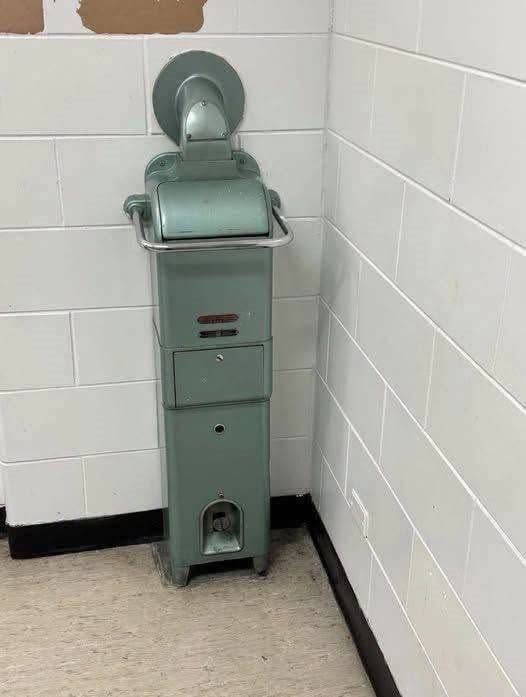
While exploring an old school washroom, you notice a strange green metal machine mounted on the wall. It has a round top, a small compartment, and a distinctive retro design. Most people have no idea what it is.
This is a vintage sanitary napkin incinerator — a fixture that was once standard in women’s restrooms across schools, offices, and public buildings throughout the 20th century. Here’s the story behind it. 👇
Disclaimer: This post is for informational purposes only. Vintage fixtures should be handled with care and removed by professionals if necessary.
🔥 What Is This Machine?
Before modern disposal methods became common, these units were used to safely burn used sanitary products. The design typically included a small compartment for the item, a heating element or burner, and a ventilation system to carry away smoke and odors.
The green metal cabinet in the photo matches the classic style of these mid-century fixtures, which were common from the 1930s to the 1970s.
Why it was used:
Sanitation: Burning waste on-site prevented the spread of bacteria.
Convenience: It avoided plumbing clogs and the need for frequent trash removal.
Modernity: At the time, it was considered a modern convenience.
Why they disappeared:
Health and safety regulations: Modern codes no longer permit on-site burning of waste in public buildings.
Improved disposal methods: Better plumbing and waste management made them obsolete.
Changing attitudes: Society moved toward more discreet and environmentally friendly disposal.
The verdict: This machine is a piece of history — a reminder of how public facilities once handled waste. It’s no longer functional, but it’s a fascinating artifact.
❓ Frequently Asked Questions
What is this machine called? It’s a vintage sanitary napkin incinerator or feminine hygiene disposal unit.
Is it dangerous? No — it is no longer connected to a power source or fuel line, so it is completely inactive. As a retired fixture, it poses no fire risk.
Why is it in a school bathroom? These were standard fixtures in women’s restrooms from the 1930s to the 1970s. Many older schools, offices, and public buildings still have them.
Is it worth anything? Vintage incinerators are sometimes collected as industrial antiques. However, because they are large and heavy, they are usually left in place during renovations or removed and scrapped.
Can it still be used? No — modern health and safety codes do not permit the on-site burning of waste in public buildings.
What should be done with it? If it is no longer in use, it should be left as-is or removed by a professional during renovation. Some building owners choose to preserve them as decorative elements.
How old is it likely to be? These were most common from the 1930s through the 1970s. Based on the style, this one is likely from the mid-20th century.
Is it a collector’s item? Some people collect vintage industrial fixtures, but they are not particularly valuable. Their main value is historical.