Viral Health Warning Confusion: Metoprolol vs. Lisinopril Side Effects Explained
A viral image warns about Metoprolol side effects but shows a bottle of Lisinopril. What’s the truth? We decode the confusion and list the real side effects you shouldn’t ignore.
Introduction
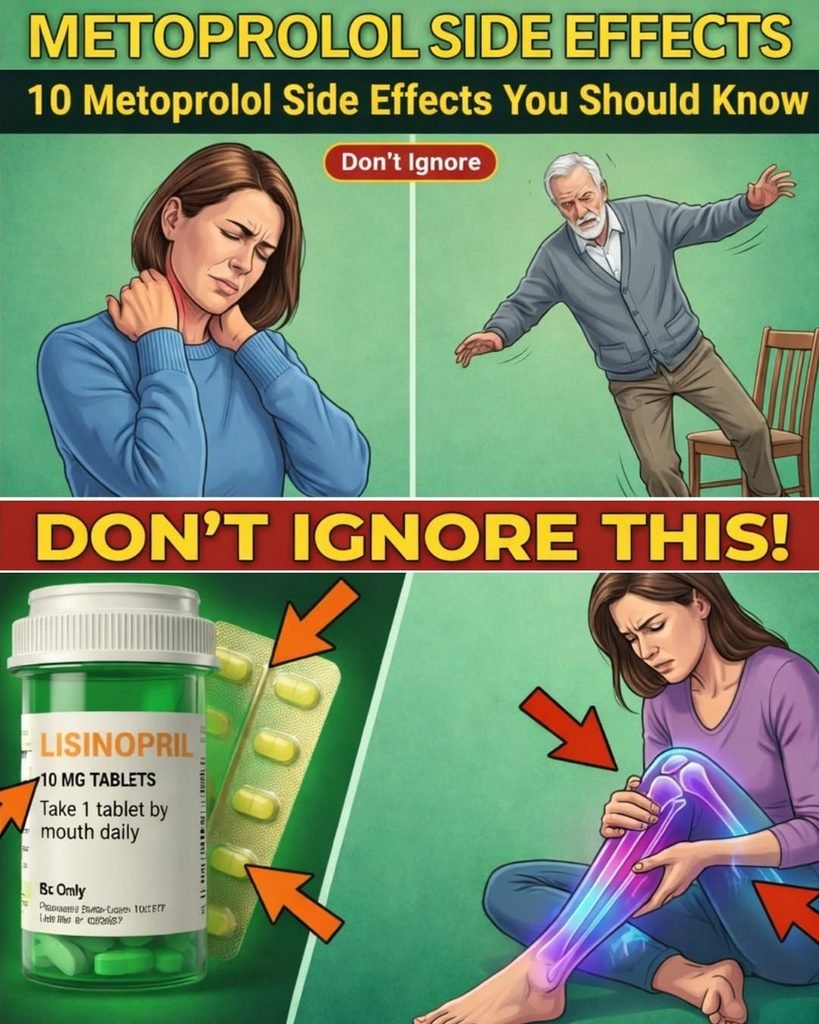
If you’ve been scrolling through social media health feeds lately, you’ve likely seen the alarming collage above. It features bold text screaming “METOPROLOL SIDE EFFECTS” and “DON’T IGNORE THIS!” alongside illustrations of people in pain and losing their balance.
But there is a massive problem with this viral image: It’s mixing up two completely different medications.
The title says Metoprolol, but the pill bottle in the bottom left clearly says Lisinopril.
This kind of “clickbait” health advice is dangerous because it confuses patients. Both are incredibly common blood pressure medications, but they work in different ways and have different side effect profiles.
If you are taking either of these drugs, or if you are worried about the symptoms shown in the image (neck pain, falling, leg pain), here is the truth about what you need to know.
Part 1: The “Metoprolol” Confusion (Top Half of Image)
The top half of the image mentions Metoprolol. This is a Beta-Blocker. It works by slowing down your heart rate and reducing the force with which the heart muscle contracts. It is often prescribed for high blood pressure, angina, and heart failure.
The Side Effects You Shouldn’t Ignore:
The image shows an older man losing his balance and a woman holding her neck. Here is how those relate to Metoprolol:
Dizziness and Falls (The “Falling Man”): This is the most accurate part of the image. Because Metoprolol lowers blood pressure and heart rate, it can cause orthostatic hypotension—a sudden drop in blood pressure when you stand up. This leads to dizziness, lightheadedness, and fainting, which is a major fall risk for seniors.
Fatigue and Weakness: Beta-blockers slow your system down. Many patients report feeling exhausted or “washed out,” which can lead to muscle aches (like the neck pain shown).
Cold Hands and Feet: By slowing circulation to the extremities, your hands and feet may feel freezing cold.
Part 2: The “Lisinopril” Reality (Bottom Half of Image)
The bottom half of the image shows a bottle of Lisinopril. This is an ACE Inhibitor (Angiotensin-Converting Enzyme inhibitor). It works by relaxing blood vessels so blood can flow more easily.
The Side Effects You Shouldn’t Ignore:
The image shows a woman holding her leg/knee in pain (with an X-ray overlay). While Lisinopril is generally well-tolerated, it has specific warnings:
The “ACE Cough”: The most famous side effect of Lisinopril is a dry, hacking cough that won’t go away. If you have this, tell your doctor; they can switch you to a different class of drug.
Dizziness: Like Metoprolol, it lowers blood pressure, so dizziness and fainting are real risks.
Muscle Cramps and Joint Pain: While less common, changes in potassium levels (Lisinopril can raise potassium) can sometimes lead to muscle weakness or cramping. The leg pain in the image could represent this, or it could be a sign of poor circulation if the medication isn’t working effectively.
Swelling (Angioedema): In rare cases, Lisinopril can cause swelling of the face, lips, or throat. This is a medical emergency.
Part 3: Decoding the “Don’t Ignore This” Warning
The red banner says “DON’T IGNORE THIS!” What is it referring to?
Usually, when health posts use this phrase regarding blood pressure meds, they are referring to Silent Symptoms or Rebound Effects.
The Silent Killer: High blood pressure often has no symptoms. If you stop taking your meds because you “feel fine” (or because you read a scary post online), your blood pressure can spike silently, leading to a stroke or heart attack.
The Rebound Effect:NEVER stop taking Metoprolol abruptly. Stopping a beta-blocker suddenly can cause a “rebound” effect where your heart rate skyrockets, potentially triggering a heart attack. You must taper off under a doctor’s supervision.
Summary: Which Drug is Which?
To help you navigate your medicine cabinet, here is a quick cheat sheet:
Feature
Metoprolol (Beta-Blocker)
Lisinopril (ACE Inhibitor)
How it works
Slows heart rate.
Relaxes blood vessels.
Common Side Effect
Fatigue, slow heart rate, cold hands.
Dry cough, dizziness, high potassium.
Key Warning
Do not stop abruptly (Rebound risk).
Watch for facial swelling (Allergic risk).
Conclusion
The viral image above is a classic example of “health misinformation mashup.” It takes scary symptoms (falls, pain) and slaps two different drug names on them to get clicks.
The Truth: Both Metoprolol and Lisinopril are life-saving medications for millions of people. While they do have side effects like dizziness and fatigue, they are generally safe when monitored by a doctor.
The Advice: If you are experiencing the symptoms in the image—dizziness, falls, or unexplained pain—do not just stop your medication. Call your doctor. They can adjust your dosage or switch you to a different medication that fits your body better.
💬 Over to You!
Are you taking a blood pressure medication? Have you experienced dizziness or fatigue? Let us know how you manage your health in the comments below! 👇
Disclaimer: This article is for informational and educational purposes only and does not constitute professional medical advice. Never stop or change your medication dosage without consulting your prescribing physician. If you experience severe dizziness, fainting, or difficulty breathing, seek emergency medical attention immediately.