The Ultimate Hungarian Dobos Torte (Dobostorta): A Masterclass in Layered Perfection
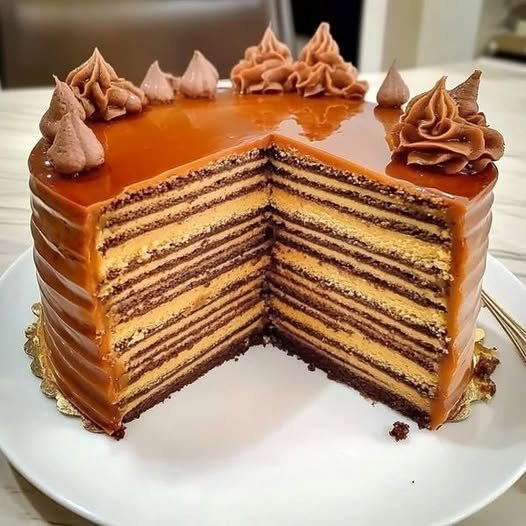
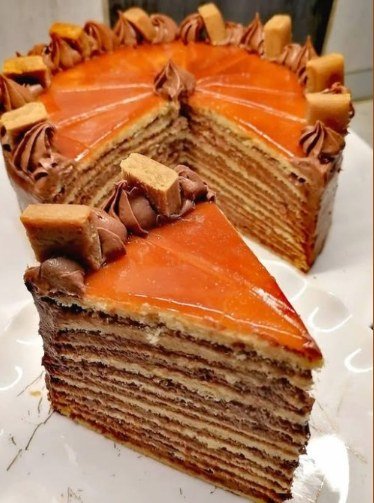
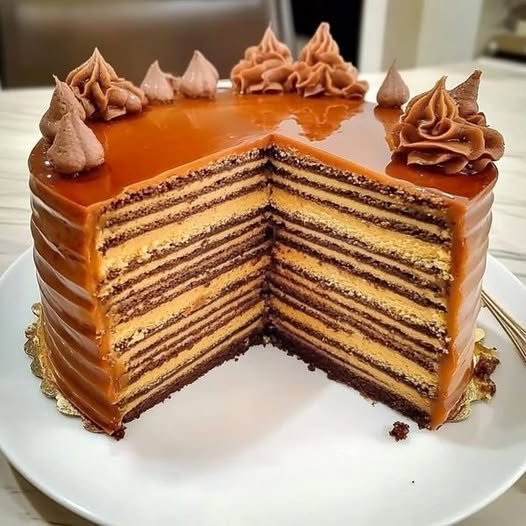
There are desserts that are merely eaten, and then there are desserts that are experienced. The Hungarian Dobos Torte, or Dobostorta, is firmly in the latter category. Looking at the image, it is easy to see why. Six delicate, golden sponge cake layers are held together by a rich, velvety chocolate buttercream, all crowned by a mirror-smooth layer of glossy caramel and finished with elegant rosettes of chocolate cream. It is a masterpiece of engineering and artistry, a cake that promises to melt in your mouth at the very first bite.
The viral post promising a “5-minute” recipe might be a slight exaggeration when it comes to the baking process—a true Dobos Torte requires patience and precision—but the sentiment is undeniable. Once assembled, it is a simple, breathtaking dessert that disappears from the plate in minutes. It is the crown jewel of Hungarian baking, a confection that has stood the test of time since its invention in the late 19th century.
This comprehensive guide will take you on a deep dive into the world of the Dobos Torte. We will explore its fascinating history, understand the science behind its unique components, and provide a meticulously detailed, step-by-step recipe to help you recreate this legendary cake in your own kitchen. From the airy sponge to the luxurious chocolate buttercream and the crackling caramel top, we will break down every element so that you can master this iconic dessert.
The Fascinating History of the Dobos Torte
To truly appreciate the Dobos Torte, you must understand its origins. It was created by József C. Dobos, a legendary Hungarian confectioner and restaurateur. In the late 1800s, Budapest was a thriving cultural hub, and Dobos was determined to create a dessert that would stand out on the international stage.
The 1885 National Exhibition
The Dobos Torte made its grand debut at the 1885 Hungarian National Exhibition. The timing was impeccable. At the time, the world was still largely reliant on iceboxes and lacked reliable refrigeration. Dobos, a brilliant innovator, designed the cake with a specific solution to this problem. He baked the sponge layers very thin so they would dry quickly, and he invented a caramel glaze for the top. The caramel acted as a hermetic seal, preventing the cake from drying out and locking in the moisture of the chocolate buttercream beneath. It was a cake that could travel the world without spoiling.
The Rivalry with Vienna
The success of the Dobos Torte sparked a friendly, albeit intense, rivalry between Budapest and Vienna. Vienna, the capital of the Austro-Hungarian Empire, was famous for its own iconic dessert: the Sachertorte. While the Sachertorte is a dense, single-layer chocolate cake with apricot jam, the Dobos Torte is a multi-layered, lighter sponge cake with a caramel crown. The two cities have been debating the superiority of their respective cakes for over a century, though most pastry lovers agree that both are magnificent in their own right.
A Global Legacy
József Dobos eventually retired, but his legacy lived on. He donated his original recipe to the Budapest Confectioners’ and Gingerbread Makers’ Chamber, ensuring that the cake’s precise methodology would be preserved for future generations. Today, the Dobos Torte is enjoyed worldwide and remains a symbol of Hungarian culinary excellence and innovation.
Deconstructing the Masterpiece: The Three Pillars
A true Dobos Torte is built upon three essential pillars. Understanding these components is the key to success.
1. The Sponge Layers (Piskóta)
The base of the Dobos Torte is a classic sponge cake, known as piskóta in Hungarian. Unlike American sponge cakes, it does not use baking powder. The lift comes entirely from whipping eggs and sugar until they are incredibly pale and airy. The flour is folded in gently to maintain the air bubbles. The batter is then baked in thin, flat layers. The image clearly shows six distinct layers, which is the traditional number.
2. The Chocolate Buttercream (Kakaós Vajkrém)
The filling is a rich, silky chocolate buttercream. In the classic recipe, it is made by cooking a sugar syrup to the soft-ball stage and pouring it over whipped egg yolks. Once cooled, high-quality butter and melted dark chocolate are whipped into this base. The result is a buttercream that is both rich and light, with a deep, intense chocolate flavor.
3. The Caramel Top (Karamell Bevonat)
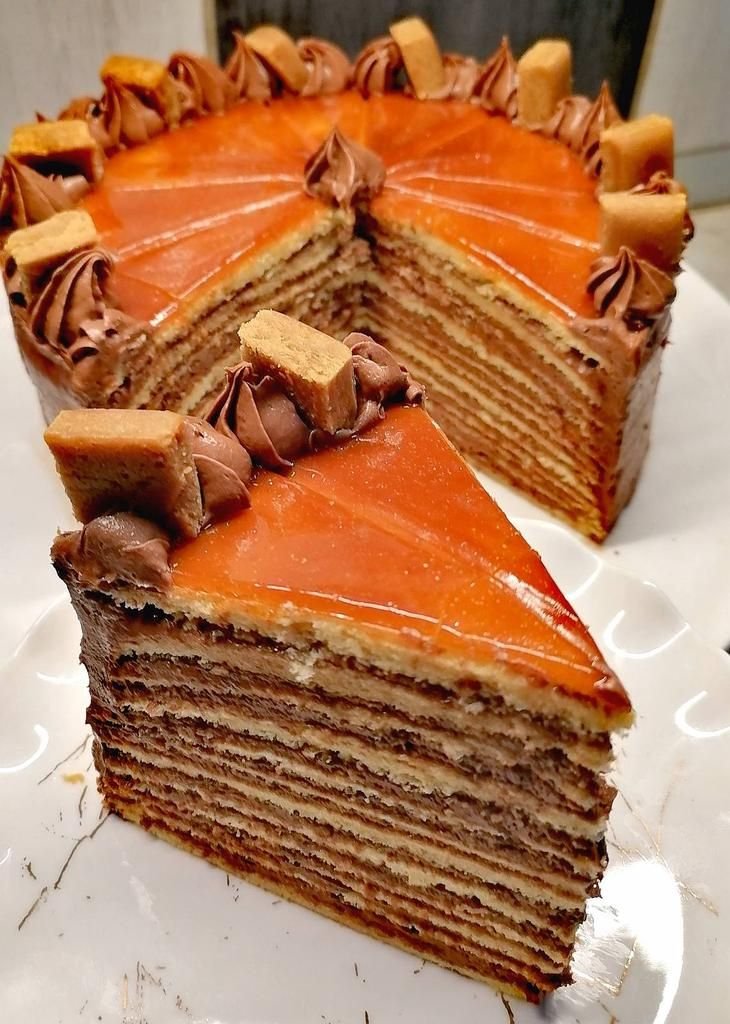
The crowning glory of the Dobos Torte is the caramel. It is a simple mixture of sugar, water, and a touch of lemon juice, cooked until it turns a deep amber color. This is poured over the final, untouched sponge layer and allowed to harden. The classic technique involves scoring the caramel into wedges before it completely cools, making it easy to slice later. The image shows a modern variation with chocolate rosettes on the caramel, which adds a beautiful aesthetic touch.
Essential Ingredients for a Perfect Dobos Torte
To achieve the best results, use high-quality ingredients, especially the chocolate and butter.
For the Sponge (6-8 layers):
6 large eggs, separated, at room temperature
1 cup (200g) granulated sugar, divided
1 1/4 cups (150g) cake flour or all-purpose flour, sifted
1/4 cup (30g) unsalted butter, melted and cooled
For the Chocolate Buttercream:
4 large eggs
1 1/2 cups (300g) granulated sugar
1/2 cup (120ml) water
10 oz (280g) high-quality dark chocolate (60-70% cocoa), melted and cooled slightly
1 1/2 cups (340g) unsalted butter, at room temperature
1 tsp vanilla extract
A pinch of salt
For the Caramel Top:
1 cup (200g) granulated sugar
2 tbsp water
1 tbsp freshly squeezed lemon juice
1 tbsp unsalted butter (optional, for a slightly softer caramel)
Step-by-Step Masterclass: Baking the Dobos Torte
This recipe requires some time and patience, but the steps themselves are straightforward.
Step 1: Baking the Sponge Layers
Prepare the Oven and Pans: Preheat your oven to 350°F (175°C). Trace the bottom of an 8-inch (20cm) springform pan onto sheets of parchment paper and cut out 6 to 8 circles. Line baking sheets with the parchment circles.
Whip the Eggs: In a stand mixer, whisk the egg whites on medium speed until soft peaks form. Gradually add half the sugar and whisk until stiff, glossy peaks form. In a separate bowl, whisk the egg yolks with the remaining sugar until pale and thick. Gently fold the egg whites into the yolks in three additions.
Fold in the Flour: Sift the flour over the egg mixture in three additions, gently folding it in with a spatula after each addition. Finally, fold in the melted butter.
Bake: Divide the batter evenly among the prepared parchment circles, spreading it out to the edges. Bake each layer for 7 to 9 minutes, or until lightly golden and springy to the touch. Remove from the oven and let cool completely on a wire rack. Peel off the parchment paper.
Step 2: Crafting the Chocolate Buttercream
Make the Syrup: In a small saucepan, combine the sugar and water for the buttercream. Bring to a boil over medium heat, stirring until the sugar dissolves. Continue cooking without stirring until the syrup reaches 240°F (115°C) on a candy thermometer (soft-ball stage).
Whip the Yolks: While the syrup is heating, whisk the eggs in the bowl of a stand mixer until pale and fluffy.
Combine: With the mixer running on low, carefully pour the hot syrup in a slow, steady stream down the side of the bowl into the whipped eggs. Increase the speed to high and whisk until the mixture has cooled completely and doubled in volume. This can take 5 to 10 minutes.
Add Butter and Chocolate: Switch to the paddle attachment. With the mixer on medium speed, add the room-temperature butter, one tablespoon at a time, until fully incorporated. Add the vanilla and salt. Finally, add the melted, cooled chocolate and beat until the buttercream is smooth, glossy, and fluffy. If it looks curdled at any point, just keep beating; it will come together.
Step 3: Assembling the Torte
Layer the Cake: Place the first sponge layer on a serving platter or a cake turntable. Spread a generous, even layer of chocolate buttercream over it (about 3-4 tablespoons). Top with the next sponge layer and repeat. Continue until you have used all but one of the sponge layers.
The Crumb Coat (Optional): If you want a perfectly smooth finish on the sides, apply a thin layer of buttercream around the entire cake to seal in the crumbs. Chill for 30 minutes. Then, apply a final, thicker layer of buttercream around the sides. Set aside the last sponge layer for the top.
Step 4: The Caramel Crown
Prepare the Top Layer: Place the final sponge layer on a wire rack set over a piece of parchment paper. Score it into 8 or 12 equal wedges using a sharp knife (do not cut all the way through, just score the surface).
Make the Caramel: In a heavy-bottomed saucepan, combine the sugar, water, and lemon juice for the caramel. Cook over medium-high heat without stirring until the sugar melts and turns a deep amber color. If using butter, stir it in quickly.
Glaze the Cake: Immediately pour the hot caramel over the prepared sponge layer, spreading it quickly and evenly with an offset spatula. Work fast, as the caramel hardens very quickly.
Score the Caramel: Using a sharp, lightly oiled knife, score the caramel along the lines you made earlier. This will make slicing the cake much easier later.
Finish the Cake: Carefully place the caramel-covered layer on top of the assembled cake.
Step 5: The Final Touches
If you wish to replicate the image, prepare a small batch of the chocolate buttercream and pipe rosettes around the top edge of the caramel layer. Chill the cake in the refrigerator for at least 2 hours, or overnight, to allow the flavors to meld and the buttercream to set.
Pro Tips for Dobos Torte Success
Room Temperature is Key: All dairy ingredients for the buttercream (eggs and butter) must be at room temperature. If the butter is cold, the buttercream will curdle.
Sift Your Flour: Do not skip this step. Sifting aerates the flour, making it easier to fold into the egg mixture without deflating it.
Handle the Caramel with Care: Melted sugar is extremely hot and can cause severe burns. Wear oven mitts and keep children away from the stove during this step.
The “Score and Slice” Trick: The caramel top is famously difficult to cut. Scoring it while it is still slightly warm, and using a knife that has been dipped in hot water and wiped dry, will yield clean, perfect slices.
Resting is Crucial: The Dobos Torte is best served the day after it is made. The time in the refrigerator allows the sponge to absorb moisture from the buttercream, resulting in that legendary “melt in your mouth” texture.
Troubleshooting Common Dobos Torte Issues
The Sponge Layers are Too Dry
Sponge cake dries out quickly if overbaked. Keep a close eye on them; they only need 7-9 minutes. If they feel dry, brush them with a little simple syrup (sugar water) before layering.
The Buttercream Curdled
This happens when the ingredients are at different temperatures. If the buttercream looks lumpy, place the bowl over a pot of simmering water (a double boiler) for a few seconds, then continue whipping. This will melt the butter slightly and bring it back together.
The Caramel Weeping or Melting
If the caramel becomes sticky and starts to slide off the cake, it means it absorbed too much moisture from the refrigerator. Keep the cake at room temperature until ready to serve, and add the caramel top just a few hours before serving, rather than overnight.
Cutting the Cake
Use a large, sharp chef’s knife. Dip the blade in hot water, dry it, and make a firm, clean cut straight down through the scored caramel. Wipe the blade clean between slices for perfect presentation.
Storage and Serving
Because of the buttercream, the Dobos Torte must be stored in the refrigerator. Wrap it loosely in plastic wrap or place it in a cake dome. It will keep for up to 4 days. Bring it to room temperature for about 30 minutes before serving to allow the buttercream to soften and the flavors to fully bloom. Serve with a cup of strong coffee or a glass of Tokaji, the famous Hungarian dessert wine.
Frequently Asked Questions
Is Dobos Torte the same as Sachertorte?
No, though they are both famous Austro-Hungarian chocolate cakes. The Sachertorte is a single, dense chocolate cake with apricot jam and a chocolate glaze. The Dobos Torte is a multi-layered sponge cake with chocolate buttercream and a caramel top.
Can I make Dobos Torte ahead of time?
Yes. You can bake the sponge layers a day in advance and store them in an airtight container. The buttercream can also be made ahead and refrigerated, but it must be brought back to room temperature and re-whipped before assembly. The assembled cake is actually better after resting in the fridge overnight.
Why is the top of the cake covered in caramel?
József Dobos invented the caramel top as a practical solution to prevent the cake from drying out in an era before refrigeration. It seals the moisture of the cake and buttercream inside.
How do I cut the caramel top without shattering it?
The secret is to score the caramel into wedges while it is still warm and slightly soft. Then, use a very sharp knife dipped in hot water to cut through the cold caramel.
What kind of chocolate should I use for the buttercream?
Use a high-quality dark chocolate with 60% to 70% cocoa content. This provides a rich, intense chocolate flavor that balances the sweetness of the caramel and the buttercream.
Can I make a gluten-free Dobos Torte?
Yes. Simply substitute the cake flour with a high-quality gluten-free flour blend. Ensure the blend contains xanthan gum for structure, and follow the recipe as written. The texture will be slightly denser but still delicious.
What is the best way to store the cake?
Store the cake in the refrigerator, covered, for up to 4 days. Do not leave it at room temperature for extended periods due to the butter and egg content in the buttercream.
Why is my buttercream separating?
Separation is usually a sign of temperature shock. The butter was too cold, or the chocolate was too hot when added. If it separates, try warming the bowl slightly over a double boiler and whipping it vigorously.
Conclusion
The Hungarian Dobos Torte is much more than just a cake; it is a historical artifact, a culinary innovation, and a testament to the artistry of Hungarian pastry chefs. From its ingenious caramel seal to its airy sponge and rich chocolate buttercream, every element is designed to create an unforgettable eating experience. While the process requires a bit of patience, the result is a breathtaking masterpiece that is guaranteed to melt in your mouth. As you assemble the layers and carefully pour the caramel, you are not just baking a dessert; you are connecting with a proud culinary tradition that dates back over a century.