The Real Reason Some Window Bars Curve at the Bottom (It Is Not Just for Decoration)
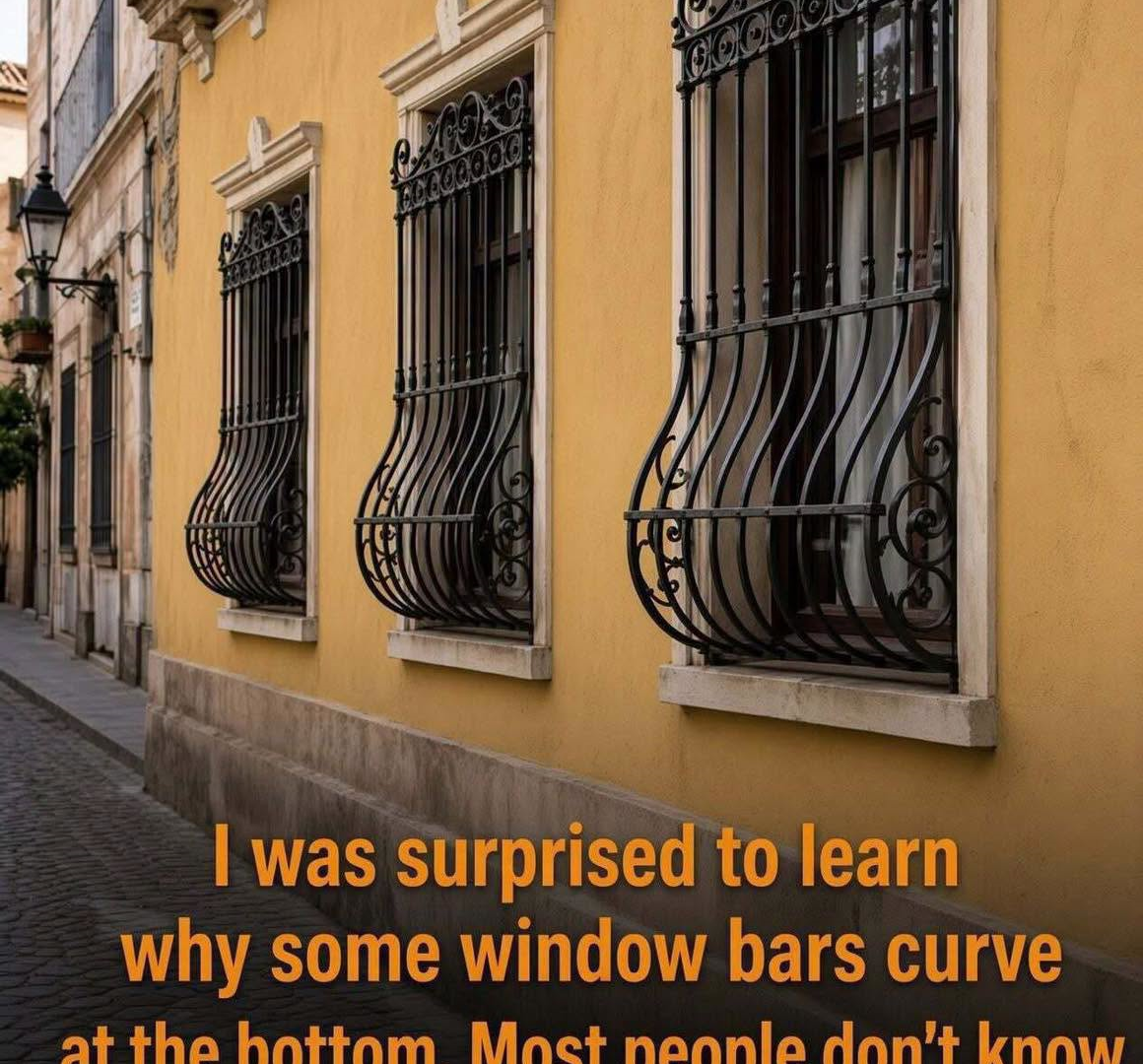
If you have ever walked through an older city and noticed buildings with ornate iron window grilles, you may have seen that some of them curve outward at the bottom. The image in your post highlights one of these windows, with a large yellow circle around the curved metalwork. Many people assume this design is purely decorative, a way to add beauty to a building’s facade. But the truth is far more interesting and practical. The curved bottom of these window bars has a fascinating history that dates back centuries.
The Practical Purpose
The curved, bulging shape at the bottom of these window grilles is not just an artistic flourish. It was designed to serve a very specific purpose: to create a small, usable space outside the window. This curved section acts like a tiny balcony or ledge, allowing a person to sit or lean out comfortably. In an era before air conditioning, this was an important way to get fresh air and a moment of relief from the heat inside the home.
A Social Space
Beyond just practical ventilation, these curved grilles served a social function as well. They were sometimes called “gossip seats” or “chatting corners.” People could lean out from their windows and talk with neighbors or watch the street life below. The curved shape provided a comfortable spot to rest your arms or sit while you engaged in conversation. It was a small but meaningful way to stay connected to the community.
Safety and Security
The grilles also provided security. They allowed windows to be left open for airflow while keeping intruders out. The curved bottom made it more difficult for someone to climb up or reach through the bars. It was a clever design that balanced the need for ventilation with the need for safety. The intricate metalwork was also a display of craftsmanship and status, showing that the homeowner could afford such detailed ironwork.
A Symbol of Elegance
While the primary purpose was practical, the design also added a touch of elegance to the building. The curved bottom created a graceful silhouette that broke up the straight lines of the facade. Many of these grilles are highly ornate, with swirling patterns and decorative details. They are a testament to the skill of the artisans who made them and a reminder of a time when even functional objects were made with beauty in mind.
Why We Do Not See Them as Often Today
Today, these curved window grilles are less common. Modern building codes, changes in architectural styles, and the widespread use of air conditioning have made them less necessary. However, in historic neighborhoods and older cities, you can still find them. They are a charming reminder of a time when homes were designed to interact with the street and the community in a different way.
Final Thoughts
So the next time you see a window with bars that curve at the bottom, you will know that it is not just for decoration. It is a clever design that served as a small balcony, a social spot, and a safety feature all at once. It is a beautiful example of how function and form can come together to create something both useful and elegant. It is a piece of history that continues to charm us today.