She Puts Vicks VapoRub on Her Feet Before Sleeping…
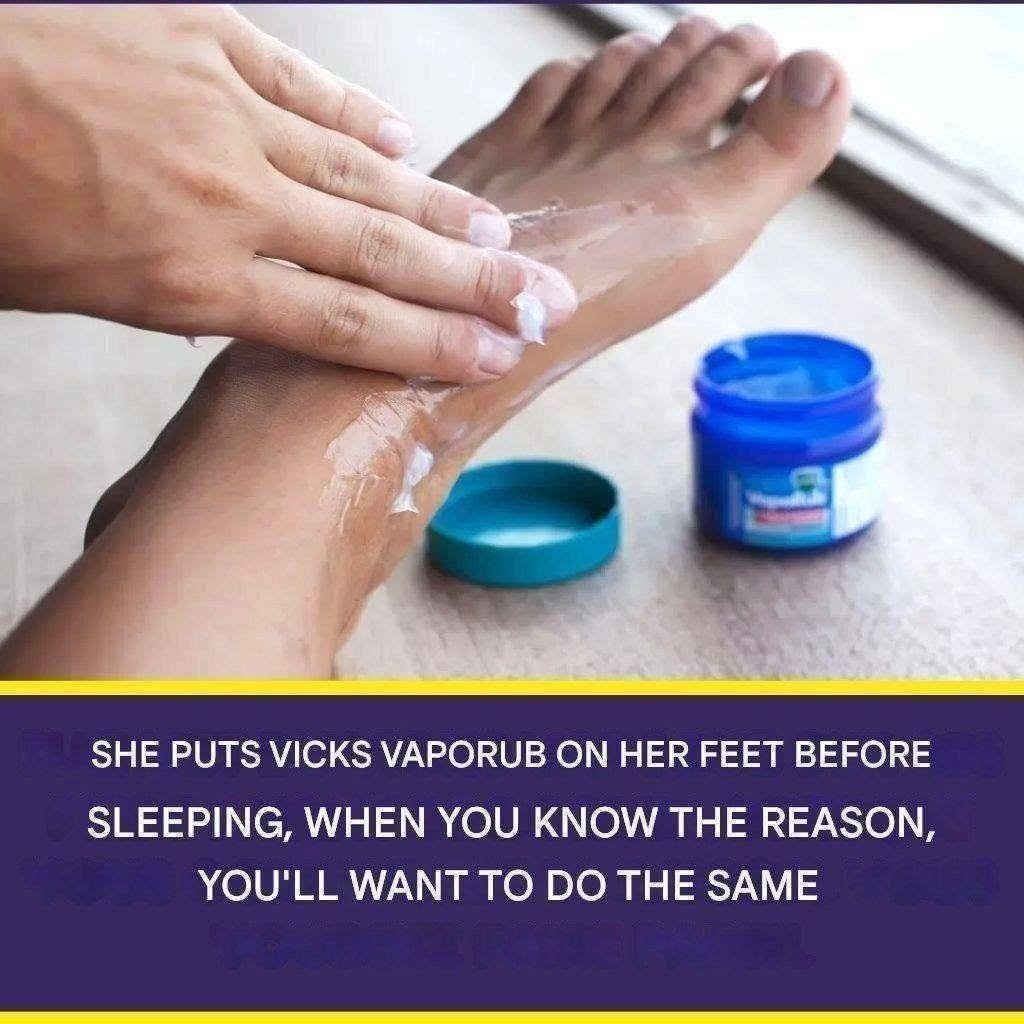
The image above captures a practice that has become a fixture in the world of home remedies: applying a thick layer of Vicks VapoRub to the soles of the feet before slipping into bed. The caption promises that once you know the reason, you will want to do the same. This ritual, often passed down through generations, is widely believed to cure nighttime coughs, promote deep sleep, and even soften dry, cracked heels.
The ritual is undeniably popular. Vicks VapoRub has been a staple in medicine cabinets since 1894, and its familiar blue jar is one of the most recognizable smells in the world . But does this specific application method actually work, or is it simply an old wives’ tale that has been amplified by social media? The answer is a fascinating blend of folklore, scientific skepticism, and genuine, albeit limited, practical benefits. From its roots in traditional Chinese medicine to the caution required for young children, understanding what happens when you apply this mentholated ointment to your feet is essential before you incorporate it into your nightly routine.
The Origin of the Myth: Reflexology and the “Cough Reflex”
The belief that rubbing Vicks on the feet can stop a cough is deeply entrenched in folk medicine. The theory behind it is not based on the respiratory system, but rather on the principles of reflexology.
According to this alternative medicine practice, the soles of the feet contain nerve endings or “zones” that correspond to different organs and systems throughout the body. Proponents theorize that massaging or applying a strong-smelling ointment to specific points on the feet can stimulate nerve pathways that send signals to the brain. In this case, the theory suggests that the menthol and camphor vapors, combined with the pressure on the soles, travel through the nervous system to the medulla oblongata (the part of the brain that controls the cough reflex), suppressing the urge to cough .
There is also a practical, albeit sensory, explanation. Some people believe that the intense tingling or cooling sensation on the feet acts as a powerful distraction from the irritation in the throat, temporarily shifting the brain’s focus away from the urge to cough .
What the Science Says: The Verdict on Coughs and Colds
Despite its popularity, the scientific community has repeatedly poured cold water on the idea that Vicks on the feet can cure a cough or cold.
The Missing Link: Inhalation
The primary function of Vicks VapoRub is to provide temporary relief from cough and congestion when applied to the chest or throat. The active ingredients—camphor, menthol, and eucalyptus oil—are volatile. When applied to the chest, body heat causes these oils to vaporize, and you inhale them. The menthol triggers cold receptors in your nose and upper airway, creating the sensation that your airways are opening up, even though they are not actually decongested .
Medical experts point out a critical flaw in the foot-application theory: the vapors have a very long way to travel from your feet to your nose. When you apply Vicks to your feet and put on socks, or when you are under sheets and blankets, the vapors are trapped. The chances of you inhaling enough of the active oils to have a pharmacological effect on your respiratory system are virtually non-existent .
Debunking the “Canadian Research” Claim
A major source of the myth is a long-circulating email rumor claiming that the “Canada Research Council” conducted a study proving that Vicks on the feet stops coughing within five minutes. This has been thoroughly debunked. The National Research Council of Canada issued a statement confirming that it had never conducted any such research. The Vicks company itself has never made claims about foot application for cough relief; they recommend applying it to the chest or throat .
A 2010 study published in the journal Pediatrics did find that applying VapoRub to the chest of children aged 2 to 11 provided symptomatic relief for nighttime cough and congestion, leading to better sleep. However, this study did not involve the feet, and it was financially supported by Procter & Gamble, the maker of Vicks .
The Legitimate Benefits: Soft Feet and More
While the respiratory benefits of foot application are dubious, there are several evidence-based reasons to use Vicks VapoRub on your feet. The product is essentially a mixture of essential oils suspended in petroleum jelly, an incredibly effective, occlusive moisturizer .
1. Healing Cracked Heels and Dry Skin
This is perhaps the most medically sound use of the foot-application trend. The soles of the feet lack sebaceous (oil) glands, making them prone to dryness and cracking, especially in winter. Applying a thick layer of Vicks VapoRub before bed and covering the feet with socks creates a powerful barrier that locks in moisture. The petroleum jelly softens the skin, while the essential oils can soothe irritation . Many dermatologists and podiatrists recommend this as an affordable alternative to expensive heel balms.
2. Toenail Fungus and Athlete’s Foot
Vicks VapoRub has a surprising reputation for fighting fungal infections. Some of its ingredients, particularly camphor and eucalyptus oil, have demonstrated antifungal properties. A small 2015 study found that Vicks VapoRub helped resolve toenail fungus in 83% of participants after six months of daily use. While larger studies are needed, a daily application on the feet can be a safe, inexpensive home remedy for mild cases of athlete’s foot or toenail fungus .
3. Soothing Muscle and Nerve Pain
The camphor and menthol in Vicks act as counterirritants. When applied to the skin, they create a cooling sensation followed by a mild numbing effect. This can overwhelm local pain receptors and provide temporary relief for achy feet, minor muscle soreness, or even the burning sensations associated with peripheral neuropathy .
4. A Sleep Aid?
There is no scientific evidence that Vicks on the feet treats insomnia. However, some people report that the soothing, familiar scent and the sensation of having warm, cared-for feet helps them relax and fall asleep faster. This is likely due to a combination of the placebo effect and the comforting ritual itself .
Crucial Safety Warnings: Who Should NOT Try This
The viral nature of this trend often obscures a very important fact: Vicks VapoRub is a potent medication, and it is not safe for everyone.
Infants and Young Children
This is the most critical safety warning. Vicks VapoRub should never be used on children under 2 years of age, regardless of where it is applied. The camphor in the ointment can cause severe respiratory distress, including laryngospasm (a spasm of the vocal cords that makes breathing difficult), especially if the vapors are inhaled in a confined space. Even for children over 2, you should consult a pediatrician before use, and avoid applying it near the nose or on broken skin .
Skin Sensitivity and Allergies
The essential oils in Vicks can cause contact dermatitis (skin irritation) or allergic reactions in some people. If you have sensitive skin, apply a small amount to a patch of skin on your arm and wait 24 hours to check for a reaction. Never apply Vicks to broken, irritated, or sunburned skin .
Not a Cure-All
It is vital to remember that Vicks VapoRub is a symptomatic relief for minor ailments, not a cure for a serious medical condition. If you have a persistent cough, a fever, or difficulty breathing, you should see a doctor. Relying on a foot application to treat a serious respiratory infection can delay proper medical care.
How to Apply It Correctly for Best Results
If you are interested in using Vicks VapoRub on your feet for its moisturizing or soothing benefits, here is the safest way to do it:
Clean and Dry: Wash your feet thoroughly and dry them completely, especially between the toes.
Apply a Generous Layer: Massage a thick layer of the ointment onto the soles of your feet and heels.
Cover with Socks: Put on a pair of clean, cotton socks to lock in the moisture and keep your sheets clean.
Use at Night: The best time to do this is right before bed. Leave it on overnight.
Wash in the Morning: Rinse your feet with warm water and mild soap in the morning.
Important: Do not wash large amounts of Vicks VapoRub down the drain. The petroleum jelly can congeal and cause severe plumbing clogs. Wipe off excess ointment with a paper towel and throw it in the trash before rinsing your feet.
Frequently Asked Questions
Q: Does putting Vicks VapoRub on your feet really stop a cough? No. There is no scientific evidence to support this claim. The vapors need to be inhaled to affect the respiratory system, and they cannot travel effectively from the feet to the nose, especially when covered by socks and blankets .
Q: Is Vicks VapoRub safe for babies? Absolutely not. Vicks VapoRub is not safe for children under 2 years old. The camphor can cause serious breathing problems in infants. Always consult a doctor before using it on any child .
Q: What are the actual benefits of putting Vicks on my feet? The most proven benefits are moisturizing dry, cracked heels and potentially treating mild toenail fungus or athlete’s foot due to its antifungal properties. It can also provide temporary relief for sore, achy feet .
Q: Can I use Vicks on my feet to help me sleep? While there is no scientific evidence that it cures insomnia, many people find the ritual soothing. The familiar scent and the feeling of warm, moisturized feet can be relaxing and promote a sense of well-being, which may help you fall asleep .
Q: Is it safe to put Vicks in my nose? No. You should never put Vicks VapoRub directly inside your nostrils or on broken skin. It can cause irritation and, in rare cases, more serious complications. Apply it to the chest, throat, or feet instead .
Conclusion
The viral trend of applying Vicks VapoRub to the soles of the feet before sleeping is a fascinating example of how folklore can persist in the modern age. While the specific claim that it cures nighttime coughs is not supported by science, and is rooted in the unproven principles of reflexology, the practice is not entirely without merit. The petroleum jelly base makes it an excellent, budget-friendly treatment for dry, cracked heels, and its camphor and menthol content can provide a soothing sensation for tired feet.
However, it is crucial to approach this remedy with a clear understanding of its limitations and safety warnings. It is a comfort measure and a skincare tool, not a medical cure. Most importantly, it should never be used on infants or young children. If you choose to try it, use it as a moisturizing and soothing ritual, and always consult a healthcare professional for persistent respiratory or skin issues.