Omeprazole and Reflux: Why a Doctor Is Warning About This Widespread Habit (and What to Do If You Are Affected)
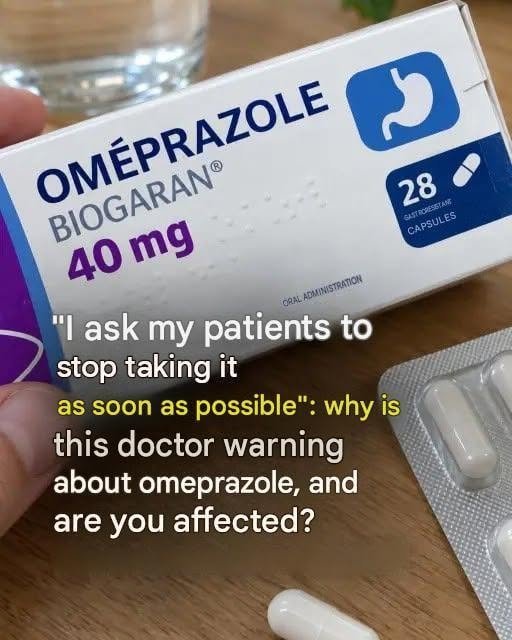
The image is a close-up of a box of Omeprazole, a widely prescribed medication for acid reflux. The box is held by a hand, and the text overlay delivers a startling message: “I ask my patients to stop taking it as soon as possible.” The accompanying caption asks: “Why is this doctor warning about omeprazole, and are you affected?”
This warning, which has gone viral, is not an isolated opinion. It reflects a growing concern among medical professionals about the long-term use of a class of drugs called Proton Pump Inhibitors (PPIs). These drugs, which include omeprazole, esomeprazole (Nexium), and lansoprazole (Prevacid), are among the most commonly prescribed medications in the world. They are incredibly effective at reducing stomach acid and treating conditions like GERD, ulcers, and esophagitis.
However, for many people, what starts as a short-term treatment becomes a lifelong habit. The longer you take a PPI, the greater the risk of experiencing side effects and potential complications. This two-part article will explore the reasons behind the doctor’s warning, the potential risks of long-term omeprazole use, and the steps you can take if you are currently taking this medication.