Mystery Solved: What Is That Tiny White Stick Found in a Teen’s Room?
A parent found a mysterious white plastic tube in their son’s room and was too embarrassed to ask. We identify the object, explain its purpose, and offer advice on how to handle the conversation with your teen.
Introduction
Parenting teenagers often involves navigating a minefield of unknown objects, closed doors, and sudden privacy. Recently, a viral post highlighted a common parental dilemma: finding an unidentifiable object in your child’s room and being too embarrassed to ask what it is for fear of the answer.
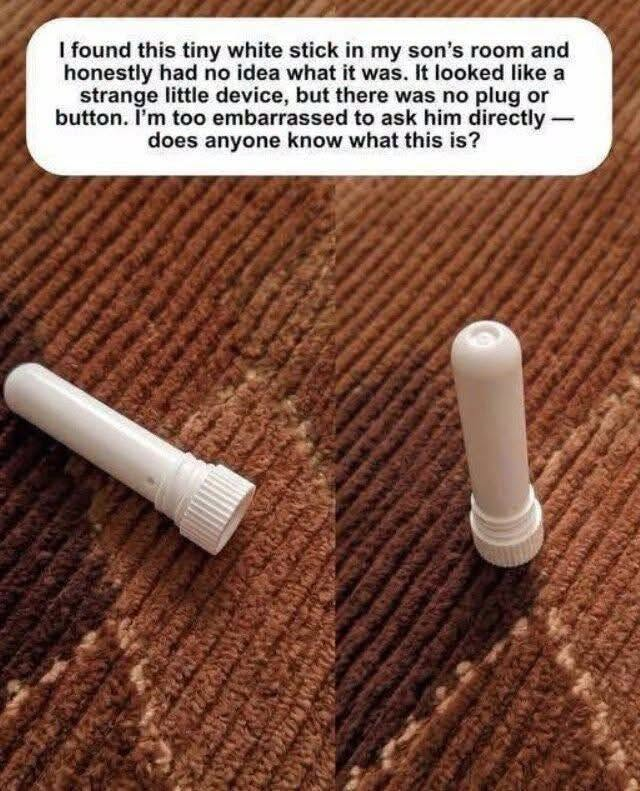
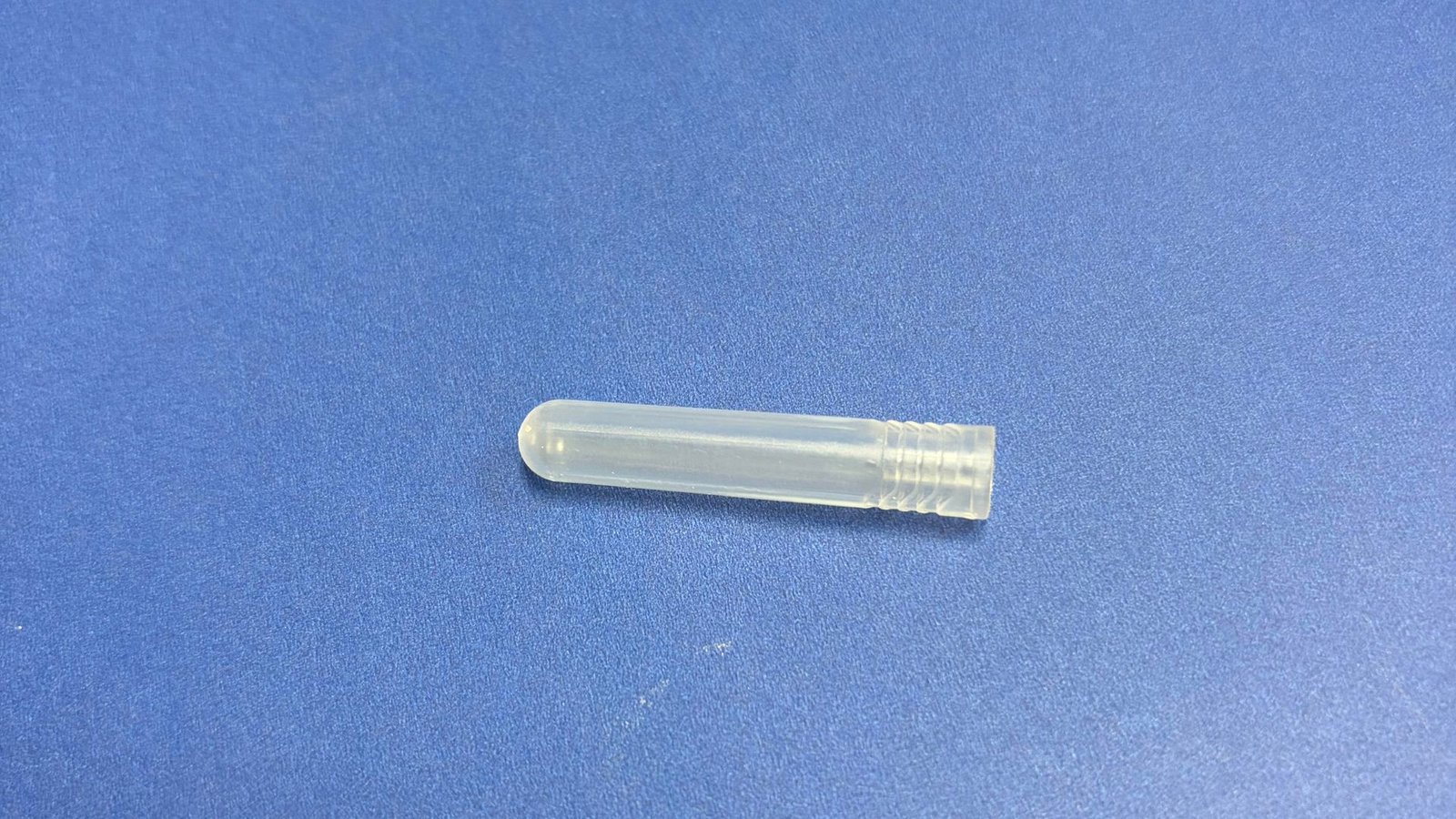
The image shows a small, white, cylindrical plastic object with a ribbed, screw-on cap at one end and a smooth, rounded opening at the other. To the untrained eye, especially one worried about teenage experimentation, it could look like anything from a strange tech gadget to something illicit.
But before you panic or assume the worst, take a breath. This object is likely much more mundane—and medical—than you think.
The Reveal: It’s an Inhaler Mouthpiece
That “mysterious white stick” is almost certainly the plastic actuator (mouthpiece) of a metered-dose inhaler (MDI).
Specifically, it appears to be the mouthpiece component that screws onto or snaps onto a metal canister containing medication (like albuterol/salbutamol for asthma).
Why It Looks Like That
The Ribbed Cap: The textured ring at the bottom is designed to grip onto the metal canister so it doesn’t slip off during use.
The Smooth Top: The rounded end is where the user places their lips to inhale the medication deeply into their lungs.
Why It Was Alone: Inhalers consist of two parts: the plastic holder and the metal medicine canister. If the canister was empty, lost, or stored separately (perhaps in a backpack or bathroom), just the plastic shell might get left behind on a carpet or desk.
Why Parents Often Miss This
It is completely understandable why a parent might not recognize this immediately:
It’s Missing the Medicine: Without the metal canister attached, it loses its recognizable “medical device” shape.
Design Variations: Different brands (Ventolin, ProAir, QVAR) have slightly different shapes. Some are L-shaped; others are straight tubes like the one in the photo.
Privacy Concerns: Teens with asthma sometimes feel self-conscious about their condition, especially if they play sports or are active. They might hide their inhaler or keep it disassembled to avoid questions from peers or even parents.
Is It Something Else?
In the age of internet mysteries, it is natural to worry about drug paraphernalia or vaping devices. However, this specific object does not match the profile of common drug tools:
Not a Vape: Vapes usually have charging ports, buttons, LED lights, or visible tanks. This object has none of those.
Not Drug Paraphernalia: It lacks the burn marks, residue, or specific geometry of pipes or rollers.
The clean, manufactured, medical-grade plastic appearance is a strong indicator that this is a legitimate health device.
How to Handle the Conversation
Finding an inhaler mouthpiece is actually good news. It means your child likely has a managed health condition rather than a hidden risky behavior. However, the fact that it was found alone suggests they might be struggling with managing their asthma or feeling embarrassed about it.
Here is how to approach it:
1. Don’t Accuse, Ask with Care
Instead of “What is this weird thing?”, try: “I found this plastic piece on the floor. It looks like part of an inhaler. Do you need a new one, or is your current one broken?”
2. Check Their Health
If your child does have asthma, ask if they’ve been having symptoms lately. Finding a loose mouthpiece might mean they’ve been using it frequently (emptying canisters) or that they lost their main device and are stressed about it.
3. Normalize It
Teens often hate feeling “different.” Reassure them that needing an inhaler is normal, especially for athletes. Many Olympic swimmers and runners use inhalers!
4. Safety Check
If your child doesn’t have a diagnosed respiratory condition, this could be a borrowed item from a friend. In that case, it’s still not dangerous, but it’s worth a gentle conversation about not sharing prescription medications.
Conclusion
So, to the worried parent in the viral post: You can relax. That tiny white stick is a lifeline for someone with breathing issues, not a cause for alarm.
It serves as a reminder that sometimes the scariest mysteries in our kids’ rooms have the simplest, most harmless explanations. Use this as an opportunity to check in on your teen’s health and let them know you’re there to support them—not judge them.
Disclaimer: This article is for informational purposes only. If you suspect your child is experiencing health issues or engaging in risky behaviors, please consult a pediatrician or healthcare professional.