If You Remember These Coming in a Tin Can… You Might Be Old
There are some things from childhood that instantly take you back. The smell of a certain soap, the sound of a specific song, or the sight of an old tin can sitting in your grandmother’s bathroom cabinet.
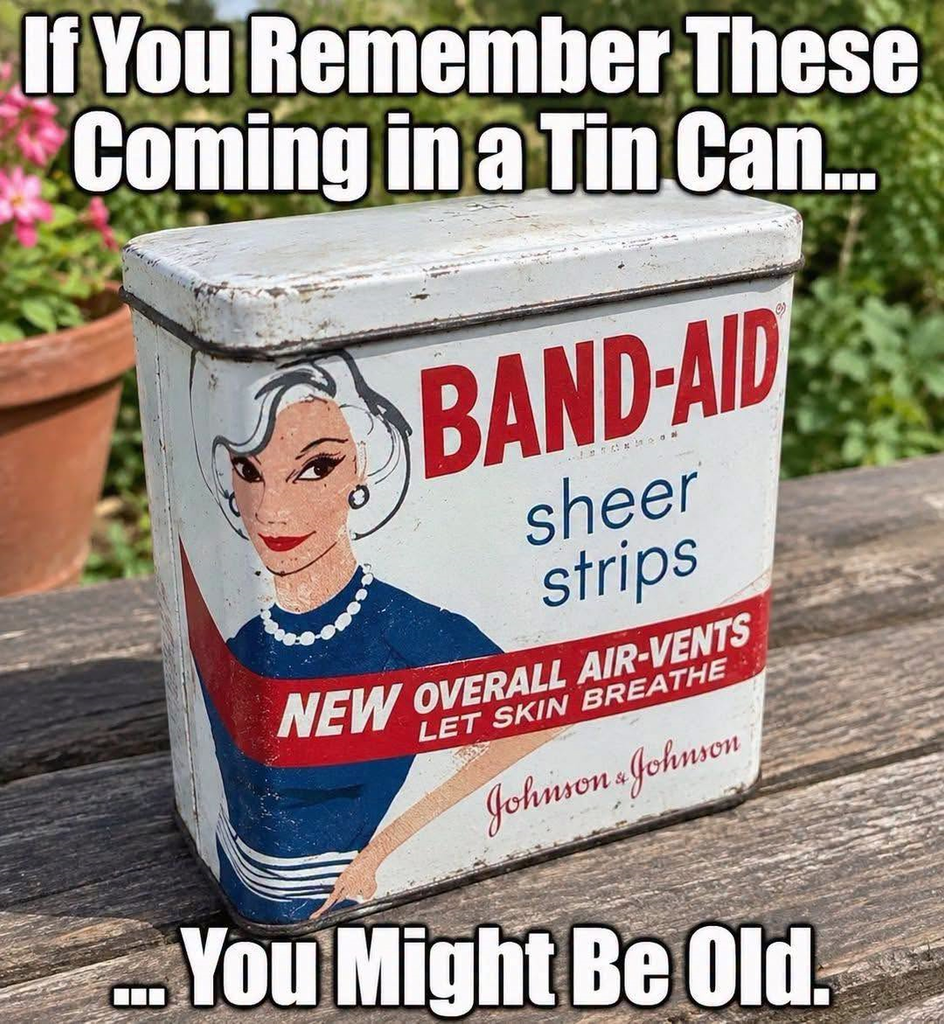
If you remember Band-Aids coming in a metal tin like this one, you’re part of a generation that knows a very specific kind of nostalgia. Here’s a look back at the iconic Band-Aid tin and why it holds such a special place in our memories. 👇
🩹 The Iconic Band-Aid Tin
What it was: Before plastic dispensers and cardboard boxes, Band-Aids were sold in sturdy metal tins. These tins were a staple in homes, schools, and first-aid kits for decades. They were practical, reusable, and instantly recognizable.
Why it mattered:
Durability: The metal tin protected the bandages from water, dirt, and damage.
Reusability: Once the bandages were gone, the tin was often kept and used for storing buttons, coins, or other small items.
Nostalgia: For many, the sight of a Band-Aid tin brings back memories of childhood scrapes, mother’s gentle care, and a simpler time.
The design: The vintage tin featured a classic illustration of a woman — often in a blue dress with a pearl necklace — and bold red lettering that read “BAND-AID” and “sheer strips.” The tagline “New Overall Air-Vents Let Skin Breathe” was a selling point that emphasized comfort and innovation.
When did they change? Band-Aid tins were gradually replaced by cardboard boxes and plastic dispensers in the 1980s and 1990s. Today, the tin is a collector’s item and a symbol of a bygone era.
❓ Frequently Asked Questions
When did Band-Aids come in tin cans? Band-Aid tins were common from the mid-20th century until the 1980s and 1990s.
Why did they stop making them? The shift to cardboard boxes and plastic dispensers was driven by cost, convenience, and changing manufacturing practices.
Are these tins worth anything today? Vintage Band-Aid tins are collectible items. Depending on their condition and rarity, they can sell for anywhere from $10 to over $50 on sites like eBay.
What did people do with the empty tins? Many people kept the tins and reused them for storing buttons, coins, sewing supplies, or other small items.
Why do these tins trigger nostalgia? They represent a time when products were built to last and were part of everyday family life. The sight of the tin brings back memories of childhood and care.
Are Band-Aids still sold in tins today? No — they are sold in cardboard boxes and plastic dispensers. However, some specialty or commemorative tins are occasionally released.
What is the most iconic Band-Aid tin design? The vintage design featuring a woman in a blue dress with a pearl necklace and the “sheer strips” text is one of the most recognizable.
Does this mean I’m old? Not necessarily — it just means you have a great memory and an appreciation for classic design!
💬 Do you remember Band-Aid tins? Share your memories in the comments! 🩹